

























































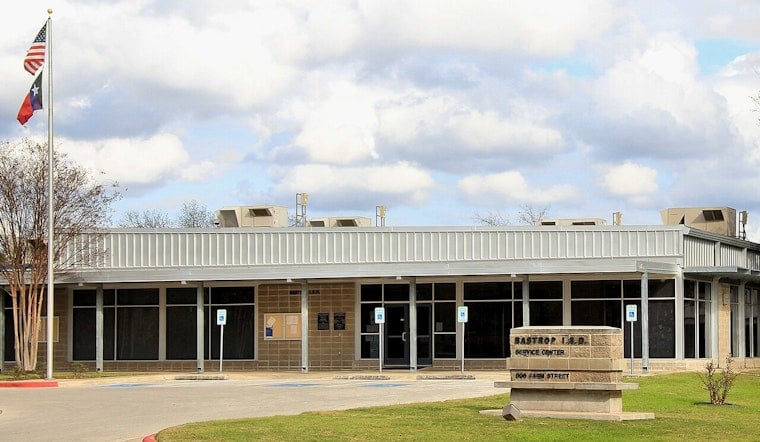
Bastrop ISD trustees have officially called for a tax rate election, asking voters on November 3 to approve a 1.3-cent increase to the district's maintenance and operations rate. The move comes as the district grapples with rising operating costs, slowing enrollment growth, and a budget that already relies on dipping into reserves just to stay afloat this year.
Trustees adopted a $1.0809 tax rate for the 2026-27 school year on August 13, according to Community Impact, which is 1.3 cents higher than the current rate. Whether that higher rate actually takes effect now rests entirely with voters. If the measure fails, the district's maintenance and operations rate would settle at $0.6499 per $100 valuation instead of the $0.6799 rate that would kick in with voter approval, according to the district's own tax rate comparisons cited in the report.
For a Bastrop ISD home with a taxable value of $378,000, the difference shows up directly on the tax bill. With voter approval, that homeowner would pay about $32 more annually after applying a $140,000 homestead exemption, or about $49 more annually without the exemption factored in the same way, per the district's figures. Without voter approval, the same $378,000 home would actually see its bill drop — about $40 less annually with the homestead exemption applied, or about $64 less annually without it, since the district's overall rate would fall short of this year's baseline.
Why Trustees Say They Need the Money
District officials project the tax increase would generate about $6 million annually. Of that, $2.4 million would come from local property tax revenue, while the remaining $3.6 million would arrive through state matching funds, according to a Bastrop ISD projection reported by Community Impact. That lopsided split isn't an accident — it's how Texas school finance law is built.
The mechanism at work is what's known as “golden pennies.” Texas school districts can access up to eight golden pennies in their maintenance and operations tax rates, and unlike other local tax revenue, those pennies draw state-matched funding and are legally exempt from state recapture, according to the San Antonio Report. That structure is precisely why a modest 1.3-cent local increase can unlock more than half its value in state dollars rather than local taxpayers shouldering the full amount.
Bastrop ISD board member Mike White said the additional money could help balance the general fund budget and support staff compensation and campus safety, per the district's own statements cited in Community Impact's report. Trustees have said they will return to amend the 2026-27 budget to account for the new revenue if voters approve the measure in November.
A Budget Already Leaning on Reserves
The financial pressure isn't new. In June, trustees unanimously adopted a $146.5 million general fund operating budget for 2026-27, projecting $142.9 million in revenue and requiring a $1.7 million draw from fund balance reserves, Community Impact reported at the time. That adopted budget relied on reserve draws to cover operational cost increases even before the election was called.
As of mid-2026, the district's general fund operating reserve stood at roughly 4.2 months of expenditures, according to a Bastrop ISD budget review reported by Citizen Portal. District officials warned that cushion would keep shrinking without a structural change to revenue, since school finance best practices typically recommend holding two to three months of reserves for cash flow — meaning Bastrop ISD isn't in crisis territory yet, but the trend line is one trustees say they want to reverse before it becomes one.
Enrollment Growth Has Slowed, but State Funding Hasn't Caught Up
Part of what's squeezing the budget is a mismatch between how fast the district grew and how the state now expects it to grow. Texas Education Agency data shows Bastrop ISD's student enrollment climbed 36% between 2013 and 2023, compared with an 8.6% statewide average, according to Citizen Portal's reporting on district budget scenarios. Yet district officials have now moved to budget models assuming zero enrollment growth for 2026-27, since Texas funding formulas are built around average daily attendance, and a slower-growing student count means slower-growing state dollars.
The compensation the district hopes to fund with the new revenue was outlined earlier this year. District financial officers proposed a 2026-27 compensation plan in May that included a 2% midpoint raise for certified teachers, a starting teacher salary of $58,000, and a minimum hourly wage of $15 for support staff, according to Citizen Portal. Central Texas districts have faced intense regional competition for certified teachers and support staff, making that pay plan part of the case trustees are making to voters.
Seniors Exempt, Election Timeline Set
Not every homeowner will feel the increase. Homeowners aged 65 and older with a homestead exemption will not see an increase from the tax rate election, per the district's disclosures reported by Community Impact.
Trustees were up against a hard deadline to get the question on the ballot. Under Texas election law, school boards must formally order a tax rate election 78 days before the uniform election date, which required Bastrop ISD trustees to call the election by August 17 for it to appear on the November 3 ballot, according to Community Impact's earlier reporting and a district resolution filed with the Texas Comptroller's office. Early voting will run October 19 through October 30, with the election itself falling on November 3.
Bond Debt Versus Daily Operations
The tax rate election is separate from the district's capital bond programs, which voters have approved twice in recent years. Bastrop ISD voters approved a $321.5 million capital bond in May 2023, following a $177.8 million bond in May 2021, providing more than $500 million combined for facility construction and security upgrades, according to the district's own bond program materials. But that construction money can't be redirected to cover the operating shortfall — Texas law strictly separates debt service funds used for buildings from the maintenance and operations budget that pays for salaries and daily costs.
The tax rate election also lands alongside other local fiscal pressures. Hoodline previously reported that the City of Bastrop was weighing options in August to close an $830,468 general fund shortfall in its own 2026-27 budget, underscoring how multiple layers of local government are adjusting to rising costs at the same time.
For 2025-26, Bastrop ISD's total tax rate was $1.0679 per $100 valuation, made up of a $0.6669 maintenance and operations rate and a $0.4010 debt service rate, according to Community Impact's earlier coverage. That rate held steady from the prior year because of property valuation thresholds, making the proposed 2026-27 rate of $1.0809 the first meaningful shift in some time — one that now rests in the hands of Bastrop ISD voters this November.



