

























































A federal judge has ruled that the Florida Department of Corrections broke the law when it seized the entire $60,000 civil rights settlement of a Pasco County man who was left blind after a beating by prison officers, wiping out the payout through a $547,850 debt lien tied to his 30-year sentence.
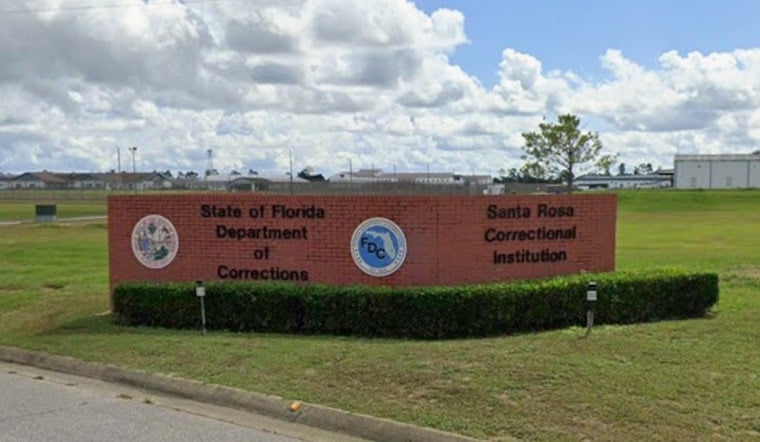
Jason Baez was sentenced to prison in 2006 for the second-degree murder of his roommate in Pasco County, according to Tampa Bay 28. While incarcerated at Santa Rosa Correctional Institution, Baez has described being restrained, beaten by five officers, and stabbed in the eye with a walkie-talkie radio, an assault that left him completely blind in his right eye and partially blind in his left, according to court documents cited by the Southern Poverty Law Center.
Baez sued in December 2019 over the beating and what he said was a failure by prison medical staff to treat his injuries. Florida settled the civil rights claims for $60,000 in August 2022 and deposited $40,000 of it into his inmate trust account, per the settlement timeline detailed in court records reviewed by the Southern Poverty Law Center. When Baez tried to transfer the settlement money to his family, the state instead obtained a lien through his sentencing court and eventually withdrew the full $60,000 from his account.
How a $50-a-Day Fee Became a $547,850 Debt
The lien Florida used against Baez comes from a state law, Florida Statutes Section 960.293, that allows the state to charge incarcerated people $50 per day for the entire length of their court-ordered sentence, regardless of how long they actually serve. For Baez's 30-year sentence, that formula produced a claimed debt of $547,850.50, which the Florida Department of Corrections sought to collect through the cost-of-incarceration lien, according to the same court records.
The state obtained that lien in July 2024 and officially transferred all of the money in Baez's inmate trust account into Florida's General Revenue Fund in February 2025, per the court documents. The Florida Department of Corrections has not responded to Tampa Bay 28's requests for comment on the case.
Federal Judge Sides With Baez, Calls the Practice Unconstitutional
Chief U.S. District Judge Mark E. Walker of the Northern District of Florida issued a summary judgment order on July 30 in Baez v. Dixon, ruling that the Florida Department of Corrections' use of the state lien to seize the federal civil rights settlement violates federal law. Walker held that applying the incarceration lien to a settlement won under 42 U.S.C. § 1983 is preempted under the Supremacy Clause, because it directly obstructs the federal law's goals of compensating victims of state misconduct and deterring future abuse by prison staff.
Baez was represented in the federal challenge by attorneys from the Southern Poverty Law Center and the Florida Justice Institute. The Southern Poverty Law Center has said the Florida Department of Corrections files liens against people who have filed civil rights lawsuits against it, and the organization says it is now speaking with other individuals whose civil rights settlements were taken through the same kind of liens.
State Courts Have Backed the Lien in a Separate Ruling
The federal ruling sits alongside a conflicting decision from Florida's own courts. On June 5, Florida's Second District Court of Appeal affirmed a state trial court's order granting the $547,850 lien against Baez, holding that state courts retain continuing jurisdiction throughout a prisoner's sentence to issue cost-of-incarceration liens, according to FindLaw. That leaves a state appellate ruling upholding the lien standing alongside a federal district court ruling that says applying it to a civil rights settlement is illegal.
Criticism of the tactic isn't new. In a 2009 concurrence involving inmate Carlos Green, Florida appellate Judge Chris Altenbernd warned, as reported by Prison Legal News, that using state restitution liens to offset federal civil rights awards let prison guards violate inmates' constitutional rights with impunity so long as judgments stayed under the $50-a-day threshold.
A Narrow Practice With a Wide Reach
The Florida Department of Corrections has chosen to file liens against only a few hundred of the roughly 80,000 people in its custody, but the debts those liens generate can be enormous given the daily accrual rate. The department does not pay incarcerated people for standard prison labor, according to the Southern Poverty Law Center, leaving many dependent on family support for basic canteen items even as they face hundreds of thousands of dollars in pay-to-stay debt once released.
Florida's approach is not unusual nationally. A June 2025 report on carceral debt found that 48 states maintain laws allowing pay-to-stay or cost-of-incarceration fees, with only California and Illinois having fully abolished such fee categories in state facilities, according to the Prison Policy Initiative. Baez's case, though, marks a rare instance in which a federal court has drawn a firm line around one specific use of those fees: taking money awarded to compensate victims of prison abuse.





