

























































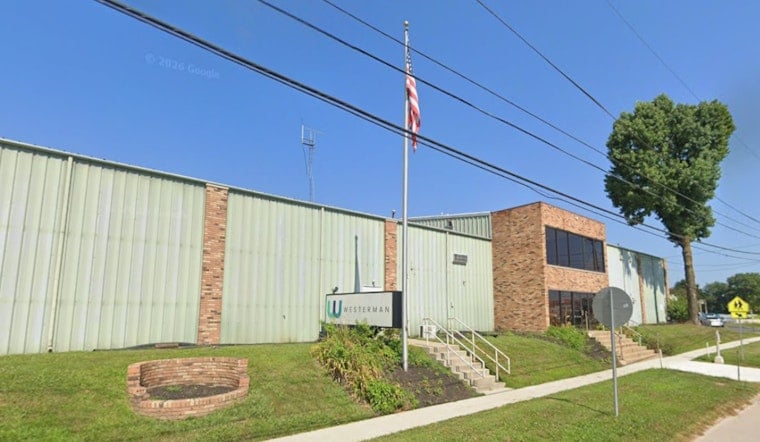
A 117-year-old metal manufacturer in the village of Bremen is betting on an in-house welding school to solve a problem that's been building for years: there simply aren't enough skilled welders left to keep its furnaces running. The Westerman Companies plans to add 210 jobs over the next five years at its Fairfield County plant, a build-out tied to a $350 million contract, according to company officials, to manufacture nuclear cylinders used to transport uranium.
The Ohio Tax Credit Authority approved a 1.644 percent, nine-year Job Creation Tax Credit for the expansion, according to a press release from Governor DeWine's office, with the state projecting the Bremen project alone will generate $13.3 million in new annual payroll across 210 full-time-equivalent jobs by the end of 2030. As reported by 10TV, Westerman also received $5 million in state tax incentives tied to the plan. The company's primary Bremen plant sits at 245 North Broad Street, per the governor's office.
A Second Expansion Just Down the Road
Westerman's ambitions don't stop in Fairfield County. The company also secured state approval on the same day for a separate $45 million, 100,000-square-foot expansion facility in neighboring Hebron, in Licking County, according to the Scioto Post. That project is expected to add 135 jobs and $8.42 million in annual payroll, and the outlet reports the Hebron facility will focus exclusively on nuclear transport and storage equipment. Combined with Bremen, the two sites push Westerman's total new hiring commitment to 345 jobs. The company is currently hiring machinists, welders, blasters and painters at its Hebron facility, per 10TV.
The nuclear cylinder work isn't abstract. Westerman's expanded manufacturing capacity is tied to supporting Centrus Energy's ongoing uranium enrichment operations in Piketon, Ohio, according to One Columbus. Centrus operates low-enriched uranium centrifuges at the southern Ohio site. Beyond nuclear work, Westerman makes industrial equipment supporting data centers, oil and gas operations and the broader power industry, including water-cooling cylinders for data centers and atmospheric-pressure tanks for oil and gas customers, per 10TV.
An Old Company Chasing a New Contract
Westerman's history in the nuclear cylinder business stretches back well before this year's announcement. When Columbus-based Worthington Industries acquired Westerman Companies for $70 million in September 2012, it identified the company as the world's largest producer of enriched uranium hexafluoride storage and transportation cylinders, according to a filing on SEC.gov. Westerman generated $71.8 million in revenue in the fiscal year before that acquisition, per the same filing. Today, the 117-year-old company operates in both Bremen and Hebron.
Why the Welding School Matters
Nolan Lamar, Westerman's general manager, told 10TV that the average welder in the industry today is about 55 years old, and that retiring institutional knowledge is creating workforce problems for welders nationwide. Lamar also said some students perceive welding as lacking an intellectual career path, and Westerman officials have identified changing young people's perceptions about the trade as a major challenge. To meet that gap, the company plans to build an on-site welding training facility designed to help meet its immediate workforce needs while training the next generation of welders. A company representative told 10TV the center will have a state-of-the-art setup with welding machines and equipment covering many different processes.
The demographic pressure behind Lamar's comments shows up in national numbers, too. About 21 percent of the roughly 771,000 U.S. welding professionals in 2025 were over age 55, while less than 10 percent of the active workforce was under 25, according to Tidewater Tech. The national average age for welders stands at 55, compared to 42 for the broader workforce, the same data shows. The American Welding Society separately projects the U.S. will need 320,500 new welding professionals by 2029, driven by roughly 80,000 annual openings needed just to replace departing workers.
Trade school enrollment among Gen Z students has climbed between 16 and 23 percent in recent years, but industry analysts say only one new welder enters the workforce for every two experienced tradespeople who retire, according to Earlbeck Gases & Technologies. Manufacturers nationwide face a growing shortage of skilled welders and machinists, and Westerman is also turning to robotics as part of its response to that labor gap, with automation intended to address insufficient worker availability, per 10TV. Broader research from Deloitte and The Manufacturing Institute projects the U.S. manufacturing skills gap could leave up to 2.1 million positions unfilled by 2030, dragging as much as $1 trillion from the national economy that year alone.
Will Westerman Deliver on Its Job Promises?
State officials are framing the state-backed incentive as a tool to help Westerman attract and train workers, but Ohio's own oversight record raises questions about how closely those numbers will be tracked. A January 2026 audit by the Ohio State Auditor found that more than half of companies claiming Ohio Job Creation Tax Credits between 2022 and 2025 failed to meet their required job creation and payroll commitments, according to the Scioto Post. State auditors noted that only 38 percent of non-compliant recipients faced penalties or clawbacks, the outlet reported, leaving the question of whether Westerman will hit its 2030 hiring targets an open one that will require continued monitoring.
Westerman's Bremen facility also carries an older regulatory footnote. In October 2008, the company entered into an administrative consent order with the Ohio EPA to resolve hazardous waste violations at the site, agreeing to a financial penalty and contributions to clean diesel school bus initiatives, according to Ohio EPA records. That settlement totaled $6,000, per the agency.
Westerman's push mirrors a wider scramble across manufacturing hubs to rebuild the pipeline of skilled trades workers before retirements outpace replacements. Greenville Tech's new $32 million welding center in Simpsonville and a $10.5 million NASA grant to Georgia Tech both aim at the same national shortfall, while an automated welding factory in Cincinnati's Camp Washington neighborhood points to robotics as another piece of the puzzle. For Westerman, the combination of tax credits, a proprietary training center and automation reflects an attempt to build its own labor pipeline from scratch, rather than wait for the broader industry to catch up.





