

























































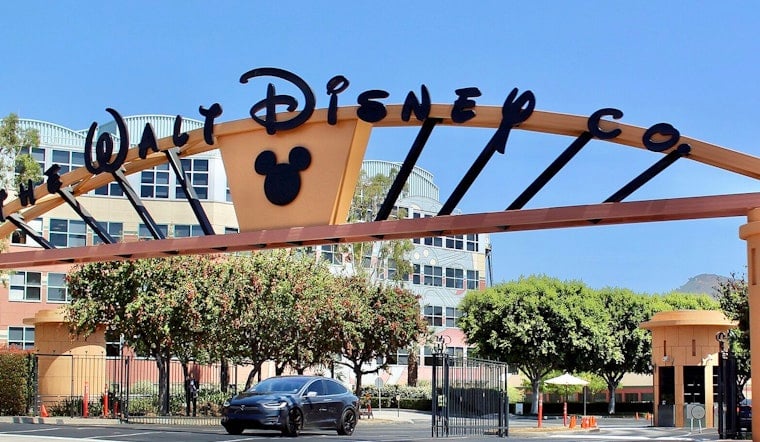
Disney has sold its 50% stake in A+E Global Media to the Hearst Corp for $1.2 billion in cash, a deal announced August 4 that hands full control of the four-decade-old cable venture to Hearst when the transaction closes in September. The sale ends Disney's half-ownership of A+E, the joint venture behind A&E, Lifetime, and The HISTORY Channel, but Burbank-based Disney is drawing a hard line: this is not a broader retreat from linear television.
Disney Chief Financial Officer Hugh Johnston has been explicit that the company has no plans to unload its other cable holdings, according to Los Angeles Business Journal. Johnston has characterized Disney's wholly owned cable networks — think ABC and FX — as brands with studios attached, pointing to shows like The Bear and Shogun as programming that gets monetized on both linear and streaming platforms. Per Johnston, Disney networks such as ABC also remain strategically tied to the company's sports business through ESPN, a connection A+E never had.
A+E Global Media traces back to 1984, when it launched as a joint venture split 50-50 between Disney and Hearst. Disney's stake originally came bundled into its 1990s acquisition of Capital Cities/ABC, a corporate lineage detailed by TheDesk.net. The network was born out of a merger between Hearst/ABC's ARTS service and RCA/Rockefeller's Entertainment Network, eventually growing into a global operation now led by A+E Global Media president and chairman Paul Buccieri.
Cord-Cutting Squeezes The Joint Venture
That scale is considerable: A+E Global Media reaches more than 414 million households across 200 territories in 40 languages, a footprint that spans A&E, Lifetime, The HISTORY Channel, LMN, FYI, and VICE TV, alongside streaming services HISTORY Vault and Lifetime Movie Club, according to a Hearst press release. But scale hasn't insulated the venture from the same forces reshaping cable everywhere. Hearst CEO Steven Swartz told staff in an internal communication, reported by TheDesk.net, that subscriber churn driven by high pay-TV costs had eroded A+E's distribution revenue.
Disney's own numbers tell a similar story about where the money is moving. During the company's second fiscal quarter of 2026, revenue from streaming subscriptions, affiliate fees, and advertising surpassed traditional linear television revenue, with streaming pulling in more than double what linear TV generated in that quarter. Disney entertainment has kept growing even as linear revenues decline, Johnston has said, and the company's diversified business — spanning parks, streaming, and sports — helps cover volatility tied to the film business, he added during an August 5 statement.
Rivals Are Splitting Off Their Cable Networks Entirely
Disney's approach stands apart from how its two biggest cable rivals are handling the same cord-cutting pressure. Comcast Corp already spun off its linear cable brands — including CNBC — into an independent company called Versant Media Group, which began trading on the Nasdaq in January. Shares fell 13% on their first day of trading, closing at $40.57, a reception the Los Angeles Times described as Wall Street skepticism toward standalone cable businesses.
Warner Bros. Discovery Inc. has announced plans to do away with similar cable assets of its own, separating legacy networks like CNN, TBS, and Food Network from its film studio and HBO streaming operations. Paramount Skydance Corp has since promised to take on Warner Bros. Discovery's cable assets amid that restructuring, adding another layer to an industry-wide shake-up that has left few major conglomerates untouched.
Disney Insists It's Holding Onto Nearly Everything Else
Johnston has pushed back on the idea that Disney might follow Comcast or Warner Bros. Discovery down the spin-off path. Splitting monetization platforms into standalone businesses is highly complex and unlikely to create incremental shareholder value, he said back in May. Disney's A+E sale does not mean the company is liquidating its other cable businesses, and Disney is holding on to almost all of its business segments beyond TV networks — a distinction the company has repeated as it fields questions about its broader strategy.
The sale lands under Walt Disney Co CEO Josh D'Amaro, who took the top job earlier this year and has been steering the company toward streaming monetization, live sports, and physical experiences. Disney also has a multiyear collaboration to stream Formula E races on Disney+ and ESPN+, another example of the sports-and-streaming integration Johnston has pointed to as the model Disney wants for its remaining networks. Hoodline previously covered D'Amaro's growth outlook after Disney's second-quarter results beat estimates, and the company's cross-platform push has continued with initiatives tying park attractions to gaming.



