

























































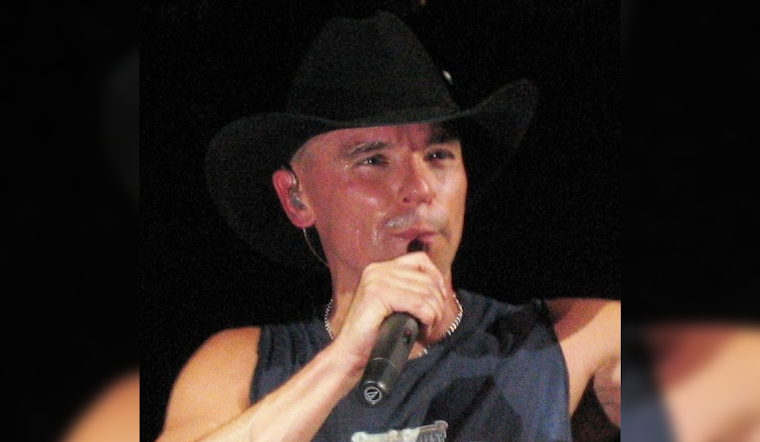
A California appeals court has ruled that Kenny Chesney cannot be held legally responsible for a fan who was tricked into sending $310,000 to a scammer posing as the country star. The court's decision, handed down on August 11, upholds a Los Angeles trial judge's earlier dismissal of the case brought by Nevada realtor Patricia Linson, who argued Chesney should have done more to protect fans from imposters using his identity.
The ruling came from California's Second District Court of Appeal, in an unpublished opinion written by Justice Victor Viramontes, according to the Metropolitan News-Enterprise. The three-judge panel found that celebrities do not owe fans a legal duty of care to warn or protect them against third-party imposter scams, affirming a decision trial judge Virginia Keeny had already made when she sustained Chesney's demurrer without leave to amend. As Billboard reports, the appeals court also found that Linson alleged no facts supporting a special relationship between celebrities and their fans, and cited no legal authority establishing a duty for celebrities to protect the public from third-party misconduct.
How the Scam Unfolded
Court filings describe how a person posing as Chesney first contacted Linson through LinkedIn in 2021, then built trust by sharing details about future concerts and releases that were not yet public. Per the Metropolitan News-Enterprise, the impersonator correctly predicted details about four unreleased Chesney songs in February 2021, predictions that were later verified when official announcements matched them. The scammer went on to say he was experiencing financial difficulties and requested money to appear at an awards show, repair instruments, and pay for music videos, according to Billboard's reporting on the case.
Believing she was helping fund Chesney's temporary expenses and would be repaid with interest, Linson transferred $310,000 — mostly in Bitcoin — to a designated recipient named Nayri Apelian in April 2021, according to FindLaw. She only hired a private investigator after the real singer failed to show up for a scheduled meeting, and Apelian later filed for bankruptcy in September 2022, the outlet reported.
A Confused Path Through the Courts
Linson's legal odyssey began with a mix-up. She initially sued the actual scammer and a named accomplice in 2022, but her original filing that year in Van Nuys Superior Court named a non-entertainer namesake who happened to share the singer's full name, Kenneth Arnold Chesney. Per MyNewsLA.com, that namesake was dismissed from the case in 2024, and a Los Angeles judge ordered judgment paperwork finalized for him this past July after a two-year delay.
Against the real Kenny Chesney, Linson accused the singer of failing to stop the fraud and sued him for negligence, arguing he likely knew bad actors were duping fans and should have taken proactive steps to warn them. Billboard reports that her legal team pointed to safety warnings posted on official pages by fellow country stars Blake Shelton and Dolly Parton as evidence that celebrities can easily alert fans to online imposters — Shelton posted his warning on his website back in March 2018, according to the Metropolitan News-Enterprise. The appeals court was not persuaded, ruling that requiring celebrities to post scam warnings under threat of lawsuit would stretch legal duty beyond what common sense and sound public policy support.
Attorney Reaction and Next Steps
Attorney Ronda Baldwin-Kennedy, who was not representing either party in the case, told Billboard that California has many scams involving people pretending to be celebrities and using inside information to solicit millions of dollars, and she said she disagreed with the appeals court's decision. Billboard also reported that Kenny Chesney's attorney did not return the outlet's request for comment as of Thursday. As a result of the ruling, Linson must now pay Chesney's legal expenses incurred defending the appeal.
A Booming National Scam Epidemic
Linson's attorneys argued that imposter scams have become an epidemic, and federal data backs up the scale of the problem. Consumers reported losing $3.5 billion to imposter scams in 2025 alone, according to the Federal Trade Commission, making it the most commonly reported scam category for the ninth consecutive year, out of a record $16 billion in total reported fraud losses. A separate FTC Data Spotlight found that nearly 30% of all reported scam losses in 2025 originated on social media platforms, totaling $2.1 billion, with Facebook cited as the most frequent point of contact, and social media scam losses increasing eightfold between 2020 and 2025.
The FTC's Trade Regulation Rule on Impersonation of Government and Businesses, which took effect in April 2024, gives federal regulators power to seek civil penalties of up to $53,088 per violation against deceptive imposter schemes. Country stars in particular have become frequent targets for this kind of fraud; in May 2025, Michigan Attorney General Dana Nessel issued a public alert warning fans that online fraudsters were increasingly impersonating stars like Garth Brooks and Kid Rock to run romance and investment scams. Hoodline has previously reported on a Pennsylvania man who lost $35,000 to a similar imposter scheme, part of a wider pattern of fraud that has also hit phone users in Washington, D.C.
Whatever sympathy the case draws for Linson, the legal outcome is now settled at the appellate level: without a pre-existing special relationship, public figures have no affirmative duty to monitor, warn, or protect the public against online impersonators. Voluntary warnings from artists like Shelton remain just that — voluntary — and the ruling makes clear they do not create an industry-wide legal obligation.





.jpg)