

























































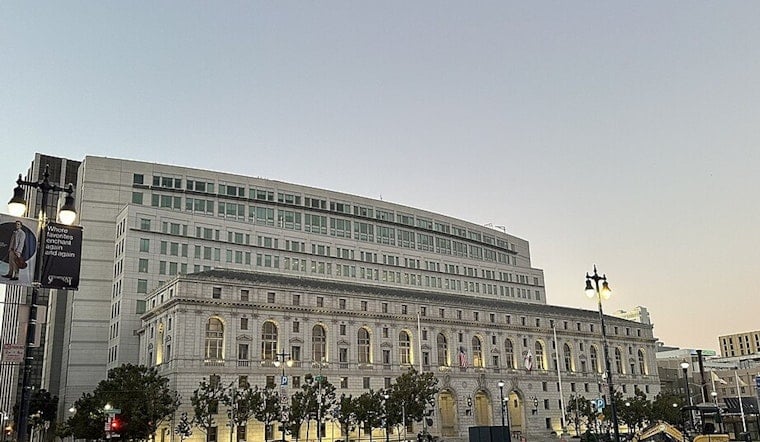
Apple Valley's decade-long legal war to seize control of its local water system from Liberty Utilities is not over, after the California Supreme Court unanimously ruled that trial courts must independently weigh the evidence in eminent domain cases involving private utilities rather than deferring to a town's own findings. The 7-0 opinion, issued Monday, sends the long-running case back to the Court of Appeal without deciding who ultimately wins the fight over a water system serving roughly 65,000 Apple Valley residents.
The ruling, written by Justice Leondra Kruger, resolves a major statewide legal question that had been hanging over the case for years, according to Courthouse News. The court held that when a private utility challenges a municipality's resolution of necessity to condemn its property, judges must exercise their own independent judgment instead of rubber-stamping the town's determination. As the Victorville Daily Press reports, the high court rejected the more deferential standard the Court of Appeal had previously adopted, and it did not authorize or prohibit the town's proposed acquisition of the water system.
Apple Valley Mayor Scott Nassif said the town was disappointed the Supreme Court rejected the Court of Appeal's legal standard, but stressed the fight continues. “The Supreme Court's opinion does not end the case,” Nassif said, per the Daily Press. Town officials said in a statement that Apple Valley will continue to protect the interests of its residents as the litigation moves forward and said the town is reviewing the opinion to evaluate its next steps.
A Fight Rooted in a 2010 Private Equity Sale
The town's push for public ownership traces back to 2010, when Apple Valley Ranchos Water Company was sold to investment fund Carlyle Infrastructure Partners, according to filings cited by the California Supreme Court. Carlyle's rate increases fueled public outcry that led the town to adopt resolutions of necessity in 2015, setting the stage for a formal eminent domain lawsuit filed in January 2016 — while Liberty Utilities was in the process of acquiring the system from Carlyle as the condemnation proceedings got underway.
The water system itself dates back much further, though the supplied sources do not provide additional historical details. Notably, the town's acquisition fight became politically urgent after private equity-driven rate hikes, per the San Bernardino County Sentinel.
Voters weighed in on the plan in June 2017, when Measure F won approval from 57.89% of Apple Valley voters — 7,200 of 12,438 ballots cast — authorizing the town to issue up to $150 million in revenue-bond debt for a potential purchase of the water system, according to the Daily Press.
A Bruising Trial and a Reversal
The case did not move quickly. Courthouse News confirms a 67-day bench trial. After the trial, the trial court ruled against Apple Valley, finding that Liberty Utilities had rebutted the statutory presumptions.
That loss came with a steep price tag: Liberty Utilities was awarded roughly $13.2 million in attorney's fees against the town, according to a report cited by The Voice of Apple Valley. The town appealed, and in September 2024 the Fourth District Court of Appeal issued a tentative decision reversing the trial court's ruling against the town, according to town officials. The appellate court formally reversed the trial court's decision in January 2025, along with the attorney's fee award, citing the trial court's use of an improper standard of review and its reliance on facts that arose after the town had already adopted its resolutions of necessity.
Apple Valley Town Manager Doug Robertson said the appellate court's decision reinforced the legitimacy of the town's case and corrected significant errors in the trial court's ruling. Robertson also argued that Liberty Utilities had relied on evidence and work completed years after the town committed to acquiring the water system, rather than focusing on conditions at the time the town made its decision.
What the Supreme Court Actually Decided
The Supreme Court's opinion did not simply side with either party outright. It anchored its reasoning in 1992 legislative amendments to California's Eminent Domain Law, holding that statutory presumptions favoring utility acquisitions function as rebuttable presumptions that affect the burden of proof under Evidence Code section 115, according to an analysis from Horvitz & Levy LLP. Code of Civil Procedure sections 1250.360 and 1250.370, which govern a utility owner's right to object to a public taking, were central to that analysis.
Under the ruling, the trial court must now determine whether Liberty Utilities proved by a preponderance of the evidence that the statutory requirements for the town's acquisition were not met. The Court of Appeal must now decide whether the remaining issues with the original trial court ruling are serious enough to overturn it, and that court will determine the next stage of the case.
The case involved participation from legal, local-government and private-utility groups. The California State Association of Counties backed Apple Valley, according to the California State Association of Counties. Local government groups sought deference to municipal decision-making, while private utility associations pushed for the independent judicial review the Supreme Court ultimately endorsed.
What Ratepayers Should Know
Even if Apple Valley eventually prevails, municipal ownership would not be the end of the matter for residents. The issue matters for a community following the litigation.
For now, the case heads back to the Court of Appeal with no timeline for resolution, and with millions of dollars in legal fees and a decade of litigation hanging in the balance. The Supreme Court's opinion resolved the standard of review that will govern the case, but it left unresolved whether Apple Valley will ultimately win the local control of its water supply that voters endorsed nearly a decade ago, or whether it will instead face renewed liability for Liberty Utilities' legal costs.





