

























































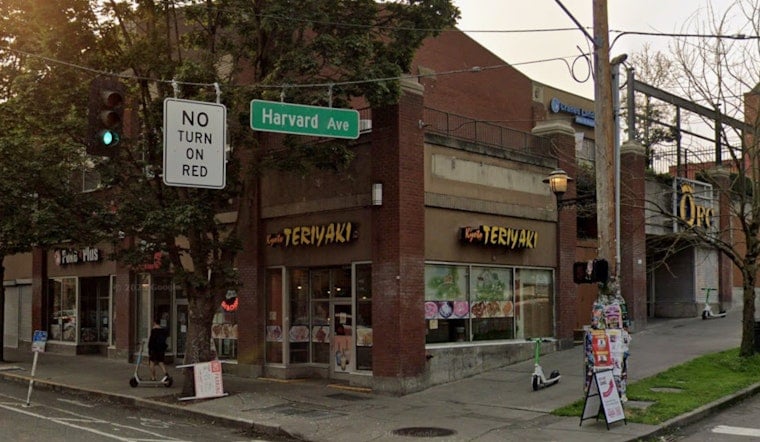
A Capitol Hill teriyaki counter just got back nearly $40,000 that Uber Eats had been sitting on for the better part of a year, but its owners say the platform still owes them more. Kyoto Teriyaki, at 803 E Pike St, received the withheld sales only after news media got involved, and its owners are now pushing Uber Eats for refunds on top of the released funds.
Owners Joy Kim and Jhoonho Kim run the longtime Capitol Hill spot, and according to FOX 13 Seattle, the withheld funds piled up from November 2025 through the week of August 10, covering nearly 1,500 orders. Uber Eats attributed the payment delay to failed identity-verification attempts, telling FOX 13 Seattle it was unable to reach Joy Kim until a video verification call finally took place last month. Kyoto Teriyaki says its banking information never changed before the payments stopped.
Jhoonho Kim disputed Uber Eats' account of how the communication breakdown happened, telling the station that Uber Eats failed to make promised calls and that the payment stoppage occurred without warning. Uber Eats maintains it attempted to verify Joy Kim's identity multiple times before the funds were finally released.
Owners Want More Than the Principal Back
Getting the roughly $40,000 back wasn't the end of it for the Kims. Joy Kim is demanding a full refund of the 30% commission Uber Eats collected during the withholding period, along with coverage of the additional interest and fees the delay caused. She's also considering hiring an attorney if those claims go unresolved. For its part, Uber Eats says it will continue working directly with Joy Kim to address her remaining concerns.
The episode fits a pattern the platform has faced elsewhere. In May, CBC News reported that Tandoori EH!, a family-run restaurant in London, Ontario, had more than $5,400 in payouts withheld by Uber Eats for over two months after a bank account update, with Uber again citing fraud security protocols. That case, like Kyoto Teriyaki's, left the restaurant owners struggling to cover rent and suppliers while waiting for the frozen money.
A Tight-Margin Business in a High-Cost City
Teriyaki has been Seattle's signature fast-food staple since the 1970s, spreading through the neighborhood dining scene into the 1990s, with Kyoto Teriyaki standing as one of Capitol Hill's long-running counters serving the local community, as The Stranger notes. Shops like it depend on steady weekly cash flow to cover food supplies and labor, which is exactly what a nine-month payout freeze threatens. The Stranger's reporting on the case points to a systemic problem: small merchant accounts can stay frozen until a news inquiry prompts a human being to actually look at the file, since automated identity-verification systems often lack a fast path to escalation.
The financial squeeze on independent Seattle restaurants using delivery apps isn't new. Uber Eats raised its nationwide marketplace commission fees in March, pushing its standard Lite tier delivery commission from 15% to 20% and its pickup fee from 6% to 7%, according to Restaurant Dive. Seattle restaurants do have some protection from those hikes: the city permanently capped core delivery commission fees at 15% back in 2022, when then-Mayor Bruce Harrell signed the law as pandemic-era emergency orders expired.
Seattle's Regulatory Push Continues
The city has layered on other rules governing app-based platforms since then. Seattle's App-Based Worker Minimum Payment Ordinance now requires covered delivery platforms to pay couriers at least $0.47 per engaged minute and $0.80 per mile, with a $5.34 minimum per offer, while a separate Deactivation Rights Ordinance that took effect last year set up formal dispute procedures against arbitrary account suspensions on these platforms. Delivery apps operating in Seattle must also register with the city's Finance and Administrative Services Department and remit a 10-cent fee per order to fund labor law enforcement.
Just this month, Seattle City Council members introduced the Fair Pricing and Transparency Ordinance, aimed at banning surveillance pricing and algorithmic price discrimination by delivery platforms and large grocery retailers, according to The Urbanist. Uber Eats also faces broader legal exposure beyond Seattle: an FTC and multistate Attorney General lawsuit over allegedly deceptive Uber One subscription billing was active as of April, building on a $10 million settlement the company reached with Chicago in 2022 over fee transparency, per the Nguyen Law Firm.
For now, Kyoto Teriyaki has its $40,000 back and is still open on E Pike Street, serving the Capitol Hill neighborhood it has long called home. But the dispute over the commission refund, interest, and fees Joy Kim says she's still owed remains unresolved, and Uber Eats has only committed to continuing to work with her directly.





