

























































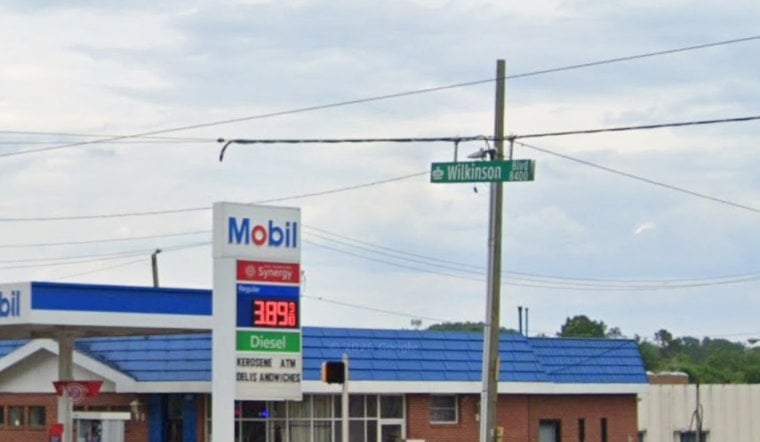
A 58-year-old Gaston County man has been sentenced to 30 months in federal prison for running a multi-million dollar fencing operation out of an unmarked storefront on Wilkinson Boulevard in Charlotte, where stolen and fraudulently obtained health and beauty products were dropped off, processed, and shipped out to online buyers across the country and overseas.
Ronald Dale Lynn operated the scheme from 2019 to 2025, according to filed documents cited by Queen City News. Prosecutors say Lynn acted as a fence, someone who knowingly buys stolen or fraudulently obtained goods from thieves and resells them for a profit. In this case, the individuals supplying Lynn were known as boosters, described in court documents as people who steal or fraudulently obtain retail merchandise before selling it to a fence.
The Wilkinson Boulevard location had no signage and was not open to the public, functioning instead primarily as a drop-off and processing point for stolen merchandise, per the same report. From there, Lynn allegedly resold new or near-new health and beauty products, including proprietary items sold exclusively by national retail brands, through eBay, Amazon, and Walmart Marketplace, pricing the goods well below what legitimate retailers charge.
Secret Service Seized Over $414,000 in Merchandise
The U.S. Secret Service executed a search warrant on Lynn's storefront and other locations in January 2025, seizing stolen or fraudulently obtained merchandise valued at approximately $414,056. Investigators ultimately determined that Lynn's scheme caused total losses between $1.5 million and $3.5 million.
The Secret Service's involvement may seem unusual for a retail theft case, but the agency's jurisdiction over major e-commerce fraud and interstate fencing networks dates back to its 1865 founding to protect the nation's financial systems, according to a report from the U.S. Secret Service. Lynn was ultimately sentenced to 30 months in prison for interstate transportation of stolen property and ordered to serve two years of supervised release afterward.
A Familiar Pattern for Federal E-Fencing Cases
Lynn's case echoes a similar Secret Service prosecution out of West Virginia, concluded in January 2022, in which a defendant who bought stolen goods from boosters and resold more than 7,000 items worth $594,000 on eBay received a 97-month federal sentence for money laundering and running an e-fencing ring. That case offers a comparative benchmark for how aggressively federal authorities pursue online resale networks tied to organized retail theft.
Online marketplaces themselves have come under growing federal scrutiny as liquidation routes for stolen goods. Effective June 2023, the federal INFORM Consumers Act requires platforms like eBay, Amazon, and Walmart Marketplace to collect, verify, and disclose bank and contact information for high-volume third-party sellers completing 200 or more sales or grossing at least $5,000 in a year, according to the Federal Trade Commission. A January 2026 data release from U.S. Senate Judiciary Committee leadership found that enforcement of the law has led marketplaces to suspend nearly 40,000 high-volume seller accounts and remove almost 3 million seller accounts and 24 million listings tied to stolen, counterfeit, or unsafe merchandise since mid-2023.
North Carolina's Enhanced Penalties for Organized Theft
North Carolina has also toughened its own laws targeting organized retail theft rings. Under General Statutes § 14-86.6, amended by state legislation effective December 2022, theft of stolen goods valued over $1,500 aggregated across a 90-day span is a Class H felony, while losses exceeding $20,000 in that same window escalate to a Class G felony punishable by up to 31 months in prison, per the North Carolina General Assembly.
Lynn's Gaston County residency places his case within a broader regional crackdown. In September 2024, federal, state, and local agencies launched Operation Fed Up, a task force targeting organized retail crime rings in Gaston County after Gastonia logged 941 larceny cases totaling $400,000 in retail losses in 2023, Hoodline previously reported on 28 arrests. A December 2025 undercover effort called Operation Naughty List saw Gastonia police sting local Walmart and Target stores, resulting in 78 arrests and 154 charges meant to disrupt booster networks feeding local fences.
That local enforcement extended into Charlotte in April 2026, when Gastonia task force officers teamed with the Charlotte-Mecklenburg Police Department for a joint sting at SouthPark Mall, recovering over $2,000 in stolen goods and arresting four suspected boosters. While Gaston County and Charlotte police have focused on catching low-level boosters in stores, cases like Lynn's show federal agencies stepping in to dismantle the higher-level fencing operations that fund those theft networks in the first place.
Organized Retail Crime Keeps Growing Nationally
The shift toward organized schemes like Lynn's reflects a national trend. A July 2026 study by the National Retail Federation and the Loss Prevention Research Council found that while traditional physical shoplifting incidents dropped 12.4% in 2025, external retail theft has shifted markedly toward organized retail crime networks, with 40% of surveyed retailers reporting increases in ORC-driven theft schemes.
The financial toll remains substantial. National loss prevention data reported in June 2026 estimated U.S. shoplifting losses at roughly $45 billion in 2024, with 67% of major retailers saying transnational or organized retail crime groups had targeted their merchandise, according to CHeKT. Lynn's sentencing adds another data point to that pattern, illustrating how a single unmarked storefront can serve as the linchpin connecting local shoplifters to a nationwide, multi-million dollar resale pipeline.





