

























































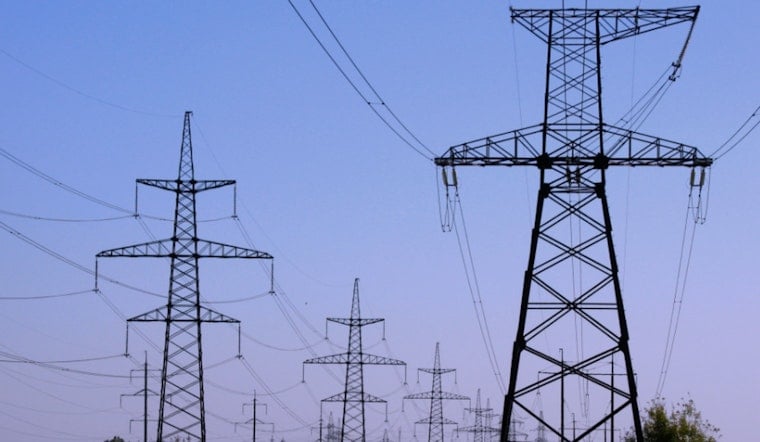
A fast-moving storm system tore through Columbus County on Saturday evening, knocking out power to more than 1,000 customers and disabling traffic signals in Whiteville that contributed to a vehicle collision at Washington Street and Powell Boulevard. Duke Energy reported that damage to major power lines caused the outage, with crews initially estimating restoration by 8:45 p.m. that night.
The outage hit hard and fast, according to WECT, which reported more than 1,000 customers in the Whiteville area lost power as the storm moved through. The scale of the damage became clearer once statewide outage data came in: PowerOutage.us recorded that Columbus County absorbed 1,143 of North Carolina's 1,600 total reported electric customer outages at 7:17 p.m. that evening, out of 92 utility providers tracked statewide. That means Columbus County alone accounted for more than 70 percent of all storm-related outages across the state that night.
On the ground, the storm's effects went beyond dark porch lights. The dead traffic signals combined with nuisance flooding to snarl roads throughout Whiteville, and the Whiteville Fire Department responded to at least one collision at Washington Street and Powell Boulevard as crews worked to untangle traffic, according to Columbus County News.
A Second Blow in Just Over a Week
Saturday's storm marked the second major outage event to hit the Whiteville area in barely more than a week. Just eight days earlier, on August 21, severe weather left more than 1,500 Duke Energy and Brunswick Electric Membership Corporation customers without power due to downed trees and high water, the same outlet reported. Duke Energy and BEMC together serve the bulk of Columbus County's roughly 30,783 tracked utility accounts, with Duke Energy alone maintaining about 16,839 of those customer accounts, per FindEnergy.
The back-to-back storms also disrupted the community beyond utility lines. Widespread rain and lightning threats across North Carolina forced high school athletic departments to reschedule dozens of Week 2 football games, including moving the West Brunswick at Whiteville matchup that had originally been scheduled for that Friday, as reported by the High School Football Network.
A County With a History of Storm Vulnerability
Whiteville, the county seat and commercial hub of Columbus County, is home to roughly 4,766 residents across 5.4 square miles, according to U.S. Census Bureau data. The town has faced serious flooding risk before: catastrophic flooding during Hurricanes Matthew in 2016 and Florence in 2018 exceeded 500-year floodplain levels, prompting the town to establish the Whiteville Floodprint infrastructure plan, according to NC State University's Coastal Dynamics Design Lab. Florence's flooding in September 2018 also resulted in a storm-related fatality in Columbus County, when a resident died during evacuation efforts amid the widespread regional flooding, per Wikipedia.
Utilities across the region have been investing in grid resilience as storms like this one recur. Duke Energy announced in November 2025 that 75% of its North Carolina customers were served by smart self-healing grid technology, which the company said helped avoid more than 1.1 million customer outages and saved nearly 2.6 million outage hours statewide during the first 10 months of 2025. Separately, industry reporting from Renewable Energy World in June 2026 found that distribution circuits that underwent targeted storm-hardening experienced a 45% reduction in damage-related outages compared to unhardened lines during severe weather.
Whether those investments blunted the impact of Saturday's storm in Columbus County remains unclear, but the outage numbers suggest the county continues to sit at the sharp edge of southeastern North Carolina's severe weather pattern. With two major outage events in just over a week, residents and officials alike are left watching the skies as the region's storm season continues.


