

























































Voters across the Claymont City School District will decide on November 3 whether to slash a voter-approved property tax levy from 5 mills down to 2 mills, following a petition drive launched by residents angered over an unvoted tax increase and the closure of Dennison's only school building. The group behind the effort, called Twin Cities Citizens, gathered 440 signatures — well beyond what was needed to force the levy reduction onto the ballot.
The dispute traces back to 2025, when the Claymont Board of Education voted to shift 3.2 mills of so-called inside millage away from day-to-day operating expenses and into a fund for permanent improvements, according to Your Ohio News. Inside millage is property tax revenue that Ohio guarantees to school districts for operations, and because Claymont already operated at the state-mandated 20-mill floor, moving that money out of the operating fund effectively raised local property taxes without a public vote. Dennison Mayor Greg DiDonato and Uhrichsville Mayor Jim Zucal publicly criticized the maneuver, telling WJER Radio in October 2025 that it lacked transparency and would cost homeowners between roughly $138 and $140 per $100,000 of home value.
Beginning in 2027, Dennison residents will pay an additional $147 on a $100,000 house as a result of the shift, the report notes. School board members have said they considered the millage move partly because they were uncertain how the state legislature might act on property-tax rules — a concern that has since played out, as lawmakers introduced House Bill 129 and House Bill 335 to restrict inside-millage reallocations and revisit 20-mill floor calculations, according to the Ohio Legislative Service Commission.
A Shuttered School and a Community's Frustration
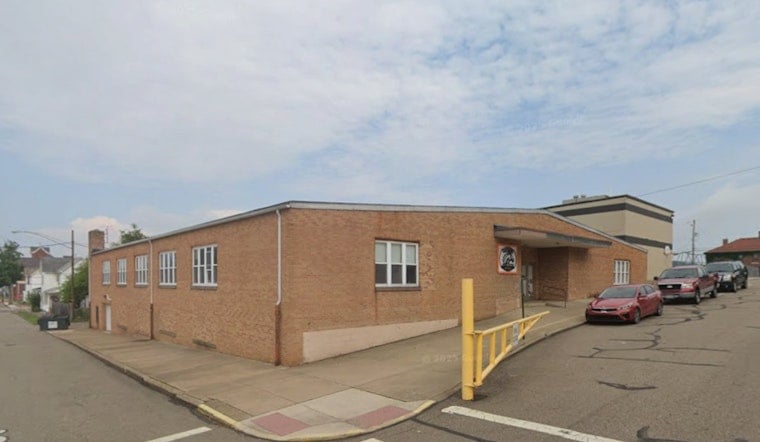
The financial fight is inseparable from the fate of Claymont Intermediate School, the only school building in Dennison. The board voted 3–1 on March 31 to close the school at the end of the 2025–2026 academic year, with board member Michelle Wolf casting the lone dissenting vote, according to Citizen Portal AI. The building needed a new roof and other structural repairs, according to Twin Cities Citizens member Brian Rentsch, even though DiDonato said the district had spent $3.2 million on improvements to the intermediate school in recent years.
DiDonato called the intermediate school spending a waste of money and said Claymont schools appear to have too much money, per the seed report. He said he is not concerned that the district might lose revenue if the levy reduction passes, and described a general lack of faith among residents in how the district is run. Rentsch, for his part, said residents should understand the decision they are making and its impact on current students, and argued that the district's strength depends on community support.
Open Enrollment Losses Add to the Pressure
Compounding the district's challenges, parents have been pulling their children out of Claymont through open enrollment, moving them to other districts because of work schedules or a preference for high-school continuity, according to Rentsch. The district has investigated the open enrollment issue as it weighs the broader consolidation strategy that helped drive the millage dispute in the first place. District leadership outlined a plan in July 2025 to reduce the district's footprint from five buildings to three, anchored by an estimated $15 million addition to Claymont High School to be funded through permanent improvement revenue rather than a voter-approved bond issue, according to WTUZ Radio.
The district enrolls roughly 1,529 students from pre-kindergarten through twelfth grade with a student-teacher ratio of 17 to 1, according to Niche. In June, the school board also approved a new three-year collective bargaining contract with the Claymont Education Association covering teachers and certified staff, a recurring financial commitment the district faces regardless of the levy vote's outcome.
What the Ballot Measure Would Actually Do
The levy voters approved in 2020 funds both operating expenses and permanent improvements. If the reduction from 5 mills to 2 mills passes, county auditor Larry Lindberg said it could cost the district as much as $785,000 per year, while property owners would see a $76 tax reduction on a $100,000 home. Lindberg called the Claymont levy issue unusual, and district officials have noted the reduction could push the district below the 20-mill operational floor Ohio guarantees.
Twin Cities Citizens is not the first group in the area to pursue this route. Under Ohio Revised Code Section 5705.261, electors can place a measure to decrease a voter-approved continuing levy on the ballot by gathering signatures equal to at least 10 percent of votes cast in the district during the most recent gubernatorial election — a threshold Twin Cities Citizens cleared with its 440 signatures. Lindberg pointed to a precedent in nearby Newcomerstown, where six levy-reduction issues covering levies originally approved between 1963 and 1977 appeared on the November 6, 2001 ballot, proposing to cut rates from 23.8 mills down to zero. Those Newcomerstown measures were ultimately defeated at the polls.
County Regulators Already Pushed Back Once
The Claymont dispute has also played out at the county level. In December 2025, the Tuscarawas County Budget Commission rejected the property tax reallocation moves proposed by Claymont, Dover, and Indian Valley school districts after all three attempted the same shift of unvoted inside millage from operating funds to permanent improvements, according to WJER Radio. All three districts appealed that rejection to the Ohio Board of Tax Appeals later that month, according to a separate WJER Radio report, leaving the underlying legal question unresolved even as the local levy-reduction vote heads to voters.
Ohio Revised Code Section 319.301 establishes the 20-mill floor, which prevents state property tax reduction factors from pushing a district's effective operating rate below 20 mills — the exact mechanism that turned Claymont's internal millage shift into a real tax increase for homeowners. That statewide tension has fueled a broader legislative push, with lawmakers citing inflationary property reassessments as the impetus for forming a Property Tax Reform Working Group. Board members have said their intent throughout has been to keep the school system thriving and viable, arguing that Claymont's students and staff are worth continued community support. Whether Tuscarawas County voters agree will become clear when ballots are counted after the November 3 election.





