

























































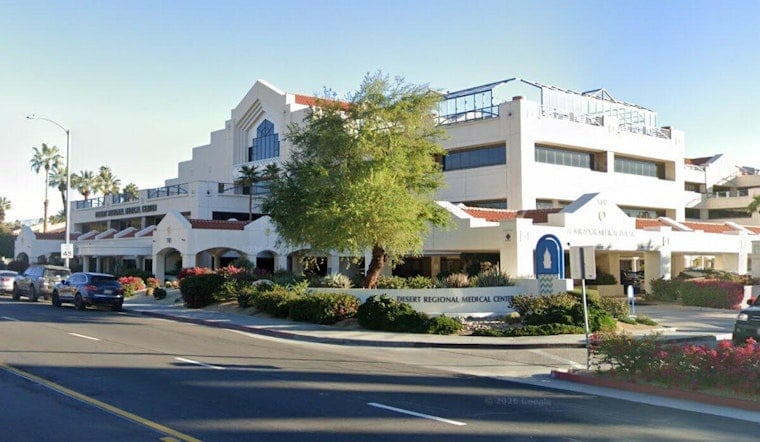
Desert Regional Medical Center in Palm Springs has filed a lawsuit accusing the physicians group it hired to help run its resident training programs of a string of failures, including allegedly fabricated obstetrics insurance paperwork and a doctor who treated patients using another physician's hospital badge. The allegations surfaced after a baby delivered at the hospital in March 2024 suffered what the family describes as profound neurological injuries, prompting a separate malpractice lawsuit from the child's family.
According to NBC Palm Springs, Desert Regional trains roughly 90 to 100 new doctors a year across six physician-training programs, and it hired Desert Physicians Medical Group to help staff and operate those residency programs. The hospital's lawsuit names DPMG along with individual defendants Tae Kim and Gemma Kim, accusing them of conduct that allegedly put both patients and physicians in training at risk. None of the defendants have been found liable, and the allegations remain part of an active civil case.
Insurance Certificates Under Scrutiny
Central to the hospital's complaint are insurance certificates submitted in January 2024 for two physicians identified in the lawsuit as Dr. ET and Dr. AL, which stated the doctors carried family medicine coverage that included obstetrics. Desert Regional says it had specifically requested proof that the two doctors held obstetrics malpractice insurance before allowing them to practice in that capacity, per the hospital's account relayed by the station.
Those certificates appear to show coverage that had already ended on December 31, 2023, the lawsuit states. The hospital further alleges that obstetrics-specific wording had been added to the insurance documents, according to the same report. Then on March 5, 2024, one of the physicians delivered a baby at Desert Regional — the same delivery now at the center of the family's malpractice claim alleging delays and other failures caused profound neurological injuries, allegations that remain unproven.
Credential-Sharing and Privilege Allegations
The hospital's lawsuit does not stop at insurance paperwork. It also alleges that a DPMG physician was given a different physician's hospital badge and electronic medical record credentials and treated patients without ever holding hospital privileges, per the lawsuit's allegations. By March 21, 2024, an insurance company had confirmed to Desert Regional that the physicians in question did not actually have obstetrics coverage.
Those alleged practices sit uneasily against California's medical staff governance rules. State regulations under Title 22 require general acute care hospitals to maintain an organized medical staff, accountable to the hospital's governing board, specifically to ensure the quality of care delivered on hospital grounds, according to the California Code of Regulations. National accreditation standards add another layer: the Accreditation Council for Graduate Medical Education requires that every patient treated in a resident-training setting have an identifiable, properly credentialed attending physician who holds ultimate responsibility for care and supervision.
Why the Hospital Faces Its Own Legal Exposure
California case law helps explain why Desert Regional moved to sue its staffing partner rather than simply distance itself from the allegations. Under the state's 1982 *Elam v. College Park Hospital* precedent, hospitals owe patients a direct duty to exercise reasonable care in selecting, credentialing, and periodically reviewing every physician allowed to practice within their walls, according to the Judicial Council of California. That duty means a hospital can be held liable for a physician's negligence even when the doctor is not a direct hospital employee.
Malpractice insurance itself isn't mandated by state law for individual physicians, but acute care hospitals often require it as a condition of granting clinical privileges, according to the Cooperative of American Physicians. That institutional requirement is what makes allegedly falsified obstetrics coverage certificates a potential breach of the credentialing process rather than a mere paperwork lapse.
Public Funding and Training Programs at Stake
The dispute also touches public money. Desert Regional says it will need to address more than $1 million in public funding tied to resident salaries and state grants. California residency programs draw on state funding sources including the Song-Brown Healthcare Workforce Training Program, administered by the state's Department of Health Care Access and Information, and CalMedForce grants funded through tobacco tax revenue under Propositions 56 and 35, per the California State Assembly. The programs are tied to the hospital's training pipeline.
Desert Regional Medical Center itself operates under a lease between Tenet Healthcare, the Dallas-based operator, and the public Desert Healthcare District, which owns the facility. Palm Springs voters were to consider Measure AA in November 2024, which would establish a new 30-year lease-purchase agreement running from 2027 to 2057, according to the Desert Healthcare District. Desert Physicians Medical Group, which operates primary care, pediatric, behavioral health, and mobile clinic services.
According to the Desert Healthcare District and Foundation, the district has been in various levels of discussion regarding the Tenet lease of Desert Regional Medical Center since 2017. According to the Desert Healthcare District and Foundation, Eisenhower Health will have established the first graduate medical education psychiatry residency program dedicated to the Coachella Valley.
Neither Desert Regional nor DPMG had responded to a request for comment at the time NBC Palm Springs published its report. It remains an open question whether state regulators, such as the Medical Board of California or the California Department of Public Health, have opened any independent administrative review into the credentialing practices and patient care events described in the court filings. Any malpractice settlement above $30,000 or civil judgment of any amount would ultimately have to be reported to the Medical Board of California under state law.
The family's malpractice lawsuit and the hospital's suit against DPMG and the Kims are described as separate civil cases; the allegations have not been proven and the defendants have not been found liable. Under California's Assembly Bill 35, non-economic damages in non-wrongful-death claims are subject to a $750,000 cap, followed by 2% annual increases.





