

























































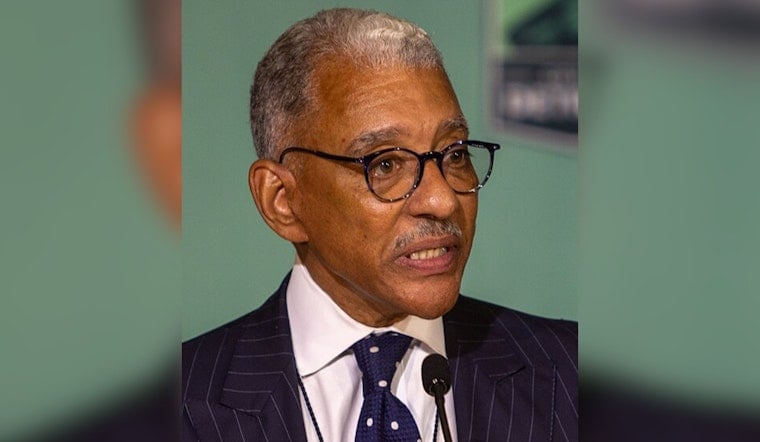
Detroit's top city lawyer earns more than $300,000 a year sitting on the board of an auto supplier that landed a 12-year property tax break from the very city departments he oversees. Corporation Counsel Conrad Mallett Jr. has collected roughly $1.8 million in cash and stock awards from Southfield-based Lear Corporation since 2020, even as Detroit officials approved a Public Act 198 industrial tax exemption for the company's Conner Avenue manufacturing plant.
The arrangement is now drawing formal ethics scrutiny. According to a report from Deadline Detroit, Detroit's ethics watchdog may review whether Mallett's paid Lear board seat violates the city's ethics ordinance, a question that surfaced as reporters detailed his total compensation from the company. Peter Letzmann, a former city attorney in Detroit, Pontiac and Troy who has lectured on ethics compliance for the Michigan Municipal League, told the outlet the situation appears to be a conflict of interest.
Mallett has served on Lear's board of directors since August 2002, meaning his corporate directorship predates his city hall roles by nearly two decades, according to Lear Corporation. Before entering municipal government, he spent two decades in executive administration at the Detroit Medical Center, including stints as Chief Administrative Officer and President of Sinai-Grace Hospital, and he served on the Michigan Supreme Court from 1990 to 1999, becoming its first African American Chief Justice in 1997.
A Reappointment Just Days Before the Scrutiny
The timing has raised eyebrows. Detroit City Council confirmed Mallett's reappointment as Corporation Counsel on August 4, 2026 — just two days before the conflict-of-interest reporting broke — despite public commenters raising objections over potential conflicts, per CitizenPortal. Mallett disclosed his Lear board role to Mayor Mary Sheffield upon that reappointment earlier this year, per the seed report's findings.
Mallett has said his roles with the city, Lear and the Detroit Economic Growth Corporation are not in conflict, and he has said he had no involvement in the Lear plant deal in his city position. He also disclosed his Lear directorship to former Mayor Mike Duggan, who in 2020 instructed city department heads not to involve Mallett in business related to Lear, according to the same account.
How the Tax Break Moved Through City Hall
The deal itself involves a 416,000-square-foot auto supply manufacturing facility Lear leases at 9501 Conner Avenue in Detroit, according to city records reviewed by the outlet. Detroit Economic Growth Corporation staff recommended a 12-year Public Act 198 Industrial Facilities Tax Exemption for the plant, and Detroit City Council and city departments ultimately approved the 12-year tax break for the facility, per the Detroit Free Press's reporting cited in the dossier.
Under Michigan's Public Act 198 of 1974, municipal legislative bodies can grant industrial facility tax exemptions of up to 12 years, cutting property taxes on new manufacturing developments by roughly half, according to the Michigan Economic Development Corporation. The DEGC — a 501(c)(4) nonprofit governed by a board of business and government leaders, including Mallett as board chair and Mayor Sheffield among its civic appointees — worked on the broader Lear plant deal.
Crucially, neither the DEGC board nor Lear's own board voted directly on the tax abatement, according to the reporting. But the DEGC did recommend the tax break, and critics note that municipal departments under Mallett's legal oversight processed and approved it regardless. A Detroit City Hall spokesman said Lear Corporation does not have current business with the city of Detroit.
A Legal Office Already Under the Microscope
This isn't the first time Mallett's leadership of the Law Department has come under fire. In January 2024, former Deputy Corporation Counsel Chuck Raimi filed a 30-page resignation letter alleging administrative mismanagement and departmental friction, a controversy Hoodline detailed at the time.
Mallett's path to City Hall began when then-Mayor Mike Duggan appointed him Deputy Mayor in May 2020 to lead the city's COVID-19 pandemic response, before nominating him as Corporation Counsel in late 2021. City Council confirmed him 8-1 in April 2022, according to WDET 101.9 FM. As Corporation Counsel, Mallett represents Detroit City Council and city departments across the full range of municipal legal matters, from major settlements to nuisance litigation against blighted properties.
Whether Detroit's Board of Ethics will formally open an inquiry into Mallett's overlapping roles remains an open question. For now, the arrangement — a sitting city attorney drawing a six-figure annual paycheck from a company that benefited from tax relief moving through his own department — sits at the center of a debate over where corporate loyalty ends, and public duty begins.





_(1).jpg)