

























































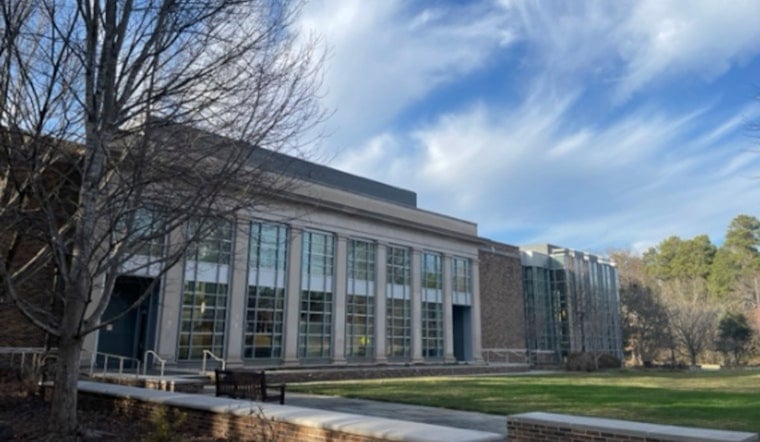
The Justice Department says Duke Law School broke federal civil rights law by using coded language in admissions essays and by tracking applicants' Pell Grant status as a way to sort candidates by race, according to a formal findings letter issued August 6. Federal investigators pointed to LSAT score gaps among admitted students in the 2023, 2024 and 2025 incoming classes as central evidence, alleging the law school kept pursuing race-conscious outcomes even after the Supreme Court barred the practice.
According to the News & Observer, the Justice Department found evidence of discrimination against white and Asian applicants across those three admissions cycles. Investigators reported that a Black applicant was 3.5 times more likely to be admitted than an Asian applicant with similar academic credentials, per the department's review. The department also said Duke's practices violated Title VI of the Civil Rights Act and the 2023 Supreme Court ruling in Students for Fair Admissions v. Harvard and UNC-Chapel Hill, which prohibits using essays or other proxies to recreate an unlawful racial admissions regime.
The numbers behind the finding are stark. Admitted Black applicants at Duke Law had median LSAT scores of 164 in 2024 and 166 in 2025, compared with 173 for Asian applicants and 172 to 173 for white applicants in both years, according to Campus Reform. Rejected white and Asian applicants, meanwhile, had median LSAT scores of 167 to 169 — higher than the median scores of admitted Black applicants in both cycles, the outlet reported. The Justice Department used those score differences as its primary measure of disparate admissions outcomes, per the News & Observer, and separately reported that median LSAT scores for admitted Black and Hispanic applicants trailed those of white and Asian students in 2024.
Essay Flags and Pell Grants Under Scrutiny
Investigators allege Duke made a deliberate effort to preserve racial outcomes in its incoming classes, according to the News & Observer, and the findings letter accuses the school of flagging whether essay answers mentioned diversity and whether applicants were Pell Grant recipients — federal need-based awards for undergraduate students. The Justice Department's letter also accused Duke of using labels including “diversity” and “services” to sort essay answers, and separately accused the school of using Pell Grant status itself as a racial proxy.
Assistant Attorney General Harmeet K. Dhillon of the Civil Rights Division, who signed the findings letter, asserted that using diversity-driven essay questions to identify preferred racial groups constitutes illegal discrimination under Title VI, according to the ABA Journal. Federal investigators also cited a November 2023 email from Duke Law Associate Dean for Admissions William Hoye discussing admissions strategy as evidence that administrators intentionally sought to preserve race-conscious outcomes after the Supreme Court's ruling, Campus Reform reported. Duke operates as a sub-awardee under a National Institute of Justice grant, which the Department of Justice says gives it jurisdiction to enforce Title VI compliance at the law school.
Duke said it was reviewing the Justice Department's letter and its conclusions carefully, according to the News & Observer. The school's response did not dispute or confirm the specific allegations. Duke Law's selectivity underscores the stakes: the school received 6,240 applications for 227 places in its latest published admissions cycle, extending 804 offers of admission, according to ICLG — an acceptance rate below 13%.
Legal Experts Split on What the Numbers Prove
Not everyone agrees the findings are conclusive. Vinay Harpalani said the Supreme Court's ruling does not ban diversity as a legitimate goal but bans using race as a category to achieve it, and he added that higher LSAT scores among white and Asian admitted students alone do not by themselves show intentional discrimination, per the News & Observer. Harpalani also said Duke can work hard to enroll a more diverse class without violating the Supreme Court's decision in SFFA.
Theodore Shaw offered a different frame, saying racial gaps in intergenerational wealth and employment opportunities reflect a long history of inequality, and that standardized test scores correlate strongly with parents' educational level and wealth. Shaw also said Asian applicants tend to outperform other racial groups on standardized tests, and he suggested Duke was targeted in part because of its elite status. Daniel Klasik characterized the Duke finding as part of the Justice Department's broader campaign against higher-education DEI initiatives, and he questioned the department's characterization of Pell Grants as a racial proxy. Jackie Gharapour Wernz said the Duke case presents a gray area involving race-related essays and resilience, noting that the Supreme Court's decision does allow universities to consider an applicant's discussion of how race affected their life — and permits schools to weigh socioeconomic status, zip code and other life experiences, so long as race itself is not the operative category.
Part of a Broader Federal Sweep
Duke Law's finding is the first Justice Department admissions finding aimed at a school outside medicine, according to the News & Observer. The Civil Rights Division began issuing admissions findings in May, starting with the medical schools at Yale University and UCLA, according to The Guardian. The department went on to issue findings against UC Davis School of Medicine in June and UC San Diego School of Medicine in July, the latter alleging the school improperly used “hardship” essay questions as a racial proxy, per the Los Angeles Times. UC San Diego denied wrongdoing and said its holistic review complies with federal law, while UC Davis disputed the June finding against it, maintaining its admissions criteria are fully lawful.
Unlike Duke, Yale, UCLA, UC Davis and UC San Diego have not reached a voluntary resolution with the department, though Yale was reportedly in discussions toward one, according to the News & Observer. The Guardian reported that the department opened civil rights compliance investigations into 15 medical schools nationwide in June to examine whether their admissions processes comply with Title VI. President Donald Trump signed a memorandum in 2025 requiring universities to report detailed admissions data by race, addressing what the administration described as hidden racial proxies and diversity statements, per the News & Observer.
The enforcement campaign has since moved beyond admissions offices entirely. Hoodline reported that the Justice Department expanded its post-SFFA push to scholarships on August 18, opening a compliance review into William & Mary over scholarship programs that allegedly favor applicants based on race and diversity interests, giving the school until September to submit internal records. That same week, the Department of Education issued a “dear colleague” letter warning school districts not to treat higher discipline rates for Black students as discrimination on their own, indicating that adjusting discipline policies to reduce racial disparities might itself amount to unlawful discrimination, according to the News & Observer.



