

























































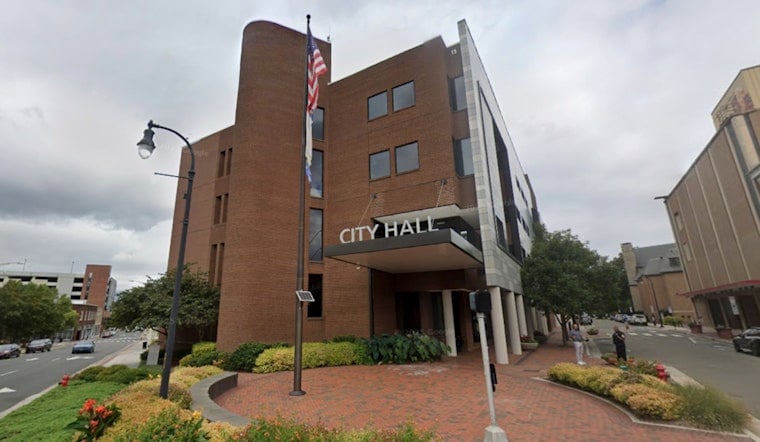
Durham's City Council voted 4-3 Monday to approve changes to the city's comprehensive plan, stripping the “D” designation from several policies that planning staff use to grade rezoning and annexation applications. The vote followed months of public hearings and came over objections from rural landowners who say the change removes a key layer of developer accountability just as southeast Durham grapples with strained infrastructure and polluted waterways.
The comprehensive plan functions as a rulebook for how Durham city and county should grow, and it has been used to review land rezoning and property annexation applications, according to the News & Observer. Under the prior framework, planning staff graded proposals against a consistency review checklist that included a “D” designation flagging policies developers had to meet. With that designation removed from several policies, staff will no longer formally grade developers against them, though the newspaper reports the underlying policies remain part of the broader comprehensive plan.
Mayor Leo Williams, along with council members Javiera Caballero, Carl Rist and Matt Kopac, voted for the changes. Council members Chelsea Cook, Shanetta Burris and Nate Baker voted against them, and the newspaper describes the split as reflecting a broader divide over how the city should manage its growth.
What Changed, and Why Staff Pushed for It
Planning staff argued that the policies losing their D status were either redundant, already covered by other ordinances, or too subjective for unelected staff to judge, per the News & Observer's reporting. City Manager Bo Ferguson wrote that the changes provide clarity, reduce inconsistencies, and are technical in nature. Council members who supported the update said they wanted to separate objective planning data from political decisions and pointed to what they described as a year-long public process behind the revisions.
The update follows a required biennial review under the city's planning framework: Policy 164, formerly Policy 166, mandates that the City-County Planning Department issue an Evaluation and Assessment Report roughly every two years to revisit consistency checklists and policy designations, according to the City of Durham. The Durham Planning Commission, which advises the council on rezoning and annexation cases, had already voted 7-4 in favor of the proposed changes in January. Aaron Cain told the council that assessing rural character in individual zoning or annexation cases is difficult and subjective — a rationale echoed by planning staff's broader case for narrowing the checklist.
State law adds weight to how those decisions get documented. Under North Carolina General Statute § 160D-605, municipal governing boards must approve a written plan consistency statement for every rezoning decision, explicitly stating whether a proposal aligns with the adopted comprehensive plan, according to FindLaw. That requirement remains in place regardless of the checklist changes, but the removal of the D markers alters what staff are formally grading against as they draft those statements.
Perry Farm Looms Large in the Debate
Opponents repeatedly pointed to the Perry Farm development on Kemp Road in southeast Durham as an example of growth outpacing infrastructure. The 280-acre project, approved in a 4-3 council vote in 2023, cleared the way for up to 665 single-family homes and townhouses, with roughly 3 percent — fewer than 20 units — designated as income-restricted affordable housing for 30 years at 80 percent of area median income, according to the 9th Street Journal.
Tina Motley Pearson said Perry Farm still lacks critical infrastructure. Christina Falcon Langley, who opposed removing the D designation from Policy 167, said doing so makes infrastructure capacity and community need optional guidelines rather than binding review criteria. Policy 167 requires that an area have necessary infrastructure for growth before development proceeds, per the News & Observer.
Supporters of the project have pointed to fire response times as evidence infrastructure exists: both Fire Station 17 and Fire Station Eight sit within a 10-minute drive of Perry Farm, faster than the national fire response standard of 6.9 minutes cited during the debate. Critics counter that response times alone don't capture the strain on water and sewer systems in the area.
Sewage Capacity, Sediment and a Federal Settlement
That strain has become concrete in recent months. Durham Water Management announced in February that wastewater infrastructure across a 5-square-mile area of east and northeast Durham had reached full capacity, placing new residential development approvals in that section on hold pending multi-year utility upgrades, according to a WRAL Facebook post. Residents raised concerns during the hearings about watershed impacts on Lick Creek and Falls Lake, the reservoir that supplies Raleigh's drinking water.
Lick Creek in southeast Durham is designated on North Carolina's 303(d) list as a federally impaired water body due to sediment pollution and poor aquatic insect diversity, and it discharges directly into Falls Lake, per the City of Durham. Sediment from the creek moves downstream into a branch of the reservoir. The pollution isn't hypothetical: in September 2025, Sound Rivers and the Southern Environmental Law Center secured a federal Clean Water Act settlement against the developer of the 216-acre Sweetbrier subdivision in Durham, obtaining $270,000 for land conservation and $80,000 in civil penalties over severe sediment pollution in the Lick Creek watershed, according to the Southern Environmental Law Center.
Riverkeeper advocates at Sound Rivers have also publicly disputed the city's own “B” stream health grade for Lick Creek, alleging in August 2024 that city testing relied on a single location far from active construction while environmental monitors documented severe sediment runoff across seven alternative sites. Durham County and city stormwater operations operate under North Carolina's Falls Lake Nutrient Management Strategy rules, which require municipalities to control nitrogen and phosphorus runoff into the Neuse River basin.
Rural Advocates Say They Were Shut Out
Pam Andrews, president of Preserve Rural Durham — a group she founded in February 2022 to organize rural landowners against expanding urban growth boundaries in southeastern Durham County — said she had studied the proposed changes for six months and expected more community conversation before the vote. Council member Sarah Chagaris wrote that a more transparent process with community and advisory-board feedback would have been beneficial.
Policy 120 requires the city to protect Durham's rural character outside the urban growth boundary, a provision residents cited repeatedly during the public hearing as they argued that removing policies from the checklist strips away developer accountability. Chelsea Cook, who voted against the changes, expressed frustration that pursuing objective criteria ignored the inherently subjective nature of community needs and vision. She noted that the policies losing their D status still exist and can technically still be applied — she simply objected to how the change was framed.
Carl Rist, who voted for the changes, said applicants want as much objectivity as possible during high-pressure hearings. The News & Observer notes that state and city housing projections from 2020 called for 60,000 new units by 2050 — a target community advocates said in late 2025 had already been met or exceeded once built, active and approved projects were counted, a statistic that has fueled arguments from both sides about whether Durham is still under-building or already overbuilding relative to its infrastructure.


