

























































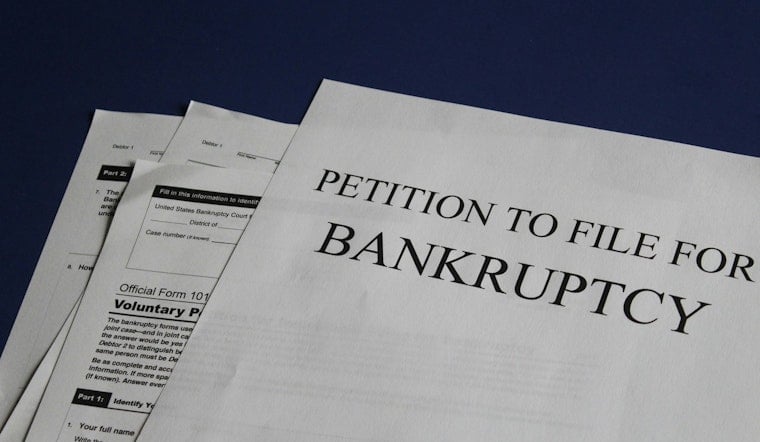
The Manhattan restaurant empire behind Trattoria Dell'Arte, Cafe Fiorello, and Bond 45 filed for Chapter 11 bankruptcy protection this month, reporting less than $100,000 in cash on hand as it scrambles to keep nine dining rooms and more than 800 jobs afloat. Fireman Hospitality Group, the company founded by the late restaurateur Shelly Fireman, listed estimated assets of just $1 million to $10 million against liabilities as high as $50 million in a filing that marks the largest New York City restaurant-empire crisis since 2020.
Twenty-two affiliated entities operating under the corporate umbrella S.M.F. Group Inc. filed voluntary Chapter 11 petitions on August 9 in the U.S. Bankruptcy Court for the Southern District of New York, according to The National Law Review. The company was first reported as filing for bankruptcy by FSR Magazine, and the case was later detailed by the New York Post, whose reporting on the filing anchors much of what's known about the company's finances. Fireman Hospitality operates Trattoria Dell'Arte, Cafe Fiorello, Bond 45, Paris Bar at Le Méridien, Cafe Paradiso, Le Jardin rooftop, two Brooklyn Diner locations in Manhattan, and a Washington, D.C. location, with more than 2,000 combined seats across the group.
A Cash Crunch Years in the Making
Court declarations show that as of March, the group was carrying more than 30 outstanding merchant cash advance loans across 11 separate lenders, totaling at least $5.5 million in debt, per filings reviewed in SDNY Bankruptcy Court records. The group began using merchant cash advances in 2024, and the debt piled up fast enough that Fireman Hospitality now describes the advances in court filings as criminally usurious and unenforceable loans. The company also owed $3 million in sales taxes and $6 million in rent, and faced nearly $10 million in secured claims overall, the Post reported.
The immediate trigger for the bankruptcy filing was a credit squeeze in late July, when payment processors withheld at least $6 million in merchant card transactions after defaulted merchant cash advance lenders sent redirect notices instructing Amex and other processors to withhold payments. That freeze knocked the company's cash reserves down below $100,000 almost overnight, cutting off the daily operating funds that keep all nine restaurants running, according to the same court filings.
Founder's Death Preceded the Collapse
Shelly Fireman died in October 2025 at age 93, leaving his estate holding all or a majority interest across the 22 debtor entities now in restructuring, per Restaurant Business. Fireman founded the company and remained active in developing new concepts until his final months, opening Paris Bar in 2025. The Post's reporting notes that the company cited cash-flow problems that began before the 2020 lockdowns and turned critical only after its larger restaurants lost substantial business — former Gov. Andrew Cuomo and former Mayor Bill de Blasio ordered most public venues closed in March 2020, and performance venues near Fireman's theater-district restaurants continued operating at limited capacity even after indoor dining resumed.
Fireman Hospitality Group had received federal Paycheck Protection Program loans during the pandemic, and by 2025 its revenue had returned to normal levels, according to the Post's account. Still, the company struggled to make rent payments to some landlords even as business improved. CEO Ben Grossman had said at the time that the group's other restaurants were doing well, even as the flagship Redeye Grill was already in trouble.
Redeye Grill's Closure Foreshadowed the Fall
The 30-year-old Redeye Grill, which occupied a prime Seventh Avenue footprint at West 56th Street directly across from Carnegie Hall, closed permanently in July after negotiations with landlord Vornado Realty Trust failed to produce a new lease, as previously reported by Hoodline. Trattoria Dell'Arte, another Fireman property, sits directly across the street from Carnegie Hall, while Cafe Fiorello faces Lincoln Center and stands as the oldest restaurant in the portfolio, having opened in 1974 and operated continuously for more than 50 years. Bond 45 sits on the same block as three Broadway theaters, underscoring how tightly the company's footprint is woven into Manhattan's theater and performance districts.
Restructuring Plan and a Potential Conflict
To manage the case, Fireman Hospitality is turning to turnaround firm SierraConstellation Partners, which was first retained for financial advisory work in March, five months before partner Jordan Meyers was formally named Chief Restructuring Officer on August 9. Meyers, who also serves as restructuring officer of SierraConstellation Partners, said the company will continue providing dining experiences to customers throughout the process. A bankruptcy judge has authorized the company to obtain financing needed during the case and to continue operating in the ordinary course, giving all existing restaurants the ability to remain open for now.
Fireman Hospitality is seeking court approval for a debtor-in-possession financing package of up to $12.7 million from prepetition lender FHGRF LLC — an entity in which CEO Ben Grossman holds a 35.8% equity interest, according to the SDNY court filings. The package includes $6.5 million in new money alongside rolled-up prepetition debt, a structure that ties the company's emergency lifeline directly to its own chief executive. Court filings indicate that if the Chapter 11 case were to revert to Chapter 7, the company would cease operations and liquidate its assets entirely.
A Legal Fight Over ‘Usurious' Debt
Fireman Hospitality's usury defense faces a steep legal climb. Under New York Appellate Division precedent reaffirmed in July, merchant cash advance contracts are classified as revenue purchases rather than usurious loans when they include genuine reconciliation provisions, lack fixed repayment terms, and place financial risk on the buyer, according to MonitorDaily. New York's criminal usury cap sits at 25% interest, but courts have routinely exempted properly structured merchant cash advances from that limit, meaning Fireman Hospitality's claim that its debts are criminally usurious and unenforceable will likely be tested against that same legal standard as the case proceeds.
The company's troubles also reflect a broader squeeze on full-service dining nationwide. Industry research from Technomic, published in 2025, found that the total number of full-service sit-down restaurants nationwide shrank by nearly 18% between 2019 and 2025, with bankruptcies eliminating roughly 350 sit-down chain locations in 2024 alone, per Restaurant Business. For now, Fireman Hospitality Group says all of its existing restaurants remain open, and the company's stated plan is to restructure its debt to keep the nine remaining locations — and the more than 800 employees who work in them — operating through the bankruptcy process.





