

























































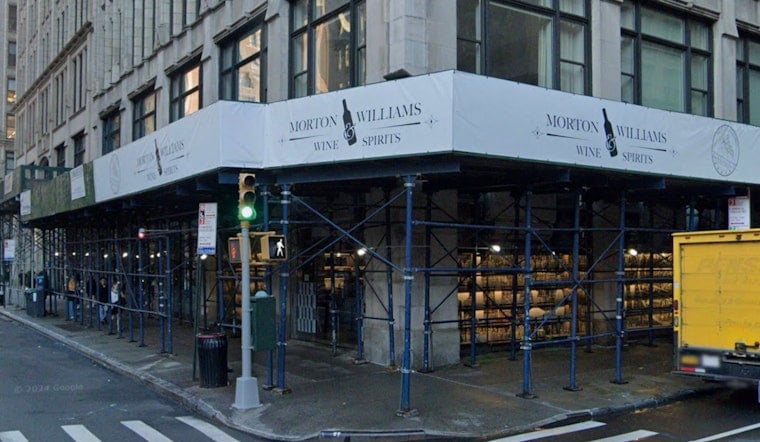
Six ground-floor retail units in a Flatiron District condo building are at the center of a new foreclosure fight involving developer Yitzchak Tessler, whose once-sprawling New York City real estate empire has been shedding properties to lenders and creditors for the past two years. The condo board at 260 Park Avenue South alleges Tessler has not paid common charges on the commercial units for years, with a lawsuit claiming he owes nearly $675,000. The building's retail tenants include a Morton Williams wine store, a FedEx branch, Spa Fore, and Nemo Tile.
The lawsuit, first detailed by The Real Deal, is only one of two legal threats now bearing down on Tessler's six commercial units at the East 21st Street building. New York City also placed a lien on Tessler for unpaid property taxes, a balance that exceeded $225,000 in 2025, and BNY has since bought that tax lien and sued him for the outstanding balance in a case that remains ongoing. Tessler has not filed a response in the condo board's case, nor did he respond to a request for comment from the outlet.
Retail tenants at the building are not expected to be immediately impacted even if Tessler loses control of the units, according to the report. Tessler redeveloped what had been two office buildings into the 12-story, 109-unit condominium at 260 Park Avenue South, completing the conversion in 2006 and selling off the residential portion for more than $190 million, according to the offering plan.
How the Debt Stack Works Against Him
The legal jockeying matters because of how New York law ranks competing claims on a property. Under New York Real Property Law § 339-z, a condo board's lien for unpaid common charges sits behind municipal tax liens and recorded first mortgages, but ahead of second mortgages and general creditor claims, according to the New York Real Estate Journal. That means if the condo board successfully forecloses and sells the units at auction, the winning bidder would take title subject to the existing tax claims and any superior mortgages still attached to the property.
New York also tightened the rules condo boards must follow before they can even get to that point. Governor Kathy Hochul signed Assembly Bill A3470 in October 2025, amending Real Property Law § 339-aa to require boards to issue a mandatory written 90-day pre-foreclosure notice in 14-point type before initiating foreclosure actions over unpaid common charges, according to legal analysis from Hinshaw & Culbertson LLP. The law was designed to give unit owners formal warning and time to resolve arrearages before litigation begins.
A Pattern Across Tessler's Portfolio
The Flatiron dispute lands amid a broader unwind of a New York City portfolio that once carried a value near $1 billion. Tessler has repeatedly faced lender actions and property losses in recent years, and he has scaled back the pace of his development activity as a result.
The most severe example came at 172 Madison Avenue, where a federal bankruptcy court judge confirmed a reorganization plan in August 2025 under which Tessler surrendered 12 unsold units — including five unfinished penthouses — to distressed-debt firm ArcPe, which had foreclosed on the units. Tessler had originally taken out an $87.6 million construction loan from Deutsche Bank for the 34-story luxury tower in 2018, and that loan defaulted in March 2024 with an unpaid principal balance of $43.6 million before it was transferred to ArcPe, according to The Real Deal's reporting. Brokers from Ryan Serhant's firm had been retained to market the unsold luxury units in an attempt to generate sales before the surrender, including promotional events held in the building's raw penthouse space.
More recently, Tessler and Cornell Realty Management sold the 110,000-square-foot office-and-retail building at 206 Kent Avenue in Williamsburg to former lender G4 Capital Partners for $65 million in April, as Hoodline previously reported. The Trader Joe's-anchored building, which is 60 percent leased, is now controlled by G4 Capital, which intends to continue pursuing a rezoning effort that would allow the site to expand from five stories to 14 stories and convert office space into 143 residential units.
What Comes Next
It remains an open question whether Tessler will respond to the pending actions at 260 Park Avenue South or whether commercial lenders will step in to protect the underlying debt on the property, as they have at his other troubled sites. Tessler, who began his career in the diamond industry as a diamond polisher before moving into Manhattan real estate development, built his reputation converting office buildings into luxury condominiums during New York's 2000s development boom. Whether that legacy survives fully intact may now hinge on how the Flatiron litigation and the city's tax lien case play out.



