

























































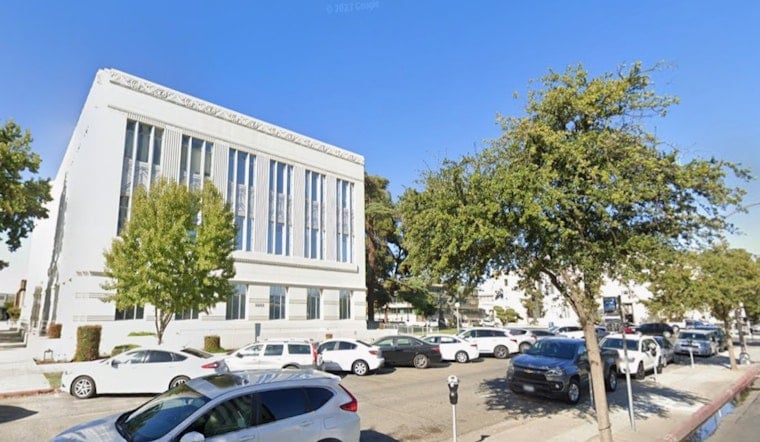
Fresno County officials are threatening to take Sacramento to court after Governor Gavin Newsom signed a law this past week ordering the county to place a half-cent sales tax measure on the November ballot, whether local supervisors wanted it there or not. The law, Assembly Bill 1923, cleared the state legislature and landed on Newsom's desk within days, and county leaders say it strips them of authority over their own election process.
AB 1923 requires Fresno County to place the citizen-backed “Better Roads, Safe Streets” initiative before voters this November, according to the New York Post. The bill passed the state Senate 27-8 and the Assembly 54-16 on August 6, and Newsom signed it as an urgency measure that same day, according to Fresnoland. Fresno County Board Chairman Garry Bredefeld framed the fight in stark terms: the dispute, he said, concerns whether Fresno County governs itself or can simply be overruled by Sacramento.
A Bill That Started as Hospital Legislation
The speed of AB 1923's passage is itself part of the controversy. Lawmakers replaced the bill's original language, which concerned California's distressed hospital loan program, with the Fresno County election mandate through what is known as a gut-and-amend process, swapping out a bill's substance late in the legislative session. Fresnoland's reporting shows the rewrite happened just three days before final passage, engineered by Assemblymember Esmeralda Soria to force the ballot placement through before time ran out.
State Senator Anna Caballero also backed the measure, and Soria has defended it publicly, calling the legislation a win for the democratic process and voting rights. But Bredefeld sees it differently, warning that AB 1923 may allow Sacramento to dictate how Fresno conducts its own local elections, a claim the New York Post's reporting also lays out. He and Supervisor Buddy Mendes announced at an August 6 press conference that the Board of Supervisors will consider authorizing litigation against state officials at its meeting Tuesday, per Mid Valley Times. County officials argue the law violates state constitutional restrictions against single-county special legislation and improperly interferes with local election authority, the outlet reports. An election-law specialist is expected to brief supervisors on the legal options at that same Tuesday meeting.
Why the County Delayed in the First Place
The clash traces back to July 14, when Fresno County's Board of Supervisors voted 3-2 to order a 30-day staff study of the Better Roads, Safe Streets initiative instead of placing it directly on the ballot. Supervisors Bredefeld, Mendes, and Nathan Magsig backed the study, according to Streetsblog California's account of the vote. That delay pushed official board action to August 11, blowing past the state's August 7 deadline for submitting local measures to the November ballot, and it was that missed deadline that triggered Sacramento's intervention.
The initiative supervisors delayed did not originate with county government at all. It was organized in February by the Moving Forward Together coalition, backed by local labor unions, community groups, and former Fresno Mayor Ashley Swearengin, according to Streetsblog's coverage. The group gathered more than 32,000 signatures, which Fresno County Registrar James Kus certified as valid on July 8 after a full manual count was required when the measure failed a random sample test.
What The Tax Would Actually Fund
Better Roads, Safe Streets is a proposed 30-year half-cent sales tax projected to raise roughly $7.4 billion to $7.5 billion for local infrastructure if voters approve it in November. The plan would direct 65% of funds to local street and road repairs and 25% to public transit, plus a $400,000 annual funding floor for smaller rural municipalities, according to Fresno Building Healthy Communities. It is designed to replace Measure C, the existing half-cent sales tax set to expire in June 2027.
Measure C has a long track record in the region. Voters first approved it in November 1986 with 57.6% support and reauthorized it for another 20-year term in 2006; over its history it generated more than $2 billion in local revenue and leveraged roughly $8 billion in matching state and federal transportation grants, per The Business Journal. A prior effort to renew it collapsed at the ballot in November 2022, when a government-drafted 30-year renewal aiming to raise $6.8 billion through 2057 failed after community groups argued it favored highway expansion over local repairs and transit, according to Ballotpedia's account of that election.
Fresno City Hedges With Its Own Backup Measure
The legal uncertainty has rippled into city politics as well. Fresno Mayor Jerry Dyer and city officials filed a backup citywide half-cent general sales tax measure on August 7, intended to keep transportation funding available if the countywide tax gets blocked in court or misses election deadlines, according to GV Wire. Dyer had previously promised to withdraw the city measure if the county tax qualified for the ballot, but the threat of litigation has changed his calculus.
The Legal Loophole Behind the Fight
The entire strategy of pushing this tax through as a citizen initiative rather than a government-sponsored measure rests on a 2017 California Supreme Court decision, California Cannabis Coalition v. City of Upland. That ruling found that the state constitution's two-thirds vote requirement for local special taxes under Proposition 218 does not apply to citizen-sponsored ballot initiatives, meaning a citizen-sponsored special tax can pass with a simple majority while a local-government-sponsored special tax generally still needs two-thirds approval, per Ballotpedia's summary of current California court rulings.
That legal distinction is also why the timing is so urgent. California voters will separately decide Proposition 43 on the same November ballot, a measure that would amend the state constitution to require a two-thirds supermajority for citizen-initiated local special taxes starting January 1, 2027. AB 1923's passage allows Fresno County's initiative to reach voters this November under the current simple-majority rule rather than the tougher threshold Prop 43 could impose, according to MultiState's analysis of the ballot measure. Advocates have noted that pushing the Fresno vote to 2028 would make passage substantially harder under a two-thirds standard.
For now, the proposed road tax is still headed toward the November ballot unless a judge intervenes to stop the state's intervention. Fresno County could still take Sacramento to court, and supervisors are expected to weigh that option at Tuesday's board meeting, with the outcome likely to shape not just Fresno's roads but the limits of state power over local elections statewide.




