

























































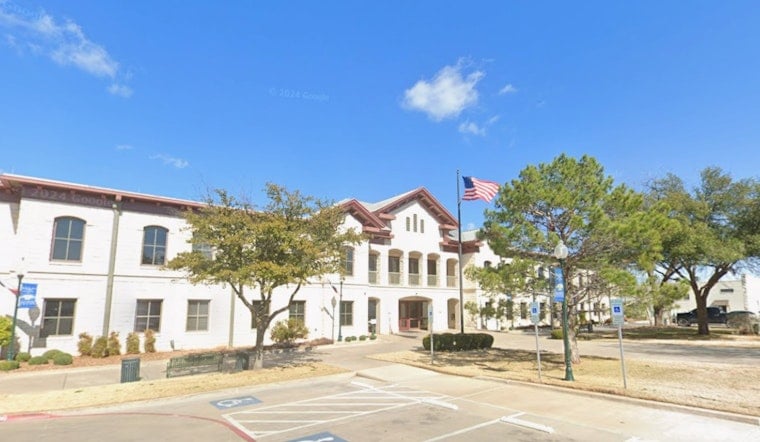
Five elected officials in Granbury, Texas, now face a choice between resigning, fighting a recall election, or digging in for prolonged litigation, after the city agreed to formally present recall petitions to its council but missed the state deadline to place any resulting election on the November ballot. Mayor Jim Jarratt, Mayor Pro Tem Bruce Wadley, and council members Greg Corrigan, Skip Overdier, and Zeb Ullom are the named targets of five separate recall petitions that grew out of local fury over a sprawling artificial intelligence data center project planned just outside town.
According to the Dallas Express, petition organizers filed the recall petitions on July 13, but the city announced on July 28 that the petitions had not been certified, arguing they failed to satisfy signature and specificity requirements under the Texas Election Code and the Granbury city charter. Under Granbury City Charter Section 4.08, the city secretary is required to present a recall petition to the council within 15 days after filing — a provision now at the center of the dispute, as reported by the Dallas Express.
Organizers Daniel Piatt and Janet Logsdon filed a writ of mandamus on August 12 in the Second Court of Appeals in Fort Worth, represented by attorney Art Martinez de Vara, according to Hood County News. In an August 24 court filing, city special counsel Darrell Noga stated that City Secretary Carla Walker would present the petitions to council within 15 days, but Martinez de Vara countered that the charter's 15-day window had already expired weeks earlier, counting from the original July 13 filing, per KERA News.
A Deadline Already in the Rearview Mirror
The dispute over when the clock started matters because Texas Election Code Section 143.007 set August 17 as the statutory deadline to order any local measure onto the November 3 uniform election ballot, according to KERA News. Because that date passed before Granbury presented the petitions to council, petition attorneys are now asking the appellate court to use emergency authority to force a November election date anyway, per the same report. Hood County Republican precinct chair Kolton Krottinger said the 15-day deadline began the moment petitions were filed on July 13, and he criticized the city's handling of the process, per the Dallas Express.
City Secretary Carla Walker has agreed to present the petitions within 15 days, and the city told the court that additional investigation and legal review led to that decision, according to the court filing cited by the Dallas Express. The Second Court of Appeals has not issued a final ruling declaring the petitions valid or setting an election date. Petition organizers have asked the court simply to resolve the timing question and require an election at the earliest lawful date, while separately asking the Second Court of Appeals to order Granbury to recognize the petitions and let the recall process move forward.
What Happens If the Petitions Stand
If the appellate court sides with organizers, the Granbury City Council would be required to order an election on the earliest date allowed under state law unless a targeted official resigns first — and any targeted official could request a public hearing before that happens. City Manager Chris Coffman reportedly discussed resignation, a recall election, or retaining personal attorneys as the potential paths facing targeted officials, in a recording posted by the Hood County Express and cited by the Dallas Express. Coffman was also quoted as estimating private legal representation could cost roughly $10,000 per official.
Even if the appellate court eventually mandates a recall vote, each targeted official would retain the right to challenge the underlying petition allegations in state district court — meaning additional litigation could follow no matter how the timing question is resolved, per Hood County News's research.
The Data Center Behind the Fury
The recall campaign grew out of opposition to Project Patriot, a proposed AI data center and power generation campus that Dallas-based Bilateral Energy LLC wants to build on roughly 2,000 to 2,100 acres at Knox Ranch along U.S. Highway 377 — land Granbury annexed from Hood County in January, according to Voices of Granbury as cited by the Dallas Express. Residents alleged the annexation happened without adequate public notice, according to Hood County News. Local reporting also disclosed a letter from Coffman to Bilateral Energy discussing prospective incentives for a $2.7 billion first phase of the project, including a 10-year, 60% tax abatement and a 1% city revenue share on electricity payments — though city officials have maintained no official tax abatement agreement has been formally submitted or approved.
Thousands of Granbury residents signed the recall petitions, according to Krottinger, and the broader campaign — organized under the banner of Grassroots Granbury — collected more than 5,000 total signatures across all five petitions, exceeding 1,300 per targeted official. Yet Walker initially verified only a fraction of those: 26 signatures for Jarratt, 44 for Wadley, 26 for Corrigan, 29 for Overdier, and 28 for Ullom, with the city rejecting thousands over technical address omissions such as leaving out the word Granbury.
Not Everyone Agrees Who Should Go
The recall push has exposed splits even among critics of the data center deal. Nate Criswell, president of the Hood County Patriots PAC and a former Hood County Republican Party chairman, has said organizers should recall everyone except Jarratt, opposing the mayor's removal while supporting the ouster of the other four officials. Criswell warned that recalling Jarratt could end up benefiting Tony Mobly, a former Granbury mayor pro tem who lost the 2022 mayoral race to Jarratt.
Voices of Granbury disputed when the charter's 15-day deadline actually began and issued a statement on the city's decision on Monday. The city of Granbury had not responded to the Dallas Express before that outlet's story was published, and the Dallas Express separately contacted the city for comment on the recorded remarks and court proceedings.
A Regional Pattern Beyond Granbury
Granbury's fight is not happening in isolation. Hood County faces at least eight proposed data center developments spanning more than 7,600 acres — roughly 12 square miles — fueling countywide debates over groundwater usage, noise, and strain on the regional power grid, according to The Texas Tribune. Developers estimate major sites in the area could eventually consume up to 3 gigawatts of power, per the same reporting.
Many Granbury residents were primed for this fight by years of complaints over noise from an existing 300-megawatt Marathon Digital bitcoin mining site, where cooling fans have generated a long-running noise war and quality-of-life complaints, per Hoodline. Neighboring Hill County took a different approach, enacting an emergency one-year moratorium on new data center and energy storage construction in May to study environmental and infrastructure impacts — a move Hood County residents have frequently cited while petitioning their own leaders. City officials have also pointed to Texas municipal development law, under which a developer's submission of a preliminary concept plan vests the property under local land-use rules already in place, potentially limiting the city's ability to retroactively block Project Patriot even with new ordinances.
The Granbury fight is not the only North Texas recall drama playing out this election season. McKinney voters are separately pursuing an effort to recall Mayor Bill Cox and three city council members, underscoring how data center growth and local government trust have become flashpoints across the region. For now, Granbury's targeted officials, the city council, and the petition organizers are all waiting on the Second Court of Appeals to decide whether — and when — voters will get their say.





