

























































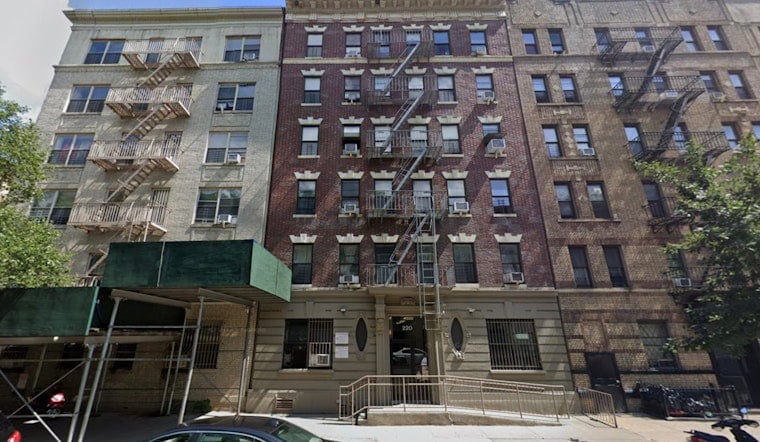
The only elevator inside a 67-unit Harlem apartment building has been out of service since September, and tenants say they've been left to climb the stairs ever since — including a 68-year-old retired NYPD clerk who uses a walker and hasn't been able to reach her fifth-floor apartment. Linda Crowell, who has lived in the building at 220 Bradhurst Avenue with her husband for 25 years, says the ongoing outage has upended her daily life. “I feel like a homeless person, even though I have a place to live,” Crowell said.
Crowell's account was first reported by ABC7 New York, which detailed her repeated efforts to get the elevator fixed. She said she has filed repeated 311 complaints and personally contacted the building's management company, Wave Crest Management, with little result. Neighbor Jose Polanco, who is recovering from back surgery, told the outlet that using the stairs has been extremely uncomfortable and that the elevator “should have been fixed a long time ago.”
Elevator-related complaints at the building date back to 2009, and New York City Department of Buildings records reviewed by the station show nine pages of elevator complaints tied to the address. The building is owned by Northern Manhattan Equities LLC, an entity that, according to background data reviewed for this story, has accumulated 840 HPD records and 79 open HPD violations as of August 2026 tied to the property, per Apartment Fax.
A Class C Violation Nearly a Year in the Making
Under the New York City Housing Maintenance Code, a broken elevator in a multi-story building with elderly or disabled residents is classified as a Class C “immediately hazardous” violation, one that legally requires landlords to fix the problem within 24 hours of notice, according to Elevator Uptime. At 220 Bradhurst Avenue, the outage has instead stretched on for nearly a year.
On July 31, city building inspectors found the building's only elevator out of service and inoperative, and had been for several months, the station's report notes. The Department of Buildings issued a summons to Northern Manhattan Equities that same day, carrying a standard penalty of $6,250. It's not the owner's only regulatory headache — Northern Manhattan Equities has accumulated 206 construction-related summonses on the city's Office of Administrative Trials and Hearings docket, including 58 currently in default, per city records.
Wave Crest Management posted a notice on the broken elevator acknowledging the disruption and told the station that ownership was seeking the necessary funding to make repairs. Northern Manhattan Equities had not responded to the outlet's requests for comment as of Tuesday.
Withholding Rent Led to a Lawsuit
Frustrated by the lack of progress, Crowell stopped paying her $1,060 monthly rent, saying she was withholding it because she wasn't receiving the elevator service she's entitled to. Her landlord responded by suing her for nonpayment, and a hearing is scheduled for October 8. New York State law does allow landlords to sue tenants who withhold rent, even when the underlying complaint concerns habitability.
New York Real Property Law § 235-b guarantees an unwaivable implied Warranty of Habitability in every residential lease, giving tenants like Crowell grounds to seek rent reductions over the lack of elevator service — but withholding rent directly carries real risk, since tenants must then raise habitability as an affirmative defense in nonpayment court, according to the New York State Attorney General's office. Tenants facing this kind of standoff have other options that don't carry the same eviction risk: they can file a $45 HP Action in NYC Housing Court to force a court-ordered inspection and daily penalties against a noncompliant landlord, per the NYC Housing Court, or file a service reduction complaint with the state Division of Housing and Community Renewal to get rent officially reduced and frozen until service is restored.
The city's Department of Housing Preservation and Development also has discretionary power, through its Emergency Repair Program, to send in independent contractors to fix hazardous conditions like a dead elevator when a landlord won't act — then bill the owner and place a tax lien on the building for unpaid costs, according to HPD. Why that program has not yet stepped in at 220 Bradhurst Avenue, or why the Department of Buildings summons has not forced compliance, remains unclear.
Neighbors Say They've Been Left to Fend for Themselves
Miosoti Valazquez, another resident, said she has contacted building management and the elevator department directly, and has also sought help from New York City and “anyone who could help.” The building's single elevator, tenants note, is the only way many residents can reach their units without climbing multiple flights of stairs — a burden that falls hardest on older tenants and those with mobility issues like Crowell and Polanco.
The dangers of neglected elevators in upper Manhattan housing are not hypothetical. In September 2025, an elevator malfunction during a high-rise fire in East Harlem forced FDNY firefighters to carry equipment up 19 flights during a response that ended in a resident's death, according to Hoodline's earlier reporting. That case underscored how elevator failures can escalate from an inconvenience into a life-safety emergency, particularly for residents who cannot easily use stairs.
Citywide, the scale of the enforcement challenge is significant: New York City regulatory agencies issued more than 120,000 housing maintenance code violations through HPD and over 45,000 building violations through the Department of Buildings in 2023 alone, according to Building Health X. For now, Crowell and her neighbors at 220 Bradhurst Avenue are left waiting — for repairs, for funding, or for a court date that could determine whether her rent withholding holds up as a legal defense.





