

























































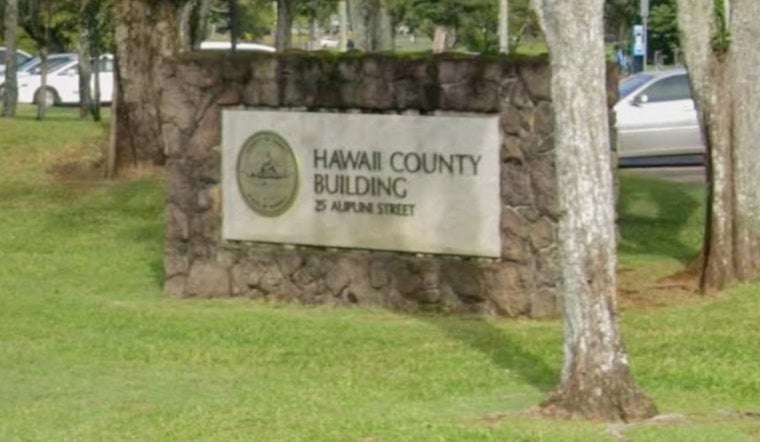
Hawaii County's finance committee deadlocked 4-4 last week on a bill that would carve out a brand-new property tax class for homeowners who rent out rooms in their primary residence to short-term guests — and forgive years of unpaid taxes for hosts who never registered in the first place. Bill 173, introduced by Councilmember Heather Kimball, now heads to the full council with no clear consensus on whether the amnesty is smart policy or a slap in the face to owners who already followed the rules.
The measure would add a bed and breakfast classification to the county's real property tax code, applying to homeowners who rent part of their primary residence for stays of less than 180 days, which is how Hawaii County defines a short-term rental. As reported by the Honolulu Star-Advertiser, the bill is designed to provide tax relief for local residents who depend on income from hosted short-term rentals, distinguishing them from unhosted vacation rentals that operate more like standalone commercial units. Councilmember Lisa Miura reported that Bill 173 would create the county's 11th real property tax class, and once tiers are factored in, the total number of real property tax classes would climb to 13.
An Amnesty Meant to Draw Hosts Out of the Shadows
Beyond the new tax category, Bill 173 would offer amnesty to property owners who have never registered their rental units, waiving rollback taxes, penalties and interest for those who come forward. Kimball said the amnesty provision could incentivize registration, and county estimates cited in the bill suggest more than 2,000 property owners may qualify for the new classification and amnesty, compared with more than 40,000 other homeowners across the island. To qualify, property owners seeking amnesty would need to register their units or stop operating by December 30, 2026.
Kimball told the committee the eventual bed-and-breakfast tax rate should land somewhere above the long-term rental category and below the residential classes, though the exact rate would still need to be set by the county council. That framing reflects the county's broader effort to treat resident-hosted rentals differently from commercial operators, an approach the Grassroot Institute of Hawaii endorsed in April testimony, arguing hosted rentals let residents earn supplemental income from tourism while affecting long-term housing supply less severely than unhosted units.
Fairness Fight Splits the Committee Down the Middle
Not everyone on the committee bought the amnesty argument. Councilmember James Hustace, who voted against the bill, said waiving back taxes could be unfair to property owners who previously complied with the law, and he specifically opposed the amnesty element even as the committee debated the broader tax class. Councilmember Rebecca Villegas, who also voted no, said the community faces real difficulty balancing tax rates against private-property uses — a tension that has defined much of the island's rental debate for years.
The finance committee ultimately split 4-4, with Kimball, Jenn Kagiwada, Matt Kaneali‘i-Kleinfelder and Michelle Galimba voting in favor, and Hustace, Villegas, Ashley Kierkiewicz and Dennis Onishi voting against. Councilmember Holeka Inaba was excused from the vote. Because of the tie, the finance committee gave Bill 173 an unfavorable recommendation, though the bill will still be sent to the full council for further consideration. Council members generally supported the underlying goal of the bill even where they disagreed on its mechanics, and several questioned whether the current approach is the best way to incentivize affordable long-term housing without harming residents who rely on rental income.
Assessment Cap Stripped Out, Deadline Questioned
Bill 173 originally included a provision capping annual property assessment increases at 3 percent for qualifying bed-and-breakfast properties, but the finance committee voted to amend the bill by removing that cap. Miura said implementing the cap would have been challenging for her department, while also noting that moving forward without it is possible within the county's current program without major added cost. Miura also questioned whether the December 31 deadline tied to the amnesty period would be realistic, and separately asked whether there would be enough time to notify potentially qualifying property owners before it takes effect.
The tax bill is not moving through the council in isolation. It arrives as Hawaii County transitions to mandatory registration for all short-term rentals under Ordinance 25-50, which set annual registration fees of $250 for hosted rentals and $500 for unhosted rentals and established potential fines of up to $10,000 for unpermitted operators, according to Big Island Now. The county pushed its mandatory registration enforcement date to September 1, 2026 after contracting technology firm Deckard Technologies to build its digital registration portal, and a companion measure, Bill 175, would add a four-month grace period through December 31 waiving registration violation fees while shifting oversight from the Finance Department to the Planning Department.
Zoning Reform and Statewide Tax Pressure Loom in the Background
A separate zoning measure, Bill 147, received favorable recommendations from both the Leeward and Windward Planning Commissions in July and would align the county's zoning code with Ordinance 25-50 by redefining short-term rentals as stays under 180 days for both hosted and unhosted units, according to Citizen Portal. That zoning overhaul traces back to Ordinance 2018-114, or Bill 108, which in 2018 restricted unhosted vacation rentals in residential and agricultural zones while allowing existing operators to continue under Nonconforming Use Certificates, as Honolulu Civil Beat has reported. Hosted rentals were largely left unregulated until this recent wave of legislation, and the county's authority to act stems from a 2024 state law, Senate Bill 2919, that gave Hawaii's four counties expanded power to regulate, restrict or eliminate short-term vacation rentals in residential and multi-family zones.
The financial stakes for hosts remain steep regardless of how the property tax question shakes out. Short-term rentals in Hawaii County already face a combined tax rate of roughly 18.5 percent, made up of the state's 11 percent Transient Accommodations Tax, a 3 percent county TAT surcharge, and a 4.5 percent General Excise Tax. That state TAT rate rose from 10.25 percent to 11 percent this year under Act 96, a change the Hawaii Department of Taxation says created a dedicated green fee expected to generate more than $100 million annually for climate mitigation, beach restoration and wildfire prevention. Against that backdrop, the county's baseline Homeowner property tax rate sits at $5.95 per $1,000 of assessed value for the current fiscal year, the rate against which council members are now weighing where a new bed-and-breakfast classification should fall.



