

























































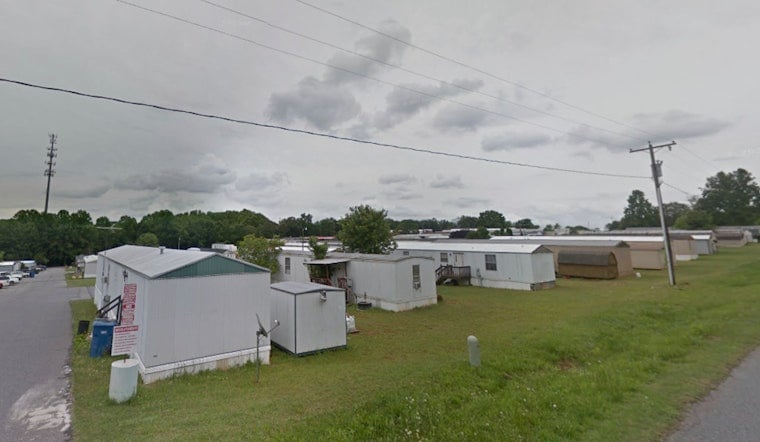
Residents of Hickory Place Mobile Homes in Hickory, North Carolina say they received end-of-lease notices giving them until September 1, 2026 to pack up and leave, just weeks after the property changed hands. Families who thought they had stable, affordable housing are now scrambling to figure out where they'll go next, with some homes still needing to be moved off the lot entirely.
Destiny Fuller, who has a four-month-old daughter, is among those who received the notice. Kari Wilkie, who has three children, told WSOC-TV reporter Dave Faherty that the timeline simply doesn't work for families with kids trying to find another place to live. Justin Powell, who has a month-to-month lease, said he initially thought the notice was a joke — until the property manager confirmed he had to be out by September 1 and later told Faherty he was trespassing when he tried to ask more questions.
Not every resident even received a notice, according to the station's report, adding confusion to an already chaotic situation. Several tenants say they are current on their rent payments, and the notices reportedly warn that an eviction will be filed against anyone who hasn't vacated by the deadline. Some of the homes on the property are described as being in bad shape and infested with bugs, underscoring the precarious conditions some residents were already living in before the notices arrived.
A $1.8 Million Sale Behind the Scramble
County records show the property sold on July 13, 2026 for $1.8 million, even though Catawba County's tax assessed value for the land is just $481,000, according to Dave Faherty's reporting. The buyer, Hickory MHC Land, is based in Delaware. Before the notices went out, residents were paying between $750 and $1,100 a month in rent — modest by local standards and a fraction of what comparable housing costs nearby.
The property manager for Hickory Place declined to comment further on the reason behind the notices but said the situation will be handled properly and that residents will be assisted, per the same account. Hickory's mayor said no one from the mobile home park has contacted the city about any issues there.
What North Carolina Law Actually Requires
The two-week timeline residents describe appears to conflict sharply with North Carolina's statutory notice requirements for manufactured home lot rentals. Under North Carolina General Statutes § 42-14, landlords ending a tenancy that involves only the rental of a space for a manufactured home must give at least 60 days' notice before the end of the rental period, regardless of whether the lease is month-to-month, according to the North Carolina General Assembly. That stands in contrast to shorter notice periods the law typically allows for other lease types — two days for a week-to-week lease, seven days for month-to-month, and 30 days for year-to-year arrangements.
If the new ownership intends to convert the community to another land use that would require the homes to be moved, the bar is even higher. Under N.C. Gen. Stat. § 42-14.3, an owner converting a community of five or more manufactured homes must give 180 days' written notice to both tenants and the North Carolina Housing Finance Agency before requiring anyone to leave, according to the North Carolina General Assembly. Failing to provide that 180-day notice can serve as an affirmative legal defense against eviction. Even after a magistrate enters an eviction judgment for a mobile home lot, tenants still have 10 days to either move the home or appeal to district court and post a rent bond before a sheriff can execute a Writ of Possession, according to Legal Aid of North Carolina, which also notes that self-help evictions by landlords are prohibited under state law.
Attorney Says Tenants Should Check Their Options
Action 9 attorney Jason Stoogenke said tenants should start by reviewing the termination provisions in their own leases, and said he is checking whether any exceptions might apply to the situation at Hickory Place, per WSOC-TV's report. That advice matters given how many residents say they never signed anything formal to begin with, and how differently the notice periods can play out depending on lease type.
A Statewide Pattern of Vulnerable Renters
The dispute lands amid growing scrutiny of mobile home park protections statewide. North Carolina lawmakers introduced Senate Bill 518, dubbed the Mobile Home Park Act, during the 2025–2026 legislative session to expand tenant protections, mandate written leases, require 60-day notice for rent increases, and create state dispute resolution mechanisms, according to the Legislative Reporting Service at UNC Chapel Hill.
Catawba County already faces significant eviction pressure. The North Carolina Housing Coalition recorded 1,459 eviction filings among renter households in the county in its 2026 county profile, ranking it 35th out of 100 North Carolina counties for eviction activity. The same report found that 41% of Catawba County renter households, or 7,606 households, are housing cost-burdened, spending more than 30% of their gross income on housing, according to the North Carolina Housing Coalition.
That cost burden helps explain why a sudden move is so daunting for Hickory Place families. Average monthly rent across apartment communities in Hickory reached $1,467 in August 2026, according to RentCafe — far above the $750 to $1,100 residents were paying at the mobile home park. Subsidized housing options are similarly scarce: roughly 3,030 people lived in HUD-subsidized housing in Catawba County in 2025, just 1.8% of the county's total population, according to USAFacts data compiled from federal housing figures.
For now, residents like Fuller, Wilkie, and Powell are left weighing their legal options against a September 1 deadline that state law suggests may not be enforceable as written. Whether the new owner intends to change the property's use, and whether proper statutory notice will ultimately be served, remain open questions as the situation unfolds.




