

























































A Hillsborough County firefighter paramedic who was fired after testing positive for marijuana he used under a state medical card has lost his fight to get his job back, after an appeals court reversed a trial judge's ruling that had awarded him more than $400,000. Angelo Giambrone now plans to take his case to the Florida Supreme Court, according to his attorney.
Giambrone tested positive for marijuana in 2019 and was placed on unpaid administrative leave before ultimately being fired, according to reporting from the Miami Herald. He has said his doctor recommended medical marijuana to treat post-traumatic stress disorder, anxiety and a sleep disorder. Giambrone sued Hillsborough County for discrimination, arguing the termination violated his rights under Florida law.
In December 2024, Hillsborough County Circuit Court Judge Melissa Polo sided with Giambrone, ruling that the county had to accommodate employees who test positive for marijuana if their use was medical, according to Sunburn. Polo awarded Giambrone $321,337 in back pay, $19,500 in prejudgment interest, and $60,000 in damages for mental distress after finding the county had violated the Florida Civil Rights Act. Polo had attempted to distinguish Giambrone's case from precedent involving armed law enforcement, reasoning that paramedics do not carry firearms, per the Phelps Dunbar legal analysis.
Appeals Court Reverses, Cites Contract Language
That win did not survive appeal. On July 29, the Florida Second District Court of Appeal reversed the trial court, ruling that Hillsborough County Fire Rescue's collective bargaining agreement requires continuous fitness and readiness, and that off-duty medical marijuana use cannot be treated the same as a negative drug test, according to VitalLaw. Judge Suzanne Labrit wrote that a medical marijuana card does not function as a prescription under the fire rescue bargaining agreement, and noted that the contract's language requiring fitness “at any time while employed” implies a duty of continuous readiness.
The appeals court limited its ruling specifically to Hillsborough County and its firefighters' bargaining agreement, according to the Miami Herald's reporting. The court also rejected the trial court's theory that Article X, Section 29 of the Florida Constitution implied an affirmative right to off-site marijuana accommodation. That constitutional provision states that Florida's medical marijuana legalization does not require accommodation of on-site use in any workplace, but the trial court had argued off-site accommodation was implied by negative inference — reasoning the appellate judges rejected as rewriting the constitution, per VitalLaw.
A License Untouched, a Job Lost
Despite the termination, Giambrone's professional credentials were never in jeopardy. The state's Department of Health has not suspended, revoked or taken away his paramedic license. After his 2019 positive test, Hillsborough County reported him to the state emergency medical services licensing board, which closed its investigation without disciplinary action, finding no probable cause given his valid state-issued medical marijuana card, according to the Drug and Alcohol Testing Law Advisor. Giambrone maintained his license unencumbered throughout the dispute, even as his employer pursued his firing.
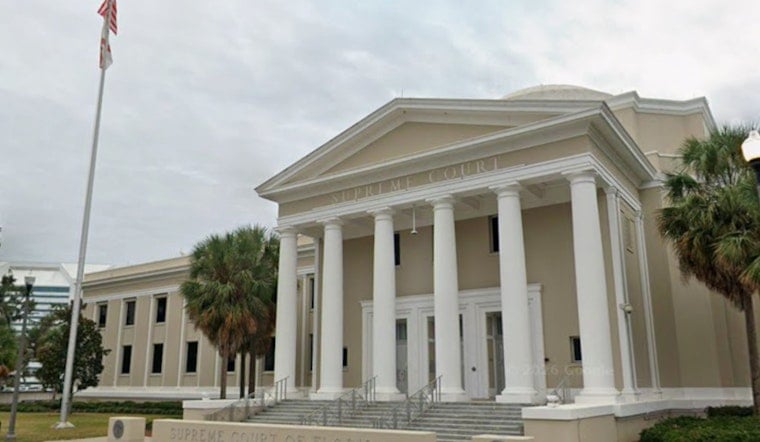
Attorney Michael Minardi, who represents Giambrone, said there is no basis to deny his client's return to work now that the federal government has moved to reclassify medical marijuana. Minardi confirmed Giambrone plans to appeal the Second District Court of Appeal's decision to the Florida Supreme Court, per the Miami Herald.
State's Legal Backing and a Union Divided
Florida Attorney General James Uthmeier's office offered an amicus brief in the case, telling the court that Florida law does not require employers to accommodate an employee's violation of federal law and that the state has a profound interest in ensuring EMTs and paramedics remain drug-free, according to the Miami Herald's reporting. Uthmeier previously led a political committee opposing a proposal for recreational marijuana in Florida, the outlet noted.
The Hillsborough County Fire Rescue union has staked out a middle position. The union supports a zero-tolerance policy for on-duty impairment but has also said firefighters should not be punished for physician-authorized off-duty medical treatment. Hillsborough County has said it will not change its medical marijuana policy despite the ongoing litigation.
Florida's Statutory Wall Against Workplace Accommodation
The legal terrain Giambrone is fighting through was built deliberately. Florida Statute § 381.986(15) explicitly states that state medical marijuana laws do not require an employer to accommodate medical marijuana use in any workplace, do not limit an employer's right to enforce a drug-free workplace policy, and do not create a cause of action for wrongful discharge, according to the University of Florida Policy Hub. That statute was codified by the Legislature after voters approved Amendment 2 in 2016.
Florida courts upholding public safety terminations have also relied on the First District Court of Appeal's 2023 ruling in Ortiz v. Department of Corrections, which affirmed the firing of a correctional officer over medical marijuana use because federal drug prohibitions conflicted with his mandatory firearm duties, per Phelps Dunbar. Roughly 929,360 Floridians were active registered medical marijuana patients as of May 29, with 2,466 qualified physicians enrolled statewide, according to the Miracle Leaf report. Nationally, about half of the 41 states with comprehensive medical cannabis programs have enacted statutory employment protections for cardholders, according to the National Conference of State Legislatures, which pointed to states like Arizona and Connecticut that explicitly prohibit adverse employment actions against medical cardholders.
Federal Rescheduling Muddies the Picture
The legal landscape shifted in April, when the U.S. Department of Justice issued a final order reclassifying medical marijuana from Schedule I to Schedule III under the Controlled Substances Act. Legal analysts at FordHarrison noted that the change may create new obligations for employers to evaluate medical cannabis accommodations under the Americans with Disabilities Act, since Schedule I substances were historically excluded from that interactive review process due to their federal illegality.
Advocates see that shift as central to Giambrone's case going forward. Jodi James said Florida law should reflect the federal reclassification of medical marijuana and that people have a right to use it as medicine. Meanwhile, Tim Pearson said the conversation should focus on fitness for duty, non-addictive treatment options, and the mental health challenges facing first responders — an issue Florida lawmakers have addressed before, having passed a 2018 law allowing firefighters, paramedics and EMTs diagnosed with job-related PTSD to receive workers' compensation benefits without an accompanying physical injury.
For now, Giambrone remains fired, his license intact, and his case bound for Florida's highest court. Whether the state Supreme Court will treat the federal rescheduling, the union's mixed position, or the county's contractual fitness argument as decisive remains an open question that the litigation has not yet answered.



