

























































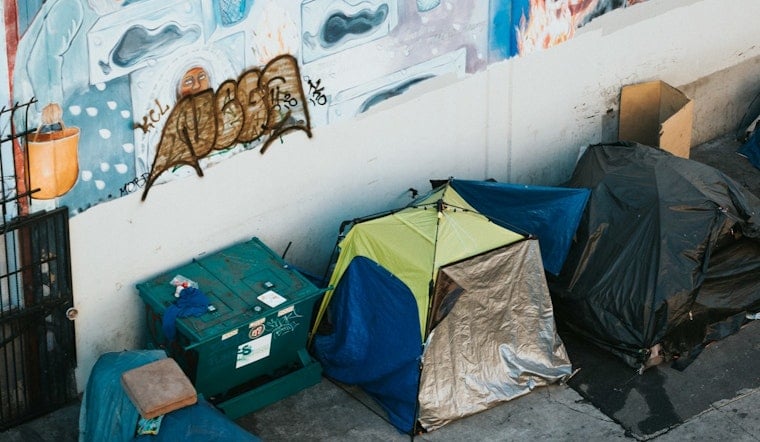
West Hollywood's official homeless count dropped to 42 people this year, down sharply from 101 people counted in 2025. The Los Angeles Homeless Services Authority found 36 people living on the street and 6 more in cars, tents or makeshift shelters this year, a steep decline from 79 unsheltered residents and 22 people in vehicles or tents just a year earlier. City officials are crediting a 20-bed interim shelter, along with local rental assistance and housing placement programs, for driving the numbers down even as homelessness rose across the rest of Los Angeles County.
The count, first detailed by WEHOonline, comes after West Hollywood's unsheltered population had been trending upward, climbing from 76 people in 2024 to the 101 counted in 2025 before this year's reversal. LAHSA's count is conducted on a single night each January, when volunteers walk assigned routes citywide, and officials caution the tally functions as a snapshot rather than a full census.
Holloway's First Full Year On Santa Monica Boulevard
The Holloway Interim Housing Program, a 20-bed shelter at 8464 Holloway Drive just off Santa Monica Boulevard, opened in October 2025 after the city spent roughly $6 million in California Homekey grant money and $7 million from its own Affordable Housing Trust Fund to acquire and renovate the former motel, according to the Beverly Press. The facility is run by nonprofit Ascencia on a 90-day referral-only basis, serving chronically unhoused adults who have a diagnosed disability or who have experienced homelessness at least four times in three years, the outlet reported.
Through the second quarter of its first year, Holloway had reached roughly 88% occupancy, served 32 people and logged more than 3,100 bed nights, per the same report. The shelter offers case management, housing navigation, meals, and connections to medical and mental health care.
City Leaders Push To Go It Alone
City leaders have framed the drop as vindication for pulling back from countywide systems. Council member John Erickson said in 2025 that he saw no real point in West Hollywood continuing to participate in LAHSA's count past that year, the report noted. Council member John Heilman put it more bluntly: "We can't rely on county agencies to provide assistance. We need to focus on what we can do in West Hollywood."
That local focus includes a coordinated response framework the city is developing to link outreach workers, shelter operators and housing agencies to the same list of people and information, rather than relying on countywide databases. West Hollywood has moved 44 people from homelessness into permanent housing in the past year alone, and 411 people since October 2016, while distributing 2,558 rental assistance grants over that same span. Residents can reach the city's Homeless Initiative Concern Line, staffed around the clock, at (323) 848-6590.
LAHSA's Funding Crisis Adds Pressure
West Hollywood's pivot toward local control comes as the regional agency it once relied on faces serious instability. Los Angeles County withdrew $300 million of its funding from LAHSA last year, the same report found, though a separate account from LA County Politics put the county's annual pullback at nearly $350 million as it moved to manage homeless services directly. The county officially launched a standalone Department of Homeless Services and Housing on July 1, following the Board of Supervisors' April 2025 vote to defund LAHSA.
LAHSA's troubles deepened further this year. The U.S. Department of Housing and Urban Development suspended federal funding for the agency in June 2026, citing internal financial control failures across $944 million in grants, prompting LAHSA to sue the federal government on June 29, according to CBS News Los Angeles. A federal judge reviewing the dispute found LAHSA's spending was nearly impossible to track, WEHOonline reported.
WEHOonline noted that LAHSA's budget had ballooned from $63 million in 2015 to $808 million by 2022. This year's countywide point-in-time count found 73,040 people experiencing homelessness across Los Angeles County, up 1.2% from last year, even as a separate transit homelessness drop was reported on Metro trains.
A Patchwork Of Results Across The Westside
West Hollywood's decline stands out against a mixed regional picture. Beverly Hills saw its unsheltered population rise from 17 people in 2025 to 30 in 2026, while neighboring Los Angeles City Council District 13, which includes Hollywood, posted a 21% year-over-year drop to 396 people, its third straight year of decline, according to Beverly Press.
Those numbers come with a caveat. A May 2026 RAND Corporation study found LAHSA's annual point-in-time counts undercounted unhoused populations in central Los Angeles by 19% to 32%, largely missing vehicle dwellers and rough sleepers, according to LAist. West Hollywood also moved this month to cap annual rent increases at a 3.7% regional Consumer Price Index adjustment, aiming to prevent displacement before it starts, the outlet reported. Researchers studying the count's limitations note it remains an open question whether West Hollywood's drop reflects successful housing placements or unhoused residents simply moving beyond the city's borders.





