

























































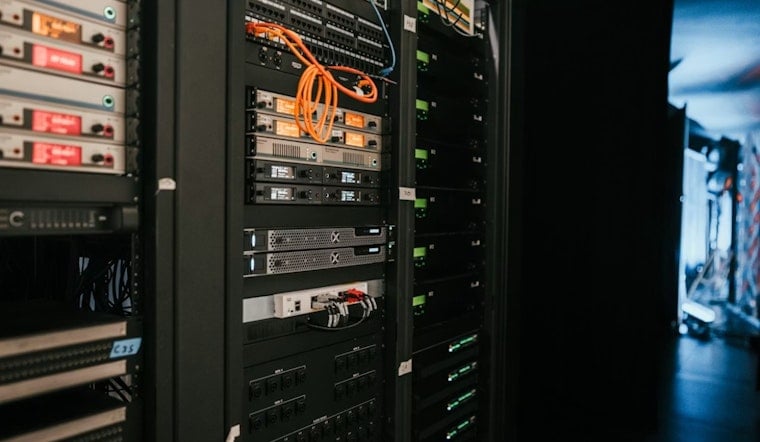
Irving-based Caterpillar has found a very 2026 way to make a fortune: sell the engines, turbines and other heavy-duty equipment needed to keep America’s AI data centers running. The company just posted its first quarter with more than $20 billion in sales and revenue, while its Power & Energy business supplied the clearest sign that the data-center boom is becoming an industrial boom, too.
Caterpillar reported second-quarter sales and revenues of $20.5 billion, up 24% from the same quarter last year, according to The Dallas Morning News. The company’s margin rose to 20.9% from 17.3%, while Power & Energy sales reached about $8.2 billion after increasing by roughly $1.2 billion year over year.
The quarter beat Wall Street expectations, and The Associated Press reported that CEO Joe Creed pointed to strong order rates and a growing backlog across Caterpillar’s major businesses. In other words, the company is still selling plenty of traditional construction equipment, but the newest and loudest growth engine is the infrastructure needed to feed artificial intelligence.
Caterpillar Is Selling More Than Yellow Iron
The data-center strategy is not limited to selling backup generators after a project is already designed. Caterpillar and Hunt Energy announced a multiyear agreement in 2025 to deliver power solutions for data centers, with an initial Texas project intended to support up to 1 gigawatt of generation capacity across North America, according to Caterpillar.
The company’s toolbox for that market includes natural-gas and diesel generators, gas turbines, switchgear, controls, engineering services and monitoring systems. That puts Caterpillar in the increasingly valuable space between a data-center developer and an electric grid that often cannot deliver new power quickly enough.
Caterpillar is also expanding its Irving headquarters in a multimillion-dollar project that began in June, The Dallas Morning News reported. A larger headquarters will not power a server farm, obviously, but it is a visible local marker of how deeply the company is leaning into the current infrastructure cycle.
Texas Wants The Boom Without The Bill
The timing is complicated because Texas is trying to keep attracting data centers while limiting their impact on residents. The Office of the Texas Governor said in June that Greg Abbott directed state regulators to make large data centers cover the infrastructure costs they create, protect residential ratepayers, encourage water-efficient cooling and address neighborhood concerns such as noise and setbacks; in July, the governor’s office announced that a proposed data center near Cedar Creek Lake had been withdrawn after falling short of those expectations.
That push-pull is already familiar around the region. Hoodline has tracked the Texas data-center rush, including a proposed $400 million AI hub in Hubbard, as communities weigh new investment against demands for power, water, land and quiet.
For Caterpillar, that tension is the opportunity and the risk. Every new campus can mean another order for engines, turbines or power systems, but every delayed approval or contested utility connection is a reminder that the company’s record quarter depends on a boom that still has to win over the people living next to it.





