

























































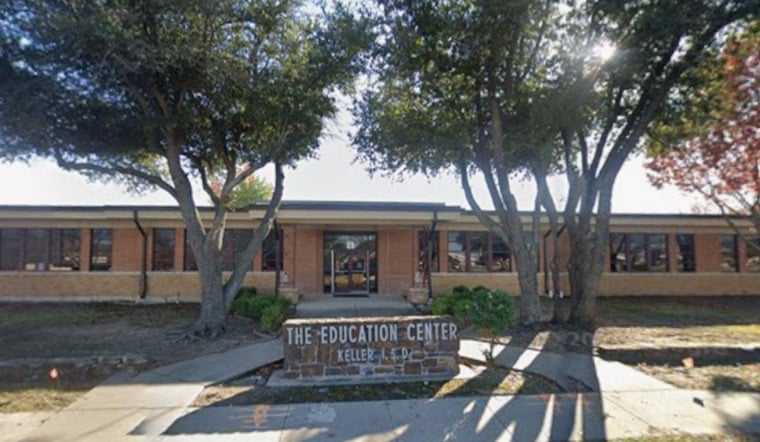
Keller ISD trustees have voted to move forward with an $837 million bond package, the largest in district history, setting up a November referendum that will ask voters to fund repairs and renovations across 34 campuses and facilities. The board must formally call the election by August 17, and if it proceeds as planned, early voting will run from October 19 through October 30.
The trustees voted 5-1 on July 23 to accept the recommendations of the Citizens Bond Advisory Committee, a panel that spent months touring facilities, reviewing district finances, and running mock bond exercises before settling on its final list, according to the Fort Worth Report. Every project in the final package needed a two-thirds supermajority from committee members to make the cut, the outlet reported. Lizzy Johnson, the committee's chair, said members were dedicated from start to finish over the course of 11 meetings.
Only trustee Chris Coker voted against accepting the committee's recommendations. Coker said he could not support the bond program because he questioned whether the district needs everything included in it, and he argued for a smaller package focused strictly on core repairs rather than an all-or-nothing debt authorization, according to Community Impact. Coker noted on social media that voters will face a single up-or-down choice in November that could bundle necessary repairs together with more controversial projects.
Where the Money Would Go
Of the total package, 67.2%, or $562.5 million, is earmarked for facility modernization and replacements, while 21.8%, or $182.5 million, would go toward maintaining existing schools, per Community Impact's breakdown of the committee's presentation. The remaining 10.9%, or $91.2 million, is set aside for student program investments. District officials plan to present the bond to voters as four or five separate propositions rather than a single line item, the Fort Worth Report reported.
The maintenance list includes roofing, HVAC, plumbing, electrical, code compliance, life-safety and building-envelope work across the district's campuses, plus new turf at middle school fields and at high school baseball and softball fields. It also covers replacement of the Keller Athletic Complex fieldhouse and related site repairs. A centerpiece project is a full Keller Middle School replacement, which would preserve previously rebuilt portions of the building while adding a modern learning environment along with safety and energy-efficiency upgrades.
Natatorium Fix Baked Into the Bond
The package also includes natatorium improvements, among them replacement of mechanical, plumbing and HVAC equipment along with site repairs and restroom work. That item lands just months after Keller ISD was forced to close its natatorium due to a filtration failure, prompting trustees to approve roughly $2.1 million in emergency repairs amid parent frustration over deferred maintenance. That facility opened in 2003 and serves high school swim teams, club programs and community lessons.
Technology upgrades round out the package, including classroom, campus and safety technology systems, an enterprise resource planning solution, network infrastructure and campus connectivity, cybersecurity and data center infrastructure with backup and disaster recovery, and student and teacher learning devices. District officials have said the bond program, if approved, would be implemented over three to five years starting in 2027. The advisory committee is expected to continue monitoring the program if voters give it the green light, and district officials have said bonds will not be sold for projects rendered needless by significant enrollment changes.
A Record-Sized Ask Amid Shrinking Enrollment
The $837 million figure represents a nearly 166% increase over the $315 million bond Keller ISD voters approved in 2019 for facility and technology upgrades, according to Community Impact. That earlier bond addressed capital needs across campuses before the district's enrollment trends shifted sharply downward. The current proposal is explicitly focused on repair rather than enrollment growth, a reversal from the district's historic growth-oriented posture.
That shift reflects a district under real financial strain. Keller ISD lost roughly 1,600 students between the 2023-24 and 2025-26 school years, part of a 12.5% enrollment decline from 2021 to 2025, and the district has projected a further drop of 1,083 students for 2026-27 that would reduce state revenue by $6.73 million, per Community Impact's reporting. Because Texas ties school funding directly to average daily attendance, the enrollment slide has squeezed operating budgets even as facilities age.
In response, Keller ISD cut its operating budget by nearly $45 million over two years, a reduction of almost 15%, while confronting an estimated $9.4 million to $10 million deficit for the 2025-26 fiscal year, according to Kera News. In May, Keller ISD's board weighed campus closures before voting unanimously to consolidate three intermediate campuses, Bear Creek, Parkwood Hill, and Trinity Meadows, starting after the 2026-27 school year, a move expected to save $3 million annually, according to CBS News. Students from those campuses will merge into neighboring elementary and middle schools under redrawn attendance boundaries.
Why the Tax Rate Isn't the Whole Story
District officials have pointed to the numbers to argue the bond won't require a tax rate hike. Keller ISD set its fiscal year 2025-26 total tax rate at $1.0852 per $100 valuation, including an Interest & Sinking debt rate of 33 cents, which officials say provides enough debt capacity to issue an $800 million-plus bond without increasing that debt rate, per Community Impact. Texas school tax rates are split between Maintenance & Operations funding for daily costs and Interest & Sinking funding for bond debt payments, and state formulas restrict how M&O dollars can be spent on capital repairs, which is why districts like Keller ISD turn to voter-approved bonds for major facility work.
Even so, state law requires every school bond ballot proposition to prominently display the statement THIS IS A PROPERTY TAX INCREASE, regardless of whether a district's debt-service rate stays flat, under Texas Education Code § 45.003. The requirement, passed by the Texas Legislature in 2019 under House Bill 3 to improve tax transparency, means Keller ISD voters will see that mandatory language on their ballots even as district officials maintain the tax rate itself won't rise.
Before landing on the bond and campus consolidations, Keller ISD leaders in early 2025 commissioned a financial study to evaluate splitting the district into two separate school districts to ease budget pressure. The idea was abandoned after analysis showed it would not generate additional state or local funding, and the proposal had drawn intense pushback from hundreds of parents during public board meetings, according to Kera News.
Committee members involved in shaping the final recommendations included Gavin Sullivan, a Keller Central High School student representative and senior class secretary, alongside chair Lizzy Johnson. Superintendent Cory Wilson oversees the district as it heads toward the November vote. Whether trustees formally call the election by the August 17 deadline will determine if the $837 million question reaches Keller ISD voters this fall.





