

























































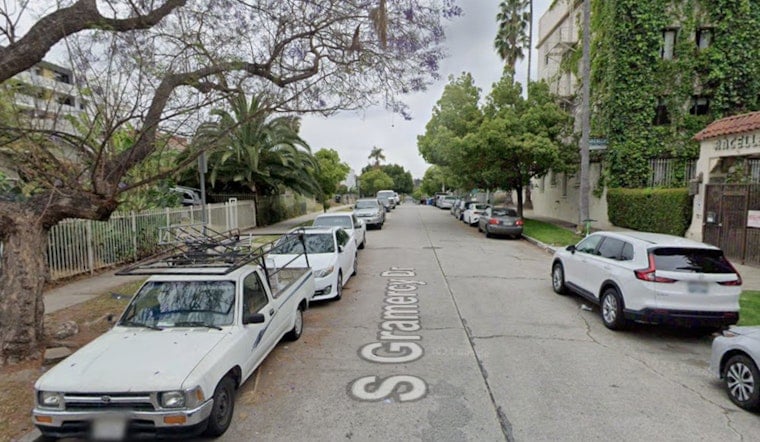
A seven-story building rising at 708-712 S. Gramercy Dr. in Koreatown will soon deliver 101 studio and one-bedroom apartments, all reserved for low- and moderate-income renters. The project began very differently: as a predominantly market-rate development with 55 apartments proposed in 2023, before developer Saman Kerendian pivoted to the fully affordable version in 2024.
According to Urbanize LA, which first reported on the site's construction, Kerendian used density bonus incentives along with the city's affordable housing streamlining rules to build a larger structure than standard zoning would otherwise allow. The site itself has a physical history worth noting: two homes built in the 1920s were cleared to make way for the new complex, per the same outlet's reporting.
City records show the original 2023 filing, submitted through Gramercy Project, LLC under case number DIR-2023-1175-TOC-VHCA, sought Transit Oriented Communities incentives for the smaller 55-unit design, which included two subterranean parking levels and just six units set aside for extremely low-income households. According to Los Angeles City Planning, that case was officially terminated in October 2024, clearing the way for the fully affordable, higher-density version now taking shape. The finished building, shown in plans as a contemporary podium-type structure designed by architect Sam Ghanouni, will include parking for 17 vehicles.
A Familiar Playbook a Few Blocks Away
The Gramercy project is not Kerendian's first run at this strategy in Koreatown. The same development team is also behind an affordable housing complex at 926 S. Kingsley Drive, which likewise began as a smaller, largely market-rate project before being converted into a 100% affordable ED1 development. That Kingsley project grew from an approved 89-unit mixed-income design — originally set aside for just nine extremely low-income units — into a 136-unit fully affordable building that landed $24.4 million in financing from Century Housing in June 2024, according to Urbanize LA.
Both conversions were made possible by Mayor Karen Bass' Executive Directive 1, issued in December 2022 to exempt fully affordable housing projects from discretionary review and environmental impact reports. The directive has helped push more than 47,000 units into the city's housing pipeline by mid-2026 and trims ministerial review timelines to under 60 days, according to the Los Angeles Business Journal. In December 2025, the Los Angeles City Council voted unanimously to convert the directive into a permanent municipal ordinance, locking the fast-track process into city law.
Why Koreatown Keeps Getting These Projects
The demographic case for the pivot is stark. Koreatown holds more than 39,000 residents per square mile, with roughly 90% of residents renting and about 20% living below the federal poverty level, based on U.S. Census Bureau data reported by LAist. City leaders have repeatedly pointed to that density when celebrating new affordable openings, including the 80-unit Atto on Hobart complex at 611 S. Hobart Blvd., which held its grand opening this month as the first completed 100% affordable development in Koreatown built under Executive Directive 1. That project delivered 73 one-bedroom and seven studio units for households earning between 80% and 120% of the area median income, per LAist's reporting.
The Gramercy and Kingsley conversions also reflect a wider shift among Koreatown developers away from market-rate designs. In a related move this month, Jamison Services refiled plans for a Manhattan Place site, swapping a previously approved 120-unit mixed-income building for a 147-unit fully affordable project, as Hoodline reported.
Economic Pressure Behind the Shift
The pivot toward fully affordable projects is unfolding against a broader slowdown in the city's housing market. Total residential building permits in Los Angeles dropped roughly 40% between 2022 and mid-2026, driven by elevated interest rates, tight lending conditions, and Measure ULA transfer taxes, according to UCLA and RAND Corporation findings cited in city housing reports. Those financing headwinds have made streamlined, ministerial approval paths like Executive Directive 1 one of the few reliable routes for developers to keep dense multifamily projects financially viable.
City Planning has also been overhauling its broader incentive structure alongside ED1. The Citywide Housing Incentive Program, unveiled in March 2024, updated state density bonus provisions and introduced a Mixed Income Incentive Program to codify Transit Oriented Communities rules along major transit corridors, expanding eligible affordable housing sites to include public facilities and faith-owned land, per Urbanize LA's earlier coverage. That TOC framework, established under 2017's Measure JJJ, had already been shown by a California YIMBY and USC study to issue building permits 28% faster than discretionary projects, helping generate more than 8,000 deed-restricted affordable units by late 2022.
For now, the transformation at 708 S. Gramercy Dr. stands as the latest concrete example of that policy machinery at work — a site that started as a modest market-rate proposal for 55 units and is emerging, three years later, as a 101-unit building reserved entirely for renters who need it most.





