

























































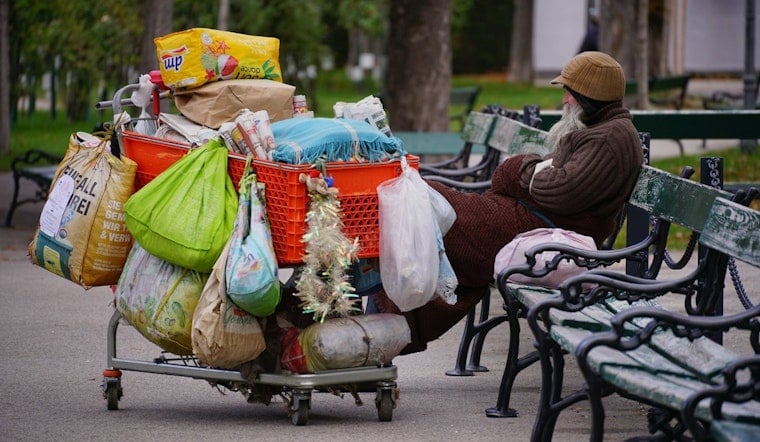
The Los Angeles City Council voted 10-3 to erase 12 anti-camping zones in Hollywood, tearing down a policy first put in place under former Councilmember Mitch O'Farrell that barred unhoused people from sitting, sleeping or storing belongings in designated stretches of the neighborhood. Councilmember Hugo Soto-Martínez introduced the resolution, framing it as the fulfillment of a campaign promise he made back in 2021, before he ever held office. Councilmembers Traci Park, Monica Rodriguez and Imelda Padilla voted against the rollback, while John Lee and Curren Price were absent from the vote.
According to MyNewsLA.com, Soto-Martínez said displacing unhoused people from encampments only makes it harder for them to eventually find housing, and his office called the anti-camping zones counterproductive to broader homelessness work. He said he surveyed roughly 2,000 constituents living near the zones, and that most of them did not support keeping the restrictions in place. Soto-Martínez also told colleagues his 13th Council District has seen a 40% drop in homelessness since he took office, crediting a shift toward expanded services and interim housing rather than police enforcement.
A Campaign Promise Years in the Making
Soto-Martínez took office in December 2022 after unseating O'Farrell the previous month on a platform that pushed care-first outreach over sweeps, a shift that included his office taking down the perimeter fence that once surrounded Echo Park, according to the same MyNewsLA.com account. Echo Park and Venice Beach both had large, sprawling encampments before those clearings. Even so, homeless advocates criticized Soto-Martínez for taking four years to actually rescind the Hollywood zones, arguing the enforcement tool should have been dismantled much sooner.
The Hollywood vote marks the first time the council has removed discretionary Section 41.18 zones rather than added them, according to Hoodline's earlier reporting on a Valley expansion vote in May, when the council approved 26 new anti-camping zones in Council District 6 by an 11-4 margin over objections from the same progressive bloc — Soto-Martínez, Nithya Raman, Eunisses Hernandez and Ysabel Jurado. Section 41.18 itself dates to a 2021 council amendment that expanded which types of areas could be designated anti-camping zones, adding daycare centers, parks, underpasses and areas near the Los Angeles River to a list that already included public schools and libraries as sensitive locations.
Council Split Over Public Safety Versus Displacement
Traci Park, who opposed the Hollywood resolution, has defended Section 41.18 as a tool for managing streets, sidewalks and public spaces, calling that management a fundamental civic obligation. She separately introduced legislation covering critical infrastructure, environmentally sensitive areas and high-severity fire zones, though that measure has languished in the committee process. Park previously spearheaded a rollout of anti-camping zones across parks, recreation centers and coastal areas in her Westside Council District 11, arguing in 2023 that street management works alongside — not instead of — housing offers, according to reporting cited in the dossier from CBS News Los Angeles.
Monica Rodriguez also opposed the rescission, arguing the issue is fundamentally about protecting public spaces for children and families. Imelda Padilla likewise voted against Soto-Martínez's action. Council President Marqueece Harris-Dawson took a different approach, saying his 8th Council District, which encompasses South Los Angeles neighborhoods, does not enforce the anti-camping law at all because, in his words, police tickets almost always make problems worse in his community. He credited the law with helping conditions at Venice Beach and Echo Park specifically, even as critics argued enforcement more broadly leads to the forcible removal of unhoused people and disconnects them from medical care, outreach and support.
The Data Behind the Repopulation Problem
A city analysis found that people present before enforcement returned to 81% of encampments flagged for removal under Section 41.18, and a separate 2024 memo from Chief Legislative Analyst Sharon Tso found that 39% of unhoused individuals returned to the exact same site within 14 days of anti-camping signs going up, according to a report from PBS SoCal. Tso's report also estimated the law cost the city at least $3 million between September 2021 and December 2023 while resulting in only two unhoused individuals being placed into permanent housing. A May 2026 study from the RAND Corporation adds another layer: rough sleeping, meaning unhoused people sleeping without a tent, vehicle or shelter, rose 20% in Hollywood, Skid Row and Venice over the prior year to a four-year high, with 46% of surveyed rough sleepers reporting their shelter had been confiscated or towed by government workers or service providers.
That research is fueling a fresh round of activism. Housing advocacy groups including Housing Is A Human Right, the National Coalition for the Homeless and Skid Row Brigade have scheduled a press conference in Hollywood to demand Mayor Karen Bass and City Hall stop taking tents away during summer heat waves, pointing directly to the RAND findings on rough sleeping, per a release distributed through Business Wire. The timing places renewed pressure on the council just as it revisits its own approach to encampment enforcement in Hollywood.
The legal backdrop for all of this shifted in June 2024, when the U.S. Supreme Court ruled 6-3 in City of Grants Pass v. Johnson that municipal anti-camping ordinances do not violate the Eighth Amendment, permitting cities to fine or ticket unhoused residents sleeping in public even without available shelter beds, as reported by CalMatters. Governor Gavin Newsom followed with Executive Order N-1-24 the following month, directing state agencies to dismantle encampments on state property and pressuring local governments toward similar action under threat of losing state funding. That combination gives Los Angeles wide legal latitude to enforce encampment bans even as individual council districts, from Soto-Martínez's Hollywood to Harris-Dawson's South LA, continue pulling in opposite directions on whether to use it.





