

























































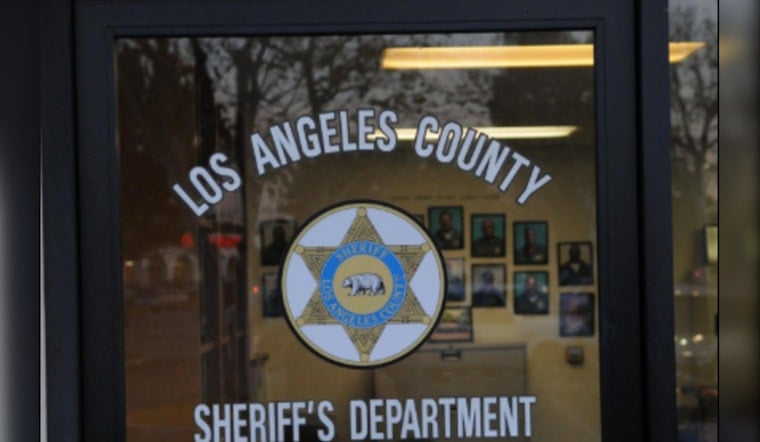
The Los Angeles County Sheriff's Department has agreed to a settlement resolving the remaining claims in a years-long lawsuit over how it handled concealed carry weapon applications, a case that came under scrutiny after a federal complaint found the department approved just two of 3,982 new applications submitted between January 2024 and March 2025. That 0.05% approval rate, along with wait times that in some cases stretched past 1,000 days, drew a parallel federal civil rights complaint from the U.S. Department of Justice on top of the private litigation that just settled.
According to the Tampa Free Press, the Second Amendment Foundation and its co-plaintiffs announced the settlement resolving the remaining claims in California Rifle and Pistol Association v. LASD, the case that had challenged concealed carry permit delays and regulations enforced by the sheriff's department. The lawsuit, originally filed in December 2023, was brought by the Second Amendment Foundation alongside the California Rifle and Pistol Association, Gun Owners of America, Gun Owners Foundation, Gun Owners of California, and individual plaintiffs, per the outlet's report.
The scale of the delays was laid out in a federal civil rights complaint detailed by the Civil Rights Litigation Clearinghouse, which found CCW applicants faced an average wait of 281 days before any administrative action was taken, a median delay of 372 days, and individual wait times reaching as long as 1,030 days. California law generally requires initial licensing determinations within 90 to 120 days, making those figures a stark departure from the statutory baseline.
How the Case Started and What It Targeted
When the lawsuit was first filed, it didn't just take aim at LASD's processing times. Per the Second Amendment Foundation's case records, it also challenged the City of La Verne's CCW application fees, which ran $900 to $1,100 for initial applications and $500 for renewals, along with a local requirement that applicants fund their own psychological exams. The Tampa Free Press reports that La Verne has since subsidized the psychological exams and reduced its concealed carry permit fees as part of the case's resolution.
The legal footing for these challenges traces back to the U.S. Supreme Court's 2022 ruling in New York State Rifle & Pistol Association v. Bruen, which explicitly warned, as noted by FindLaw, that even under shall-issue permit regimes, unconstitutional barriers could arise if agencies imposed “lengthy wait times in processing license applications or exorbitant fees.” That decision opened the door for lawsuits challenging administrative delays as a form of unconstitutional obstruction, not just outright permit denials.
Attorneys Point to Statutory Compliance
Kostas Moros, an attorney involved in the case, said the remaining claims against LASD were settled after the department demonstrated compliance with statutory timelines, according to the Tampa Free Press. Moros said the case addressed obstacles faced by both Californians and visitors seeking to exercise their Second Amendment right to carry, and added that the Second Amendment Foundation will continue monitoring the situation to ensure the litigation gains are not rolled back.
Under California Penal Code § 26205, local law enforcement agencies are statutorily required to notify applicants in writing of an approval or denial within 120 days of receiving a completed application, or within 30 days of receiving DOJ background check results, per the Riverside County Sheriff. The sheriff's department now represents that it processes CCW applications within that 120-day window, a claim that formed the basis for resolving the lawsuit's remaining claims. Adam Kraut, another attorney on the case, said litigation remains an effective tool for forcing government agencies to comply with the constitution, and stated that the Second Amendment Foundation will continue using legal action to enforce permit regulations.
A Preliminary Injunction With National Reach
The litigation had already produced one of its biggest wins well before this settlement. A preliminary injunction obtained during the case required California to issue concealed carry permits to qualified nonresidents, and marked what the Outdoor Wire described as the first federal court ruling in the nation confirming that the Second Amendment right to carry handguns in public applies across state lines to nonresidents. Before that ruling, California barred out-of-state residents from obtaining state concealed carry permits entirely.
That injunction did not stay a court order alone for long. The California Legislature codified the nonresident concealed carry permit policy through Assembly Bill 1078, enacted in late 2025, which also established a new limit restricting California residents to purchasing no more than three firearms in any 30-day period starting April 1, 2026, according to Orchid Advisors. That purchasing cap replaced an earlier one-handgun-per-month statute that had been struck down by federal courts. California law has also eliminated automatic five-year permit bans that previously applied when a temporary restraining order was dissolved without a full hearing.
Settlement Still Awaits Final Sign-Off
The settlement is not yet final. It remains pending approval by the Los Angeles County Claims Board, and a separate federal lawsuit filed by the U.S. Department of Justice against the sheriff's department is a distinct matter that this settlement does not resolve, the Tampa Free Press reports. That DOJ suit is part of a broader shift in strategy: reports from The Trace indicate the Department of Justice's Civil Rights Division has expanded its focus on Second Amendment enforcement in 2026, filing federal suits against both the sheriff's department and the U.S. Virgin Islands Police Department over permitting delays.
The settlement lands amid a string of related shifts in California's concealed carry landscape this year. Governor Gavin Newsom signed Assembly Bill 1948 on June 30, extending the standard validity period for new and renewed CCW licenses from two years to three beginning January 1, 2027, as Hoodline previously reported. Separately, the Second Amendment Foundation filed suit against Contra Costa County and Sheriff David Livingston in June over local restrictions banning red-dot optics, weapon-mounted lights, and single-action 1911-style pistols for permit holders, a case Hoodline also covered. Together, the cases reflect a sustained legal push reshaping how California's sheriffs handle concealed carry, county by county.





