

























































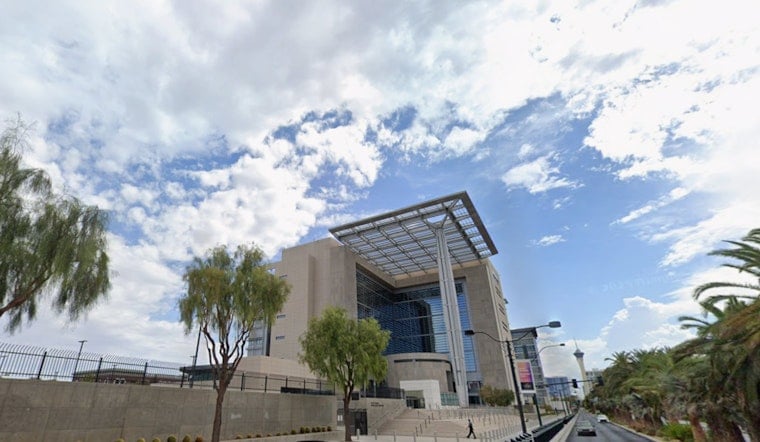
A Las Vegas businessman who once falsely claimed his company ran an artificial intelligence supercomputer that mined cryptocurrency has been convicted on 15 federal counts tied to a fraud scheme that took roughly $24 million from more than 400 investors. Brent C. Kovar owned and operated Profit Connect from late 2017 through July 2021, and a federal jury found him guilty following a nine-day trial in Las Vegas.
According to FOX5 Las Vegas, Kovar was convicted of 11 counts of wire fraud, two counts of mail fraud, and two counts of money laundering. The U.S. Attorney's Office says Kovar falsely claimed Profit Connect was backed by hundreds of millions of dollars in cryptocurrency reserves, that the company was profitable, that it offered a 100 percent money-back guarantee, and that it paid investors fixed annual returns of 15 to 30 percent. Officials say Profit Connect claimed it used artificial intelligence on a supercomputer to mine and verify cryptocurrency transactions.
The reality, according to a court-appointed receiver's forensic accounting report, was far different. Court records filed in the U.S. District Court for the District of Nevada show that Profit Connect generated more than $24.6 million in net investor cash flows across 23 accounts, yet mined only $352.93 worth of cryptocurrency total — most of it during a two-week panic period after federal regulators first intervened. Officials say Kovar made investor repayments appear to come from cryptocurrency mining when they did not.
Where the Money Actually Went
Investigators with the IRS Criminal Investigation team say Kovar used investor money to fund company operations, buy himself a house, purchase employee gifts, and repay earlier investors — the classic structure of a Ponzi scheme, where new deposits pay off old ones rather than generating real returns. U.S. District Judge Jennifer A. Dorsey had rejected Kovar's pretrial request to bar prosecutors from using the term “Ponzi scheme” at trial, according to court records reviewed by midpage.ai, and she also denied his motions to suppress evidence gathered by the Securities and Exchange Commission after he claimed civil investigators had improperly coordinated with criminal prosecutors.
This was not Kovar's first brush with federal securities regulators. The SEC had already obtained a permanent injunction, a penny stock bar, and an officer and director bar against Kovar in 2010 for his role in a pump-and-dump scheme involving Sky Way Global LLC, a company that had falsely claimed to possess anti-terrorism technology and nationwide broadcasting towers, according to SEC.gov. Despite that history, Kovar launched Profit Connect years later with his mother, Joy I. Kovar, who served as the company's president and control person; SEC filings show investor money was routinely transferred into her personal bank accounts for personal use.
A Family Home Built on Investor Funds
The SEC's civil case moved first. In July 2021, the agency unsealed an emergency enforcement action and obtained an asset freeze against Profit Connect, Brent Kovar, and Joy Kovar after determining the operation had raised over $12 million from at least 277 retail investors — a figure the criminal case later expanded to more than $24 million from over 400 investors. Court-appointed receiver Geoff Winkler evicted the pair from their three-bedroom Las Vegas house later that year, according to BehindMLM, after determining the property had been purchased with investor funds.
Federal grand jury charges unsealed in February 2025 formally indicted Kovar on 18 criminal counts total, including 12 counts of wire fraud, three counts of mail fraud, and three counts of money laundering, with the FBI, FDIC, and IRS all involved as investigating agencies. SEC records show Profit Connect marketed so-called “Wealth Builder” accounts and supercomputer “seats” aimed squarely at people trying to build retirement or college savings, encouraging them to pull money out of home equity and retirement plans to invest.
Recovery Efforts and What Comes Next
Civil recovery work has continued in parallel with the criminal case. The receivership estate reached a formal settlement with Bank of America in October 2025 to recover funds, after alleging the bank maintained accounts involved in Profit Connect's fraudulent transfers; forensic accounting found Bank of America held more than 96 percent of investor deposits.
U.S. Attorney Sigal Chattah said the verdict “demonstrates an absolute commitment to aggressively pursuing bad actors who manipulate records to steal millions,” adding that financial fraud “undermines the foundational trust of our economic system.” Kovar is scheduled to be sentenced on November 30, 2026, and faces a statutory maximum of 280 years in prison; a federal judge will determine the actual sentence.
The case lands amid a surge of similar schemes nationally. The FBI's 2025 Internet Crime Report, released in April 2026, found that cryptocurrency investment fraud accounted for $11.3 billion in reported losses across more than 181,000 complaints nationwide — nearly half of all cybercrime losses that year — with Americans over 60 alone reporting $7.7 billion in losses.





