

























































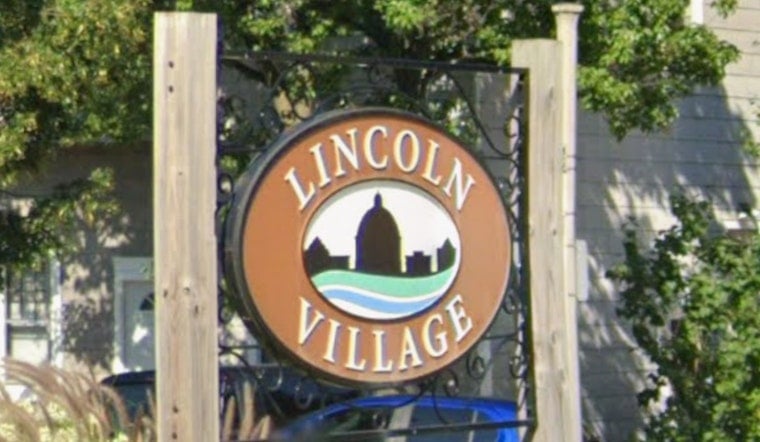
Commercial property owners along Lincoln Avenue on Milwaukee's South Side are moving to tax themselves in order to fund safety patrols, beautification and marketing for the Lincoln Village business corridor, a proposal that has already drawn unanimous support from the city's Plan Commission and a formal objection from at least one industrial property owner. The proposed Business Improvement District would run along S. 5th Street near Interstate 43/94 west to W. Forest Home Avenue and S. 25th Street, funding a first-year operating budget of $57,424.
Maribel Franco, president of the Lincoln Village Business Association and owner of Hideout Lash Room, pitched the plan to the City Plan Commission on August 17, according to Urban Milwaukee. Franco said other Wisconsin districts have seen BIDs go very well and argued the structure would bring businesses together fairly, since residential and tax-exempt properties would not be taxed under the plan. Under Wisconsin Statute § 66.1109, municipalities can authorize BIDs allowing commercial property owners to assess themselves special taxes for corridor improvements, though the effort can be killed if owners representing at least 40% of assessed property value file a formal objection within a 30-day window that opened at the Plan Commission hearing.
Nearly 90 such districts operate statewide as of last year, according to the Wisconsin Economic Development Corporation, which notes BIDs give commercial corridors steadier funding than relying on event fundraising or grant cycles. Milwaukee alone has 31 active Business Improvement Districts, per the same report cited by Urban Milwaukee, joining long-running districts like Historic Third Ward BID #2 and Milwaukee Downtown BID #21.
How the Assessment Would Work
Under the proposed formula, commercial property owners would pay between $300 and $1,200 annually, with a property reaching the minimum payment at $150,000 in assessed value. Commercial and manufacturing properties would also be levied an additional $2 per $1,000 of assessed value, with the maximum annual payment kicking in at $600,000 in assessed value. The Common Council must still approve the district before it can move forward.
The operating plan carves out specific line items: $18,000 for safety, which would support a part-time ambassador or patrols; $9,250 for beautification; $5,000 for marketing; $3,000 for events; $2,500 for a website; and $16,000 for administration and coordination. The district would also work closely with the Commercial Corridor Team inside the city's Department of City Development, and Mayor Cavalier Johnson would need to appoint up to 11 members to the BID's governing board.
Volunteer Fatigue Meets Institutional Backing
Don Rambadt, a Lincoln Village Business Association member, area resident and artist, said volunteer work without funding has plateaued — a plea for structure behind an effort that has already produced 54 planters along the corridor through unpaid labor. The BID is designed to provide resources to the all-volunteer association going forward, and would help fund neighborhood staples like Lincolnfest and a winter market.
Two of the corridor's oldest institutions have thrown their weight behind the plan. John Rozga, the fourth generation of Rozga Funeral & Cremation Services — a business tracing back to 1898, when Stephen and Clara Rozga started it as a furniture shop before it became a funeral home, per Urban Milwaukee's history of the neighborhood — said he feels safe investing his BID money in the group. Bob Cook, pastor and head of the Basilica of St. Josaphat, said the district would improve the neighborhood's image and bolster the church's role as a tourist destination; the Basilica, completed in 1901 by Polish immigrants using salvaged materials from Chicago's demolished post office and customs house and designated a minor basilica in 1929, strongly supports the BID's creation even though it would be exempt from paying into it as a tax-exempt property.
A Factory Owner Pushes Back
Not everyone is on board. Steven Arenzon, who owns Wisconsin Knitwear at 1111 W. Lincoln Ave., filed a letter opposing the district. Wisconsin Knitwear is a second-generation, family-owned textile factory specializing in American-made knit headwear that drew a visit from U.S. Sen. Tammy Baldwin earlier this year to discuss federal tariff impacts on local manufacturing. Arenzon's objection underscores a familiar tension in commercial-corridor financing: retail businesses chasing foot traffic and streetscape beautification often see direct upside from a BID, while industrial manufacturers may not see the same return on street-level marketing spending.
The proposal isn't dead on arrival because of one letter — it would take property owners representing 40% of the district's assessed value filing objections within the statutory window to block it outright. Six blocks north, Historic Mitchell Street BID #4 offers a point of comparison: that corridor similarly shifted from a Polish immigrant shopping hub into a diverse Hispanic and multi-ethnic business district, according to WUWM 89.7 FM, and its BID has partnered on projects like a combined library and apartment complex. Lincoln Village itself has undergone a similar transformation, with over 55% of residents now Latino and Spanish spoken in nearly 61% of households, per Urban Anthropology Inc.
A Neighborhood Still Absorbing a Recent Loss
The push for dedicated corridor funding comes as the neighborhood grapples with the loss of Lincoln Avenue Elementary School, destroyed by fire in July. Milwaukee Public Schools must now determine what to do with the school property, adding another layer of uncertainty to a corridor already navigating demographic and economic change. If the Common Council signs off, the Lincoln Village BID would also be required to file annual operating plans for municipal approval, joining the roughly three dozen districts already operating citywide.





