

























































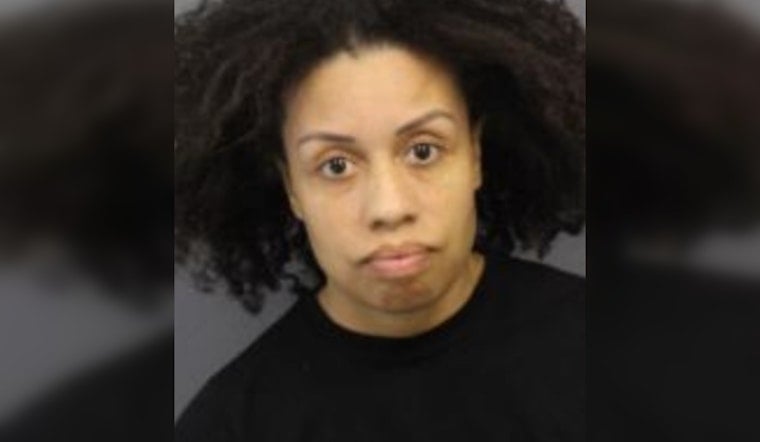
Nearly two years after she was accused of fatally shooting her husband inside their Manassas home, Latoya Crabbe is no longer facing murder charges. Prosecutors moved to drop the case against her this week after a previously unexamined five-hour audio recording surfaced evidence they say could support a claim of lawful self-defense.
The shooting happened on October 21, 2024, when Manassas City Police officers responded to the 9200 block of Brinkley Lane shortly before 2:30 p.m. following a 911 call, according to WJLA. Officers found 36-year-old Curtis Bryant Crabbe suffering from an apparent gunshot wound, and medical crews pronounced him dead at the scene. Investigators identified his wife, Latoya Crabbe, then 34, as the suspect and arrested her at the residence; per Potomac Local News, police described the shooting as domestic in nature and said it did not extend beyond the home.
From Second-Degree Murder to a Grand Jury Indictment
Crabbe was initially charged with second-degree murder and use of a firearm and held without bond, then booked into the Prince William County Adult Detention Center, the station's report notes. Prosecutors later escalated the case, dismissing the second-degree murder charge in order to seek a grand jury indictment for first-degree murder in March 2025, according to Patch. That same month, Prince William County Circuit Court Judge Angela Horan granted Crabbe a $10,000 secure bond with GPS ankle monitoring, WUSA9 reported, allowing her to await trial at home rather than behind bars.
Before that release, Crabbe had spent 123 days in custody. She was reunited with her mother and three young children at her Manassas home in February 2025, according to Potomac Local News. In early bail hearings, prosecutors alleged Crabbe reloaded her firearm and shot her husband while he cowered under a desk, an account defense attorney David Daugherty disputed, arguing that two of the wounds resulted from a single bullet passing through the body rather than a second, deliberate shot.
The Recording That Changed the Case
The break in the case came from a digital device seized during the original investigation. Manassas City Police and federal digital forensics partners accessed a previously unexamined audio recording lasting five hours that captured conversations and events immediately preceding the shooting, according to the seed reporting. The Commonwealth's Attorney's Office said the recording introduces significant evidence that a reasonable jury could interpret as supporting a claim of lawful self-defense.
Based on that new evidence, prosecutors determined that questions had been raised about whether Crabbe acted in lawful self-defense, and the office said it could not ethically continue pursuing the case at this time. Commonwealth's Attorney Amy Ashworth, who oversees criminal matters across Prince William County and the cities of Manassas and Manassas Park, credited the police department and its federal forensics partners with surfacing the recording. Her office stated that a prosecutor's highest ethical duty is to seek justice, which requires a continuous and objective evaluation of all evidence throughout the life of a case.
A History of Threats and a Call for Help That Went Unanswered
The couple had been estranged since Crabbe requested a divorce in August 2024. Text messages released by Crabbe's mother showed that two days before the shooting, Curtis Crabbe sent messages threatening to hurt everyone in the house, set it on fire, and take their children, according to WUSA9. On the morning of the fatal shooting, Crabbe reportedly tried to reach a domestic violence organization for support but received only an automated message citing limited availability and unusually high wait times.
Crabbe's professional background became part of the pretrial narrative as well. Before her arrest, she worked as a Program Management Officer with the U.S. Food and Drug Administration starting in May 2023, following nearly five years as an officer in the U.S. Public Health Service Commissioned Corps, and she earned a doctorate in pharmacy from Hampton University in 2014, per Potomac Local News. Her defense team frequently cited that record of public service during bail arguments.
What Happens Next Under Virginia Law
The prosecutors' move is formally known as a nolle prosequi, which under Virginia Code § 19.2-265.3 functions as a dismissal without prejudice rather than an acquittal or conviction. Because double jeopardy does not attach before trial, the Commonwealth retains the technical right to re-indict Crabbe if new evidence were to emerge, though Ashworth's stated rationale — that the recording created reasonable doubt about criminal intent — makes further prosecution unlikely absent evidence that contradicts it. For now, the nolle prosequi ends the prosecution, and Crabbe remains free.





