

























































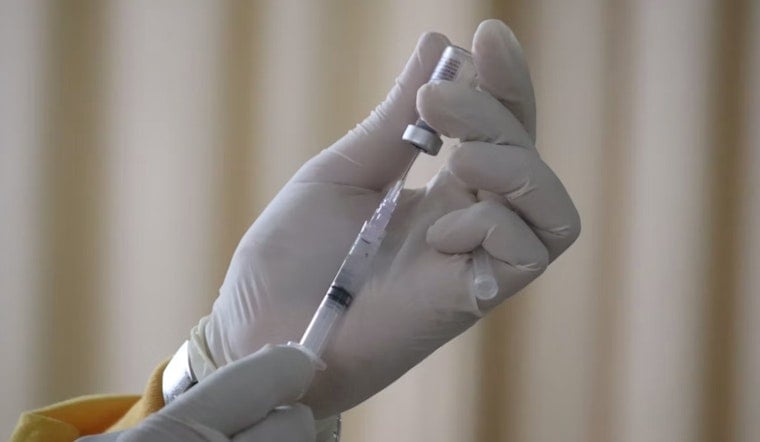
A divided federal appeals court has ruled against a Marin County pharmacist who said her body was a temple of the Holy Spirit that had to stay free of harmful substances, rejecting her claim that she was illegally fired for refusing a COVID-19 vaccine on religious grounds. Maria Ledezma worked as a pharmacist for Optum Health in Rohnert Park starting in 2013 and was fired in December 2021 after she declined the shot required by her employer during the pandemic.
The 9th U.S. Circuit Court of Appeals dismissed Ledezma's lawsuit against Optum Health Services in a 2-1 ruling yesterday, as reported by the San Francisco Chronicle. Ledezma had objected to vaccinations for many years before the pandemic mandate, and Optum required proof of vaccination as part of a broader industry response to state health rules. Judges Mary Murguia and John Owens, both appointed to the court by President Barack Obama, wrote that invoking a broad principle that sounds in religious terms does not transform Ledezma's personal health judgment into a religious mandate.
How a Personal Health Choice Became a Legal Test
The case traces back to a January 2025 summary judgment order from U.S. District Judge Vince Chhabria, who found that while Ledezma's Catholic belief that her body is a temple of the Holy Spirit was sincere, her objection to the vaccine was grounded in personal health choices rather than religious doctrine, according to court records reviewed by Justia Law. Chhabria dismissed Ledezma's lawsuit in 2024, saying she failed to explain her sincerely held religious belief or how it conflicted with Optum's COVID-19 vaccination requirement.
Court records show Ledezma testified in her deposition that she practices her beliefs by caring for her body holistically, avoiding allopathic medications, and exercising what she called self-autonomy to decide what might harm her. The same records indicate her interpretation of the Bible gave her personal discretion over health decisions, which is part of why judges classified her views as personal health preferences rather than religious doctrine. The 9th Circuit majority found that Optum Health Services was entitled to conclude Ledezma's objections were based on personal health preferences and a self-directed judgment about harmful substances.
A Sharp Dissent Over Religious Duty
Judge Patrick Bumatay, appointed to the court by President Donald Trump, dissented, arguing Ledezma's religious duty impelled her to seek personal guidance from the Holy Spirit and that her religion commanded her not to introduce potentially harmful substances into her body. Bumatay wrote that Ledezma should be allowed to sue her former employer and try to prove religious discrimination. Lawyers for Ledezma and Optum Health did not immediately respond to requests for comment on the ruling, per the Chronicle's report.
The California Department of Public Health had ordered in August 2021 that all healthcare facility workers, including pharmacists, be fully vaccinated against COVID-19 by the end of September 2021 unless granted a medical or religious exemption, according to Epstein Becker Green. Federal guidance from the Equal Employment Opportunity Commission has long held that Title VII requires employers to consider religious accommodation requests but does not protect objections rooted in political views, social views, or personal medical preferences, the agency's technical assistance notes.
A Growing Split Over What Counts as Religious
Ledezma's case fits into a broader pattern of post-pandemic litigation testing where personal health autonomy ends and protected religious exercise begins. Just weeks before this ruling, a divided 9th Circuit panel decided a nearly identical dispute in Detwiler v. Mid-Columbia Medical Center, finding that invoking broad religious tenets, such as viewing the body as a temple, does not convert secular medical concerns about alleged harmful substances into protected religious beliefs, according to reporting from Religion Clause. In that case, plaintiff Sherry Detwiler had argued that weekly nasal swab testing violated her Christian duty to protect her body from carcinogens.
Not every 9th Circuit vaccine case has gone against the employee. In January 2025, the same appeals court ruled in favor of San Francisco public employees in Keene v. City and County of San Francisco, finding that workers who cited specific Christian objections to fetal cell lines used in vaccine development had established a likelihood of success on their religious discrimination claims, as reported by Justia. The city in that case had failed to accommodate Christian employees who offered remote work or testing alternatives.
The distinction, legal observers say, comes down to specificity: courts have been far more receptive when employees tie objections to particular theological tenets rather than general health philosophy. That framework has been reinforced by the U.S. Supreme Court's 2023 decision in Groff v. DeJoy, which raised the bar for employers seeking to deny religious accommodations, ruling they can only do so if providing them would cause substantial increased costs to their operations, according to the American Bar Association. That standard replaced a nearly 50-year-old rule that let employers deny accommodations posing more than a minimal cost.
Federal Enforcement Still Evolving
Even as the 9th Circuit rejected Ledezma's claim, federal enforcement elsewhere has moved to hold employers accountable for blanket denials. In May, the Equal Employment Opportunity Commission issued a federal sector appellate ruling finding that federal agencies unlawfully discriminated against employees by summarily denying COVID-19 vaccine religious exemption requests without demonstrating undue hardship under the Groff standard, according to the EEOC. That decision involved California federal employees who had objected to fetal cell lines, echoing the theological specificity that helped the San Francisco plaintiffs prevail.
The 9th Circuit's own trial courts have since updated how they instruct juries on these disputes. Model civil jury instructions published this month by the Courts of the Ninth Circuit confirm that employers asserting an undue hardship defense against Title VII religious accommodation claims must prove substantial increased costs, following the recent wave of appellate decisions on the issue.
Optum Services operates under Optum Health, a subsidiary of UnitedHealth Group, which reported $447.6 billion in total revenue in 2025 and employs more than 300,000 workers nationwide, according to FirstWord Pharma. The scale of the company underscores the stakes for employers navigating an increasingly narrow legal path between accommodating sincere religious objections and enforcing workplace health mandates that courts have repeatedly upheld.




