

























































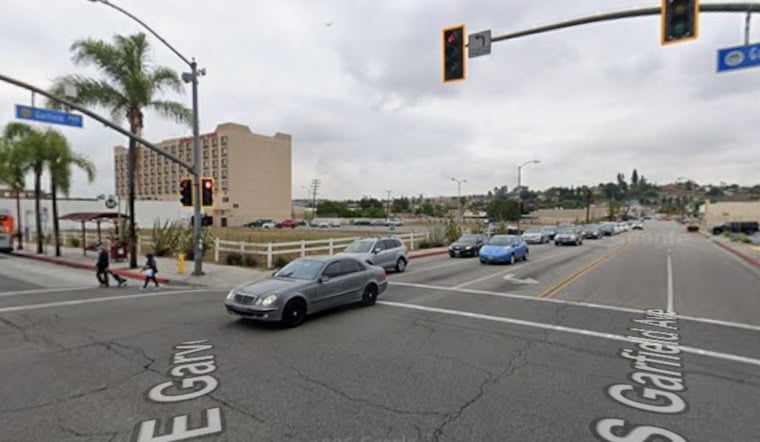
A long-vacant lot at the corner of Garvey and Garfield avenues in Monterey Park is finally set to become something: a seven-story building with 169 apartments, after the City Council signed off on an upsized version of the Celadon project during its regular meeting on August 5. The plan swaps out an earlier condominium concept for rental units, trims the amount of ground-floor retail, and leans on a new state law to skip the kind of lengthy environmental review that has stalled housing projects across California for years.
The council's approval of Amended Development Agreement No. 2261-AA and Tentative Map No. 26-05 formally authorizes developer Rykadan 005 LLC to move forward with the seven-story building, according to City of Monterey Park meeting records. As Urbanize LA reports, the finished building designed by Studio T-SQUARE will include 169 one- and two-bedroom apartments, 16,300 square feet of commercial space on the ground floor, parking for 343 vehicles, and a new public plaza at street level. The site itself spans six contiguous parcels at the southeast corner of Garvey and Garfield avenues, according to filings with CEQAnet.
The project has changed dramatically since Rykadan first secured approvals back in 2021. That original version called for a five-story building with 105 condominiums stacked above roughly 70,000 square feet of commercial space, per the same Urbanize LA report. By 2024, the plan had already grown once, to 150 homes with 43,000 square feet of commercial space and parking for more than 500 vehicles, before landing on the current 169-unit rental configuration with a smaller commercial footprint.
How a New State Law Sped Things Along
Celadon is now using Assembly Bill 130 to claim an exemption from review under the California Environmental Quality Act, the Urbanize LA report notes. City staff determined the project qualifies for a statutory exemption under Public Resources Code Section 21080.66 because it meets urban infill criteria, falls under applicable site size caps, and does not require demolishing any designated historic structures, according to the same CEQAnet filing.
That exemption traces back to a state budget package Governor Gavin Newsom signed on June 30, 2025. Public Resources Code Section 21080.66, created under AB 130, grants full CEQA exemptions to qualifying urban infill projects up to 20 acres, according to the Office of Governor Gavin Newsom. The law is designed to let developers bypass the environmental review cycles that can add years to housing projects, a streamlining mechanism detailed by real estate consultancy Ascent.
Before the council vote, the development team held a public community meeting on April 28 at Luminarias Restaurant to walk residents through the updated design, parking reductions, and revised unit mix, according to city records. Rykadan 005 LLC is a subsidiary of Hong Kong-listed Rykadan Capital Limited, which manages more than $840 million in assets across the U.S., U.K., and Asia and had originally designated the site as the Monterey Park Towne Centre Project.
Part of a Larger Shift Along Garvey Avenue
Celadon is one piece of a broader transformation underway along Monterey Park's commercial corridors. The same day it approved the project, the City Council also voted to place a measure on the November ballot establishing commercial housing overlay rules, aimed at revitalizing underused commercial strips while chasing a state-mandated target of more than 5,000 new housing units, per city records.
Just up Garvey Avenue, another proposal called Deerfield Center would replace a commercial strip center at Atlantic Boulevard with a five-story, 369-apartment building featuring more than 20,000 square feet of retail, as Hoodline reported in its strip mall redevelopment coverage. And this week, Hoodline also reported that The Olson Company closed a $25 million purchase of an 8-acre office park on Potrero Grande Drive, with plans to build 159 condominiums there instead.
Not every commercial-to-residential swap has gone unchallenged in Monterey Park. In March, the City Council voted to place a separate measure on the June ballot that would permanently ban data center developments citywide, a move aimed at preserving commercial land for more traditional community uses rather than industrial or tech infrastructure. Taken together, the votes suggest city leaders are trying to steer growth toward housing on corridors like Garvey Avenue while keeping heavier industrial uses off the table.
No timeline for groundbreaking at 114 E. Garvey Avenue has been announced, and it remains unclear whether construction will bring disruptions to the busy Garvey and Garfield intersection or whether the project will include specific affordable housing designations under local density bonus provisions.





