

























































A 47-year-old Mt. Pleasant woman accused of pocketing Medicaid caretaker payments while an elderly disabled man in her care was left in a state of severe neglect is now headed to trial. Claudia Payne faces five felony counts tied to her alleged handling of state funds meant to pay for home caretaking services between October 2023 and November 2024.
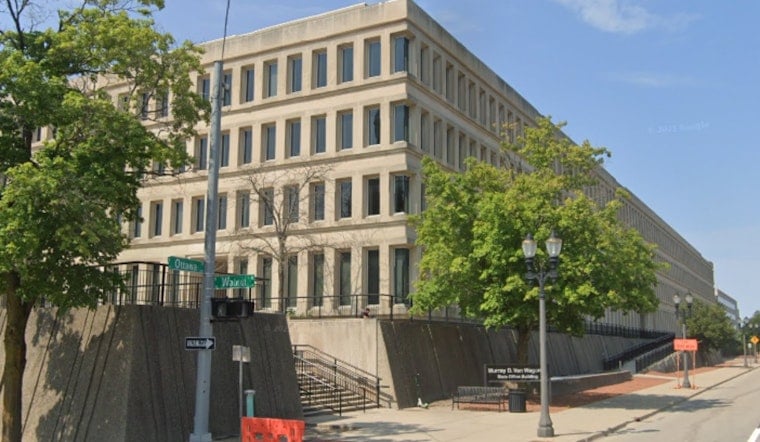
Payne was bound over on Wednesday to stand trial in Ingham County's 30th Circuit Court in Lansing, following her arraignment in East Lansing's 54B District Court earlier this summer, according to the Tampa Free Press. Prosecutors allege that after accepting Medicaid payments to care for the elderly disabled man in Mt. Pleasant, Payne failed to actually perform the caretaking duties she was funded for, and investigators claim the man was ultimately left in a state of severe neglect as a result. A pretrial date in the 30th Circuit Court has not yet been scheduled, according to court records.
Charges Trace Back to a Statewide Sweep
Payne's case did not emerge in isolation. She was charged on June 23 alongside three other Michigan residents as part of a single coordinated enforcement action announced by Michigan Attorney General Dana Nessel, according to a Michigan Attorney General press release. That same day's sweep also produced felony charges against a Detroit outreach contractor accused of improperly receiving $234,000 intended for autism services, an Ann Arbor pharmacist accused of billing for condoms never acquired, and an Oak Park caregiver accused of billing for vulnerable adult care while living out of state, as reported by CBS News Detroit.
Nessel said the Payne case exemplifies the work of the state's Health Care Fraud Division to protect Michigan residents and safeguard Medicaid's integrity, adding that the charges are moving forward to trial. “Medicaid funding exists to care for those in need, not line the pockets of caregivers who abandon them,” Nessel said. Payne was charged following an investigation by the Health Care Fraud Division of the Michigan Department of Attorney General.
Part of a Multibillion-Dollar National Crackdown
Payne's charges stem from the National Health Care Fraud Takedown, an annual nationwide effort led by the U.S. Department of Justice aimed at uncovering and prosecuting health care fraud schemes. This year's takedown resulted in criminal charges against 455 defendants, including 90 licensed medical professionals, across 56 federal districts and 45 U.S. states and territories, involving more than $6.5 billion in alleged false claims, according to the U.S. Department of Justice.
Alongside the criminal charges, the Centers for Medicare and Medicaid Services suspended 1,079 providers and revoked billing privileges for another 1,403, while law enforcement seized more than $182 million in cash, vehicles, and luxury assets nationwide, per the same DOJ announcement. That builds on the 2025 National Health Care Fraud Takedown, which brought charges against 324 defendants across 50 federal districts tied to $14.6 billion in false billings and $245 million in asset seizures.
How Michigan's Fraud Unit Is Funded
Michigan's Health Care Fraud Division operates as the state's federally certified Medicaid Fraud Control Unit. For fiscal year 2026, it received $5,517,524 — about 75 percent of its budget — in federal grant funding from the U.S. Department of Health and Human Services, with the remaining $1,839,170 coming from the State of Michigan.
Under Michigan's Medicaid False Claim Act, each count of knowingly presenting a false Medicaid claim is a felony punishable by up to four years in prison, along with fines of up to $50,000 per count. With five counts pending against her, Payne faces significant potential prison time and financial penalties if convicted at trial.
Part of a Broader Pattern in Michigan Courts
Payne's case follows a string of similar filings moving through the same district court system. In May, Michigan prosecutors charged a Northville dentist in East Lansing's 54B District Court with 42 felony counts of Medicaid fraud for overbilling and falsifying procedure records. Home-care billing schemes in particular have surfaced repeatedly in state Medicaid programs; in May, an Illinois woman was charged with felony vendor fraud and theft after submitting more than $44,000 in false timesheets for personal care services while her clients were hospitalized or while she worked another job, a case Hoodline covered at the time.
Several details in Payne's case remain unresolved in public filings, including the exact dollar amount she received from Medicaid during the period in question, the specific mechanism by which the alleged neglect was discovered, and the current medical condition of the man who was in her care. It is also unclear whether parallel adult protective services actions or license revocations have been initiated against her. Those questions may come into sharper focus once a pretrial hearing is docketed in Ingham County's 30th Circuit Court.





