

























































Before he ever ran a football team, Michael Blatt ran apartment complexes, hotels, and a stable of NFL clients out of Stockton, California — and in 1989, as he angled for a top executive job with the newly sold Seattle Seahawks, he was arrested and charged with first-degree murder in the crossbow killing of a former business associate. Blatt was never convicted. Two separate trials ended in deadlocked juries, and prosecutors ultimately dropped the case, closing one of the strangest chapters in NFL ownership history without ever resolving who, if anyone, would be held criminally responsible.
The case is detailed in a new investigation from The Athletic, whose reporters — Katie Strang, Nathan Fenno, and Zak Keefer — interviewed more than 70 people and reviewed more than 10,000 pages of source material to reconstruct Blatt's path from real estate developer to accused murder-for-hire mastermind. Blatt, now 80 and living in Savannah, Georgia, built a real estate empire worth an estimated $28 million by the early 1980s, according to the outlet, and co-founded the Sunwest Sports agency in 1982, which represented more than 50 NFL clients that same year.
An Aggressive Rookie Holdout Built His Reputation
Blatt's reputation for hardball tactics grew after he advised client Kelly Stouffer, drafted No. 6 overall by the St. Louis Cardinals in 1987, to sit out his entire rookie season rather than sign — a strategy that eventually forced the Cardinals to trade Stouffer to Seattle. That aggressive posture, per The Athletic's reporting, helped position Blatt as a broker when the Nordstrom family decided to sell the Seahawks to real estate developer Ken Behring in 1988. The Nordstroms, who had led the ownership group since 1974, had grown weary of the sports business after two separate NFL player strikes, according to MyNorthwest.
Blatt resigned as an NFL agent in 1988 and put $4.4 million in escrow for a minority stake in the team, The Athletic reports, hoping to parlay his role in the sale into a Seahawks executive position. He told The Stockton Record in February 1989 that he would become the team's top executive. Ten days later, the Seahawks announced Tom Flores as team president and general manager instead, and Blatt was passed over — a rejection that came as Mike McCormack departed the same positions.
A Threatening Letter and a Business Feud Turned Deadly
The man at the center of Blatt's undoing was Larry Carnegie, who had arrived in Stockton in 1974 to attend the University of the Pacific's pharmacy school and met Blatt through a property-management referral in 1981. Their relationship soured after Blatt sold the Fremont Inn in 1985; buyers later sued Blatt and Carnegie over allegedly cooked property books, a lawsuit Blatt settled in 1986. In February 1987, Carnegie sent a nine-page letter threatening to expose damaging information about Blatt and separately contacted Blatt's wife, Suzanne, with similar claims, according to The Athletic's account.
By late February 1989, according to the investigation, Blatt offered James Mackey and his wife a Stockton condominium unit at cost — a deal that could have netted Mackey $40,000 by flipping it — and allegedly told Mackey that Carnegie should be killed. Blatt gave Mackey a $2,000 check on February 27, 1989. Mackey then asked Carl Hancock to find someone to carry out the killing, and the two men bought a crossbow, a sleeping bag, and two fishing licenses the following day, per the reporting.
Crossbow Attack Northwest of Stockton
On February 28, 1989, Hancock lured Carnegie to a house amid farmland and orchards northwest of Stockton, where Mackey shot him in the chest with the crossbow. A driver near Tokay Colony Road called 911, but Mackey and Hancock had already strangled Carnegie, killing the 38-year-old, before his body was found in Sonoma County the following day, according to The Athletic. Carnegie's wife, Karen, identified Blatt as the person who wanted her husband dead.
Investigator Hal Lipset, hired by Ken Hofmann in 1989, and detective Pete Rosenquist — who interviewed Blatt for 73 minutes in Morada, California, that March — both pursued the case, while Blatt denied any involvement. Mackey was arrested for first-degree murder in June 1989 and identified Blatt as the mastermind; Hancock was arrested the following month. Both men signed plea deals agreeing to testify against Blatt in exchange for facing almost 17 years in prison before parole eligibility, rather than the harsher sentence a murder conviction could bring.
Arrest, Two Hung Juries, and a Dismissed Case
Blatt was arrested and charged with first-degree murder on August 31, 1989, on Pershing Avenue in Stockton. Investigators reportedly found a note reading “Larry we are even!!” in his home or office that same day. Mackey and Hancock ultimately pled guilty to first-degree murder and received sentences of 25 years to life, according to the Bakersfield Californian.
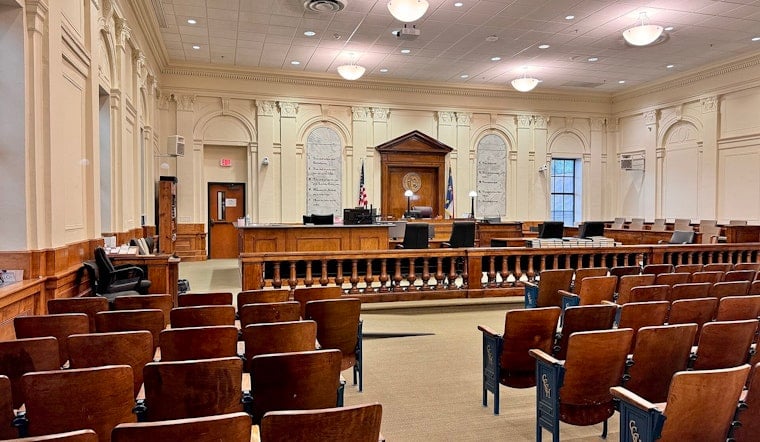
Blatt's first trial jury deadlocked after 14 days of deliberation on October 31, 1990, splitting nine votes to convict and three to acquit. His second trial fared even worse for prosecutors: after 20 days of deliberation in May 1992, jurors voted 11 to 1 in favor of acquittal, a result UC Berkeley Law attributes in part to defense attorneys Penny Cooper and Cris Arguedas successfully undermining Mackey's credibility on the stand. San Joaquin County District Attorney John Phillips, overruling prosecutor Eual Blansett, decided against a third trial in June 1992 after juror interviews convinced the office a conviction was not achievable, according to California Lawyer. Blatt walked out of jail a free man after more than two years behind bars.
Other Legal Troubles Piled Up Around the Same Years
The murder case was not Blatt's only legal exposure during that period. In May 1989, three months before his arrest, Ramada Inc. won a $263,406 federal court judgment against him in Sacramento over underpaid hotel franchise fees, per the Los Angeles Times' archived coverage. Former NFL player John Farley, whom prosecutors identified as another prospective target in Blatt's alleged murder-for-hire plot, separately won a $204,886 arbitration award against Blatt over investment mismanagement, a ruling later upheld by a California appellate court.
Blatt's ex-wife, Suzanne Chausse, had filed for divorce from him in 1983, during which his real estate empire was valued at $28 million; she ultimately received $2.2 million paid out over 15 years. Years later, in 2014, retired investigator Paul Holes looked into Blatt as a possible Golden State Killer suspect while Blatt was living in Sausalito, California — an inquiry closed after Blatt's DNA did not match that of Joseph DeAngelo, who was identified as the Golden State Killer in 2018. A friend of Blatt's in Sausalito had found two 17-inch arrows at his home and on his Porsche in 2007, according to the reporting, though no charges resulted. Hancock, for his part, insisted at a 2019 parole hearing that Carnegie's death was a murder for hire commissioned by Blatt. Mackey was released from prison in 2017.
The NFL's Response and a Franchise Transformed
The controversy surrounding Blatt's attempt to combine an agent's role with team ownership came during a period when the NFL Players Association had no formal rules preventing such conflicts. That changed in December 1994, when the union established its Regulations Governing Contract Advisors, introducing mandatory background checks, certification exams, and strict conflict-of-interest prohibitions, according to Pro Sports Group.
The Seahawks franchise Blatt once hoped to help run has since become almost unrecognizable from its 1988 sale price of $80 million. Microsoft co-founder Paul Allen bought the team from Behring for $194 million in 1997, partly to block Behring's attempt to relocate the club to California, and in July 2026 the Seahawks were sold again — this time to the Khosla family for a record $9.612 billion, according to CBS News. Behring's own Northern California real estate legacy resurfaced more recently closer to home: his 26,627-square-foot Danville mansion, built during his years as a developer and Seahawks owner, sold at auction for $10.8 million in August 2024 — less than half its original $25 million asking price, as Hoodline previously reported.





