

























































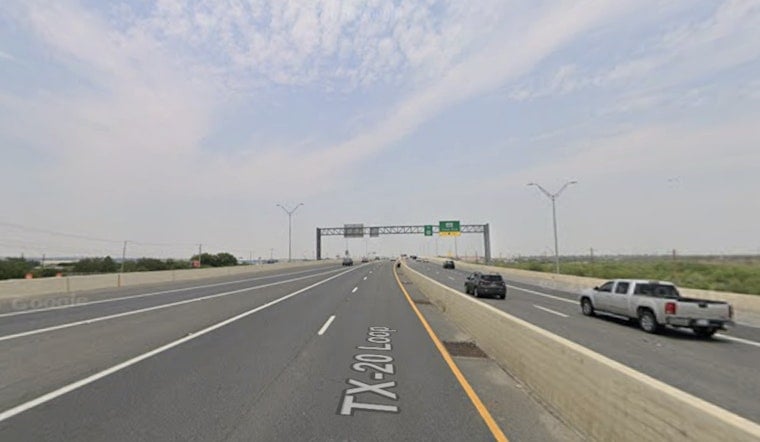
A National Transportation Safety Board preliminary report has revealed that both engines on the Cessna Citation Latitude carrying Austin tech leader Joshua Baer flamed out before the aircraft slammed into a Laredo highway on June 16, killing the Capital Factory founder and injuring five others. The pilots reported unusual vibrations, right-side fuel pressure warnings, and electrical system failures in the moments before the jet went down one mile short of the Laredo airport runway, forcing an emergency landing on Texas State Highway Loop 20.
The findings, first detailed in July, offer the first official technical explanation for why the plane lost power on final approach, according to KSAT. The jet had taken off from San José del Cabo, Mexico, and was bound for Austin before diverting to Laredo, according to ABC News. The pilots called Laredo airport just five minutes before the crash, per that same report, and the plane ultimately struck a vehicle as it came down on the highway during evening traffic.
Baer, the 47-year-old founder and CEO of Austin-based Capital Factory, was among six people aboard the jet, which also carried three teenagers, including his own son, and two pilots. Capital Factory confirmed Baer's death, and ABC News reported that the plane's passengers included some relatives and some friends. Baer's teenage son was among the five survivors pulled from the wreckage and escaped without critical injuries, according to a report cited by KXAN.
Bystanders Raced to the Burning Wreckage
In the chaotic minutes after impact, passersby and motorists on Loop 20 rushed toward the flaming aircraft, using tools including a sledgehammer and a shovel to smash through cockpit glass and pull occupants free before emergency crews could arrive, according to The Texas Tribune. An off-duty Laredo police officer driving home after his shift also witnessed the aircraft coming down and was among the first people on scene to help survivors, the outlet reported.
Police began receiving 911 calls about the crash at around 10 p.m. local time, per ABC News. Police officers and firefighters rescued passengers from the plane, and the Laredo Fire Department retrieved the remaining person aboard along with a small pet. Five police officers were hospitalized with smoke inhalation and were later released. Laredo Mayor Victor Treviño said the tragedy did not become a mass fatality event. The occupants of the vehicle struck during the jet's emergency landing attempt were also taken to a nearby hospital with non-critical injuries, the Tribune reported.
Highway Cleanup and Federal Investigation
Jet fuel spilled onto the roadway required a cleanup before Loop 20 could reopen, and federal authorities gave permission to begin clearing debris, according to ABC News. Laredo authorities hoped to reopen the highway by 5 p.m. that Wednesday, though the wreckage remained on Loop 20 into the early morning hours. The Federal Aviation Administration assisted with debris recovery at the scene, and the FBI was also present, per the outlet's reporting.
The National Transportation Safety Board is leading the investigation into the crash, with the FAA assisting. The aircraft, registered as N523QS, was operated by NetJets, the fractional private aviation company owned by Berkshire Hathaway since 1998. NetJets said it was aware of the event involving its aircraft in Laredo and was working with authorities, according to ABC News. The crash marked the first passenger-fatal jet accident in NetJets' history, according to Private Jet Card Comparisons, a notable statistic given the company's decades-long reputation for safety in business aviation.
In a July letter sent to customers following the NTSB report, NetJets Chairman and CEO Adam Johnson stated that the flight crew responded to an “extraordinarily complex and unprecedented series of circumstances with professionalism, discipline, and dedication,” per Private Jet Card Comparisons. The precise mechanical or maintenance cause behind the fuel pressure warnings and dual engine flameout remains unresolved, and full NTSB investigations of this kind typically take 12 to 18 months to complete.
Baer's Legacy in Austin's Tech Community
Baer founded Capital Factory in 2009 as a software accelerator, and the organization grew into the most active early-stage venture investor in Texas every year since 2010, backing deep-tech startups including humanoid robotics firm Apptronik and aerospace company Firefly Aerospace, according to Capital Factory. Beyond his work at the accelerator, Baer served on the board of directors of the Texas Tribune from 2015 to 2017 and taught entrepreneurship courses in the University of Texas at Austin's computer science department, per the Tribune's reporting.
Following Baer's death, Capital Factory President Bryan Chambers announced that the organization remains fully operational and committed to continuing Baer's core mission of backing Texas founders, according to KVUE. Chambers emphasized that Baer had built a resilient team capable of sustaining the venture firm without him, a reassurance aimed at the founders and investors who relied on Capital Factory's backing across Central Texas.





