

























































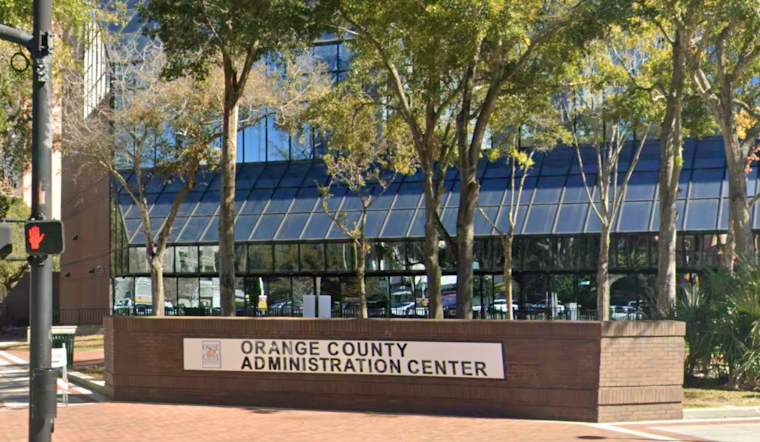
Orange County commissioners are trying again to push through Vision 2050, the long-term growth plan meant to modernize decades-old development rules, after the state of Florida declared the entire plan null and void last year. This time, county planners have built in an escape hatch for developers, hoping it will let the plan finally take effect just before the new year.
Vision 2050 was approved by Orange County commissioners in 2025 as a way to expand housing options while protecting established neighborhoods and rural land, according to WFTV. The plan is designed to determine what can be built and where across the county, guiding new development toward areas equipped to support it. But Florida blocked the county's first attempt to implement the changes, and the state's move traces back to Senate Bill 180, a 2025 law that bars local governments under hurricane emergency declarations from enacting land development regulations considered more restrictive or burdensome through October 2027, as reported by Central Florida Public Media. The law, passed as a hurricane recovery measure, applied its preemption retroactively to August 2024.
Orange County Planning Division Manager Alberto Vargas told a public meeting that the Florida Department of Commerce's July 2025 letter declaring Vision 2050 null and void was “unprecedented” in his 30-year planning career, per the same outlet's reporting. State planning agencies typically offer compliance feedback rather than invalidating an entire municipal comprehensive plan outright, underscoring how unusual the intervention was.
An Opt-Out Built to Satisfy State Law
To comply with SB 180 while still salvaging Vision 2050, county planning staff crafted an opt-out mechanism that would let developers proceed under the county's pre-2025 comprehensive plan on a case-by-case basis. Commissioners endorsed that approach during a July 14 work session, with public hearings now scheduled for Thursday, August 20, and again on September 29, according to the same Central Florida Public Media report. The Orange County Planning Board has recommended moving forward with the proposal, and county commissioners are expected to discuss it further at the September 29 meeting.
Under the plan, some projects already moving through the county's approval process could temporarily remain under old regulations, while other projects could choose to opt out of Vision 2050's new rules for a limited period, per WFTV's reporting. That flexibility is the mechanism designed to keep the county in compliance with state law without abandoning years of planning work. If the strategy holds, Vision 2050 could take effect on December 21, becoming the county's new development rule book.
Why the County Wanted a New Rule Book
The stakes behind the rewrite are considerable. Orange County's population is projected to grow by 500,000 residents to exceed 2.1 million by 2050, a 48% increase over 2020 levels that would require an estimated 276,000 new housing units, according to Orange County Government figures cited by CNU.org. The county has gained more than 200,000 residents per decade since 1960.
Vision 2050 was developed alongside Orange Code, the county's first comprehensive zoning overhaul since 1957, which shrinks the existing 1,200-page zoning ordinance into a 400-page form-based code, per CNU.org. Rather than strictly segregating land uses, form-based codes focus on building placement and streetscape design. The plan directs 44% of future population growth into designated urban sectors covering just 6% of the county's land area, prioritizing high-density infill along International Drive, near the University of Central Florida, along Semoran Boulevard, and in Downtown Orlando. By applying form-based transect zoning across unincorporated areas housing roughly 900,000 residents, Orange Code represents the largest form-based sprawl-repair code adopted in the United States by population, unlike city-level codes such as Miami 21, which don't focus as heavily on retrofitting suburban commercial arterials.
The stakes of inconsistent rules are already visible on the ground. Properties along Curry Ford Road, for instance, are governed by different rules depending on whether they sit inside Orlando's city limits or in unincorporated Orange County, WFTV reports — a patchwork Vision 2050 aims to untangle.
A Legal Fight That's Far From Over
Orange County isn't relying solely on the opt-out compromise. In September 2025, the county joined a coalition of 25 Florida municipalities and counties in filing a lawsuit in Leon County Circuit Court challenging SB 180 as an unconstitutional infringement on local home rule authority, according to Central Florida Public Media reporting via Florida's People Olive Branch. Local governments involved argue the state preemption creates unconstitutional unfunded mandates and blocks local disaster resiliency planning.
Lawmakers tried to ease the pressure this year. During the 2026 legislative session, the Florida Senate unanimously passed Senate Bill 840, 38-0, to narrow SB 180's land-use preemption, but the measure died after the Florida House declined to take it up before adjournment. Hoodline previously reported on the Sustanee case. That failure leaves the county's opt-out procedure as the primary near-term path forward, with full preemption relief unlikely before October 2027.
Voters have already weighed in on part of this fight. In November 2024, Orange County residents approved a Rural Boundary Charter Amendment with 73% support, requiring a supermajority commission vote to extend urban development into protected rural areas east of the University of Central Florida. A developer challenged that amendment in court, but Florida's Sixth District Court of Appeal upheld it in March 2025, reinforcing the kind of growth boundary that Vision 2050 was built to preserve.
Whether the state accepts Orange County's opt-out compromise remains an open question, as does how many developers will choose to build under the older rules rather than wait for Vision 2050 to take hold. The outcome of the broader lawsuit against SB 180 is also still pending, leaving the county's long-term development rule book in a kind of legal limbo even as the December 21 target date approaches.





