

























































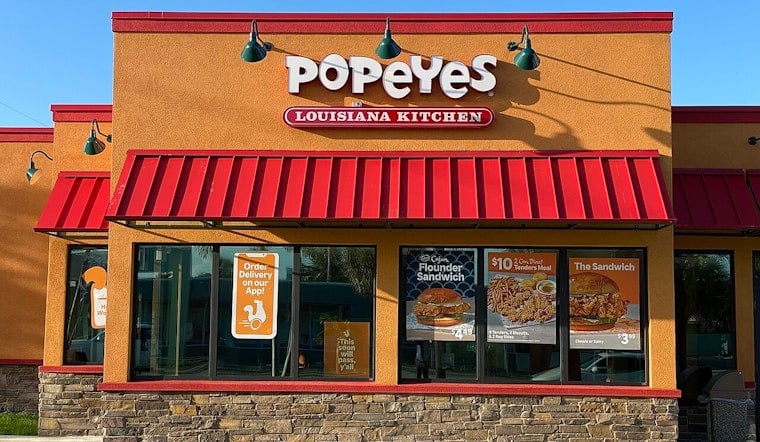
A Houston-area couple has filed a lawsuit seeking more than $1.5 million from Popeyes, claiming they found what appeared to be a condom-like object embedded in a piece of fried chicken. Justin Howard, who lives in Missouri City, and Danielle McKinnon, who lives in Katy, say the discovery happened on July 25 at the Popeyes location at 7416 South Sam Houston Parkway West on Houston's southwest side. The lawsuit describes the alleged incident as \"a deeply disturbing and frightening event.\"
According to Chron, Howard says he bit into the chicken and found the object appearing embedded within the meat itself. The couple says they stopped eating immediately and became physically nauseated, then told Popeyes staff about what they had found - only to be met with laughter from employees, the lawsuit alleges. Restaurant management first tried to replace the allegedly contaminated order, according to the outlet, and ultimately issued a refund after Howard and McKinnon pressed the issue. The suit seeks damages covering medical and healthcare expenses, physical pain and suffering, mental anguish, lost wages, attorney's fees, court costs, and pre- and post-judgment interest.
Petition Lists Six Legal Claims Against Four Sets of Defendants
Howard and McKinnon filed their petition on August 3 in Harris County District Court, according to Houston Stringer. The filing lays out six causes of action: negligence, gross negligence, negligent hiring and supervision, strict products liability, breach of implied warranties, and violations of the Texas Deceptive Trade Practices Act. It names four categories of defendants - parent company Restaurant Brands International Inc., brand owner Popeyes Louisiana Kitchen Inc., local franchise operator AAMANA Businesses Inc., and unnamed employees listed as John Does 1 through 10, the outlet reports.
That mix of claims matters because Texas law allows for damages well beyond simple compensation. Under Chapter 17 of the Texas Business and Commerce Code, the state's Deceptive Trade Practices-Consumer Protection Act lets consumers who receive contaminated goods recover economic damages and court costs, according to ICLG. The statute also permits up to treble damages if a defendant's conduct is proven to be knowing or intentional.
Still, the petition itself is careful with its language. Court filings phrase the allegation as \"what appeared to be a condom-like foreign object\" and cite fear of exposure to bodily fluids and bloodborne pathogens, but the filing does not allege that pre-suit forensic or laboratory testing confirmed the object's exact composition, as a discussion of the case circulating on Reddit pointed out. That distinction - between what the object appeared to be and what it was scientifically confirmed to be - is likely to be a central point of dispute as the case moves forward.
Activists and Police Got Involved Before the Lawsuit Was Filed
Community activists pushed for action even before the case reached court. On July 27, Dr. Candice Matthews and Quanell X met with restaurant management, urging the franchisee to temporarily stop serving chicken at the location while asking the Houston Police Department to assign a detective to investigate, according to Houston Stringer. The pair recorded themselves confronting the restaurant's manager during that visit.
Houston police also responded to the restaurant after verbal altercations broke out between customer representatives and staff over the contamination claims, according to video and posts shared on Facebook documenting the scene. The exact nature of that confrontation remains described mainly through social media accounts rather than an official police report.
Popeyes' Corporate Scale Versus a Single Storefront
The lawsuit's $1.5 million demand is a small fraction of what the Popeyes brand generates nationally. Popeyes opened its first restaurant in New Orleans in 1972 and now counts more than 4,000 locations in the U.S. and abroad, per Chron.
Popeyes has been owned since 2017 by Restaurant Brands International Inc., the corporation formed in 2014 through the merger of Burger King and Tim Hortons, according to Restaurant Brands International. The parent company reported more than 32,000 restaurants across over 120 countries and nearly $45 billion in system-wide sales in 2026. Roughly 95% or more of RBI's quick-service restaurants nationwide are owned and operated by independent franchisees rather than the corporation directly, delegating daily staffing, food preparation, and supervision to local operators.
Case Arrives Amid a Bumpy Stretch for Houston-Area Popeyes Franchises
The lawsuit lands as Popeyes continues expanding across Southwest Houston. Municipal permit records show plans filed in February for a new location at 2820 Hillcroft Avenue, less than four miles from the restaurant named in the suit, Hoodline reported in its coverage of Popeyes' Hillcroft expansion plans. That growth has come even as some franchisees struggled: major operator Sailormen Inc., which ran more than 130 Popeyes stores, filed for Chapter 11 bankruptcy protection in mid-January and closed roughly 20 locations, Hoodline previously detailed in its report on the Miami franchisee's bankruptcy filing.
Chron reported that it reached out to Popeyes for comment on the lawsuit; the chain had not responded by the time of publication. Any formal response from the defendants would appear next in Harris County District Court records, where the case remains pending.





.jpg)