

























































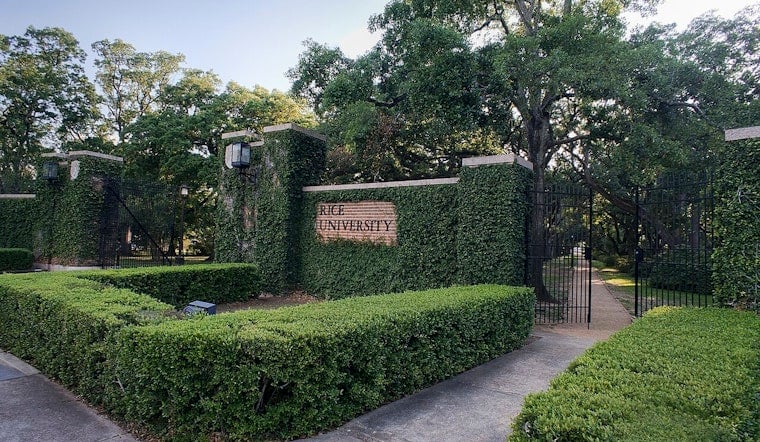
Rice University announced it is expanding its free tuition program, raising the income cap for full coverage to $200,000 a year — a move that will let far more Houston-area and out-of-state families send their kids to the private university without paying tuition. The change lands even as Rice's own sticker price keeps climbing, with total annual cost of attendance approaching $93,000 for the 2026–2027 school year.
Under the current version of the program, Rice covers tuition for families earning between $75,000 and $140,000 a year, while families earning $75,000 or less already have their fees, room, and board covered too, according to ABC13 Houston. Starting in Fall 2027, Rice will cover tuition, fees, room, and board for students from families earning less than $100,000 annually, and will provide free tuition alone to students from families earning between $100,000 and $200,000 a year, per the same report. Rice President Reginald DesRoches said talent exists in every community and across every socioeconomic background, calling the expansion “a defining moment for Rice University and for the future of higher education.”
What the New Income Cap Actually Changes
The jump is significant for families in the upper-middle income bracket. Before this expansion, families earning between $140,000 and $200,000 only qualified for half-tuition coverage at Rice — meaning the new policy effectively doubles their benefit by converting partial aid into full tuition coverage, according to the Houston Chronicle. The previous cap for 100% free tuition had been $140,000, the Chronicle reports.
There's a catch worth noting for prospective applicants: eligibility isn't based on income alone. The expanded thresholds, which take effect for incoming undergraduates in Fall 2027, require that families also hold what the university calls “typical assets” to qualify, according to The College Investor. In practice, that means Rice's financial need calculations weigh total household wealth and savings alongside annual gross income, so a high-asset family earning under $200,000 could still be expected to contribute something toward tuition.
Rising Sticker Price, Rising Aid Budget
Rice set undergraduate tuition for 2026–2027 at $71,140, a 6.5% increase over the prior year, according to the Rice Thresher. The university also raised room and board charges to $20,530 alongside the tuition hike, the student newspaper reported, pushing the total estimated annual cost of attendance to nearly $93,000.
Even as the sticker price climbs, Rice has poured resources into offsetting it for lower- and middle-income students. Since launching the original version of The Rice Investment in 2019, the university has distributed more than $1 billion in financial aid to undergraduates, according to Click2Houston — a total that represents a 75% increase over what Rice distributed in the seven years prior to the program's launch. The outcome shows up in graduation debt numbers: by late 2024, the share of Rice undergraduates graduating with debt had dropped from 25% before the 2019 launch down to 14%, per Poets&Quants for Undergrads, which also noted that more than half of all Rice undergraduates received need-based aid during the 2023–2024 academic year.
A Return to Rice's Founding Roots
The loan-free framework echoes something baked into Rice's history from the start. When the university opened in 1912, it operated completely tuition-free for its first 50 years, according to Fox 26 Houston, before introducing tuition decades later and eventually re-establishing major free-tuition guarantees through initiatives like the Rice Investment.
Rice Joins a Crowded Field of Tuition-Free Promises
Rice isn't moving in isolation. ABC13 reports that Texas Tech, the University of Houston, Texas A&M, and the University of Texas all have similar free tuition programs of their own, reflecting how competitive the landscape has become for Texas students weighing college costs. Nationally, Rice's shift to a $200,000 cap mirrors moves at other elite private schools — MIT and the University of Pennsylvania have raised their own tuition-free income caps, and Boston University announced a matching $200,000 threshold, as reported by the Washington Post.
Texas public universities have been racing to keep pace in their own way. The University of Texas System Board of Regents voted in November 2024 to cover full tuition for Texas residents earning up to $100,000 across all UT academic campuses starting in Fall 2025, under the Texas Advance Commitment, according to UT Austin News. Texas A&M followed in February 2026, announcing its Aggie Assurance program would expand starting Fall 2026 to cover full tuition for Texas residents with family incomes up to $100,000, up from a previous $60,000 threshold, per Forbes. Texas A&M also extended its undergraduate tuition freeze through the 2026–2027 school year, Forbes noted.
Closer to home, the University of Houston's Cougar Promise program covers full tuition and mandatory fees for Texas freshmen from families earning $65,000 or less, with partial tuition grants available up to $125,000 in family income, according to the University of Houston. UH raised its full-coverage threshold from $50,000 to $65,000 back in 2020.
One key distinction sets Rice apart from those public programs: as a private university, Rice's loan-free aid applies to eligible domestic undergraduates regardless of home state, while the UT System, Texas A&M, and UH promise programs are restricted to Texas residents. The expansion follows other Hoodline coverage of the broader trend, including UNT's Denton free-tuition pledge and the University of Chicago's move to offer free tuition for families under $250,000.





