

























































Franklin Templeton is preparing to put tokenized assets inside conventional investment funds, meaning everyday investors in ordinary ETFs and mutual funds could end up holding blockchain-based assets without ever having sought them out. The San Mateo-based asset manager plans to use its tokenized money-market fund as a holding and as collateral inside its own ETFs and mutual funds, a move the firm says has cleared a key US regulatory hurdle for the first time.
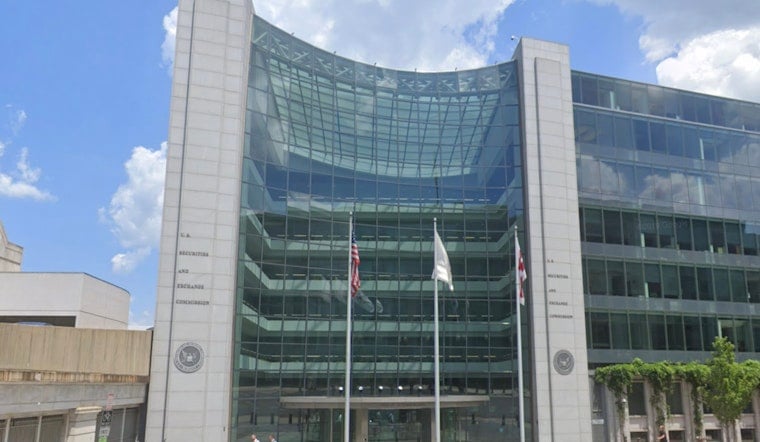
According to Bloomberg, reporters Olga Kharif and Vildana Hajric detail how Franklin Templeton says it has received what the firm describes as the first US regulatory clearance allowing digitally native products to be used within traditional funds. The clearance traces back to an August 12 letter posted by the Securities and Exchange Commission, which waived several requirements of Rule 17f-2 under the Investment Company Act of 1940 — specifically paragraphs (b), (e), and (f), which had required physical vault custody or thrice-yearly accountant counts for fund holdings.
What the SEC Actually Waived
For decades, mutual funds and ETFs relied on internal money market funds to park excess cash and securities-lending collateral, but Rule 17f-2's custody rules were built for an era of paper certificates, not blockchain ledgers, per background compiled by The Defiant. To satisfy the SEC's 12 required custody safeguards without a physical vault, affiliated transfer agent Franklin Templeton Investor Services will instead secure private keys and retain administrative smart-contract controls, allowing it to correct unauthorized transactions, freeze or migrate wallet records, and restore the master shareholder ledger if something goes wrong, as reported by The Defiant.
In its regulatory request, Franklin Templeton stated that sweeping traditional fund cash and securities-lending collateral into its tokenized fund offers real operational upside: hourly net asset value calculations, intraday trading, faster settlement, potential cost reductions, and enhanced data security, according to Ledger Insights. That is a meaningful shift from the daily NAV calculations that have governed traditional cash management inside mutual funds for decades.
A Five-Year Head Start on Wall Street
The fund at the center of the arrangement, the Franklin OnChain U.S. Government Money Fund — ticker FOBXX, represented on-chain by the BENJI token — launched in April 2021 as the first US-registered mutual fund under the 1940 Act to use a public blockchain as its primary system of record for transactions and share ownership, per the Stellar Development Foundation. By July 2026, FOBXX had grown to roughly $2.44 billion in total assets spread across nine public blockchain networks, including Stellar, Ethereum, Solana, Polygon, Avalanche, Arbitrum, Aptos, Base, and BNB Chain — a sharp expansion from its original Stellar-only footprint, according to data cited by Spark.
That growth mirrors a broader industry surge. The market for tokenized US Treasuries and money-market funds climbed from roughly $850 million in early 2024 to surpass $10 billion by February 2026, then reached $17 billion by mid-2026 across more than 70 distinct products, Spark reports. Franklin's biggest rival in the space, BlackRock, runs a competing tokenized money market fund called BUIDL that held over $2.8 billion in assets by July 2026 — but BlackRock requires a $5 million institutional minimum, while Franklin's FOBXX asks for just $20, opening on-chain Treasury exposure to retail investors in a way BlackRock's product does not.
A Template Other Fund Giants Could Copy
Financial legal analysts told TFTC Newsdesk that the SEC's August decision effectively creates a replicable regulatory template, making it structurally difficult for agency staff to deny similar Rule 17f-2 self-custody relief to competitors such as BlackRock or Vanguard should they file comparable requests. Franklin has continued building out its crypto footprint elsewhere in its business, too: in April 2026, parent company Franklin Resources agreed to acquire crypto manager 250 Digital from CoinFund to launch a unit called Franklin Crypto, notably using BENJI tokens themselves as part of the payment consideration in that deal, per Investing.com.
Franklin Templeton, headquartered in San Mateo, manages more than $1.7 trillion in global assets and charges a 0.15 percent management fee on FOBXX. The company's push follows a broader pattern of traditional finance edging toward blockchain rails that Hoodline has tracked in Nasdaq's tokenized stock trading approval and other moves toward round-the-clock, blockchain-integrated markets. Whether rival asset managers move quickly to seek the same relief — and whether everyday mutual fund investors notice or object to holding tokenized assets they never explicitly chose — remains an open question that regulators and the industry are still watching play out.





