

























































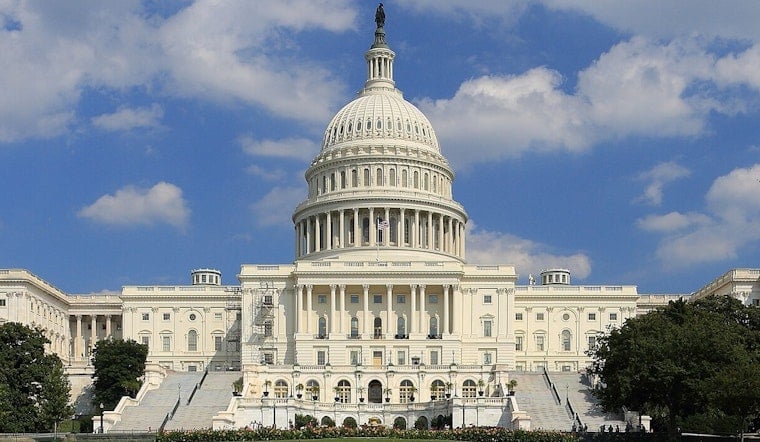
The U.S. Senate approved a $1 trillion bipartisan infrastructure plan on August 10, 2021, in a 69-30 vote that saw 19 Republican senators cross the aisle to join every member of the Democratic caucus. The bill immediately moved to the House of Representatives, where it faced an uncertain path before it could reach President Joe Biden's desk. Republican senators had attempted to slow the bill during the legislative process, and lawmakers spent several weeks making amendments and changes before the final vote.
As reported by Tampa Bay 28, the coalition of more than 20 Democratic and Republican senators represented the first phase of President Biden's rebuilding agenda. Senate Minority Leader Mitch McConnell and lead GOP negotiator Rob Portman were among the 19 Republicans who joined all 50 Democrats to comfortably clear the 60-vote filibuster threshold, according to a report cited in the research record. Speaking from the East Room of the White House on the day of the vote, Biden said the bill showed that Democrats and Republicans could still work together, and he described it as a historic investment on the scale of the New Deal and the interstate highway system.
Biden also said the Republican senators who crossed the aisle showed a lot of courage, and he told reporters the legislation would make the most important investment in public transportation in American history. Per Tampa Bay 28's account of the vote, the president said he was confident a companion budget bill would also pass, and he expected the House to eventually place two bills on his desk — one for infrastructure and one for budget reconciliation.
What Made It Into the Final Deal, and What Got Cut
Reaching a bipartisan agreement required trade-offs. Senate Democrats removed childcare and eldercare provisions from the infrastructure package to secure Republican support, even though a separate $3.5 trillion budget plan the Senate began voting on that same day still included increased access to childcare and eldercare. Senator Bill Hagerty refused to back down on the amount of mandatory debate time allotted for the infrastructure bill, a sticking point from two days before the vote, per the article's account of the Senate floor fight.
The amendments that ultimately passed included a section on cryptocurrency, according to NPR, which the research record shows required digital-asset “brokers” to report transactions over $10,000 to the IRS — a provision the Joint Committee on Taxation estimated would raise $28 billion over ten years, per Baker McKenzie. The bill also included a section repurposing unused COVID-19 relief funds, again according to NPR, which the dossier notes redirected roughly $205 billion from earlier stimulus packages, as detailed by WVPE.
Where the Money Was Set to Go
The legislation's total authorized spending reached approximately $1.2 trillion over eight years, though only $550 billion of that represented new federal spending above existing baseline levels, according to Clark Hill. Among the new transportation investments, the bill designated $110 billion for highways and major bridge repairs, $66 billion for freight and passenger rail, and $39 billion for public transit expansion, per The Council of State Governments. That rail figure marked the largest single federal investment in passenger rail since Amtrak's creation in 1971.
Beyond transportation, the bill allocated $65 billion to expand high-speed broadband access to underserved areas and $55 billion to upgrade municipal drinking water systems and eliminate lead service lines, according to Ballotpedia — the latter figure representing the largest federal clean drinking water investment in U.S. history.
A Fight That Was Far From Over
Passing the Senate was only half the battle. House Speaker Nancy Pelosi and progressive lawmakers went on to delay taking up the Senate-passed bill for nearly three months, from August until November 2021, in an effort to force simultaneous passage of the broader budget reconciliation package, according to Ballotpedia. Progressives ultimately agreed to decouple the two bills after receiving assurances of a later vote on social spending. The Senate debate on that broader budget plan was expected to extend into the fall.
The House would not approve the infrastructure package until November 5, 2021, passing it 228-206 after 13 Republicans supported the bill and six progressive Democrats voted against it, according to CNN. Biden signed the Infrastructure Investment and Jobs Act into law ten days later, on November 15, 2021. By November 2024, federal agencies had announced or allocated more than $568 billion across over 66,000 specific infrastructure projects nationwide, per the Clean Air Task Force, showing just how far the law's reach ultimately extended beyond the Senate floor where it began.








.JPG)