

























































A federal permitting requirement that has governed the sale of gun suppressors and short-barreled rifles since 1934 lapsed early Thursday after the Trump administration did not appeal a court ruling striking it down, and New York's attorney general is vowing to keep fighting the change. Customers lined up at gun stores across the country Thursday to buy suppressors without a registration permit for the first time in nearly a century.
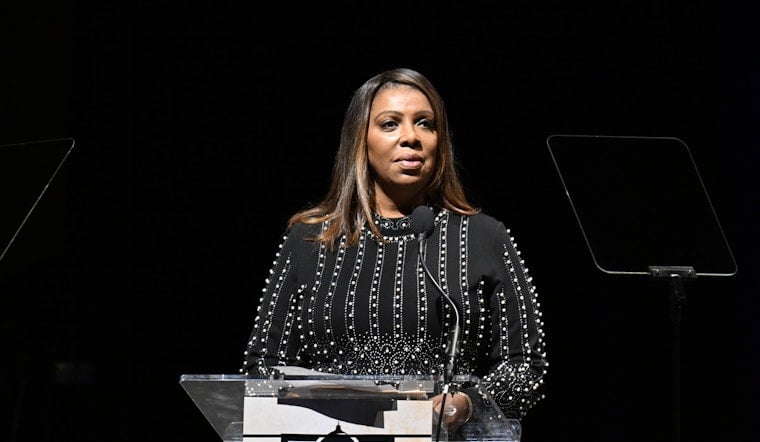
New York Attorney General Letitia James, whose office posts as NY AG James, called the development “abhorrent” and said “I won’t stop fighting to protect our communities and combat the gun violence crisis,” sharing a link to a New York Times article on the ruling. The Times report, written by Chris Cameron reporting from Washington under the headline “Trump Administration Lets Key Gun Law Lapse Following Court Ruling,” details how the administration allowed the restrictions to lapse under judicial scrutiny.
The ruling came from U.S. District Judge James Wesley Hendrix, who serves on the Northern District of Texas and found that the mandated permitting process under the National Firearms Act was unconstitutional. Judge Hendrix ordered that his ruling would take effect Thursday unless the Justice Department appealed it, and, per court records, Trump administration officials did not file an appeal before 12:01 a.m. Thursday. The Trump administration still has 52 more days to file an appeal, according to the same report.
What Changed and Why
President Trump signed a law in 2025 that weakened National Firearms Act restrictions, and that law removed the $200 permit tax that had applied to suppressors and short-barreled rifles. Suppressors are devices that reduce the sound produced when firearms are fired, and gun rights groups and gun businesses supported the lawsuit challenging the National Firearms Act that led to Thursday's outcome. The Trump administration's actions have made suppressors and short-barreled rifles more readily available, and gun rights supporters asserted Thursday that it is now legal to cut down firearm barrels without federal approval.
But the picture is not simple. Critics warned that a wrong move could still mean felony charges, and they described the legal landscape as murky. Even the Second Amendment Foundation, which supported the underlying legal challenge, said it is not quite time to celebrate, reporting that there were numerous outstanding questions about how to interpret the injunction and how it applies to affected people and firearms.
New York's Independent Ban Still Stands
Regardless of what happens at the federal level, New York's own laws are unaffected. Suppressors remain completely illegal for civilian possession, transfer, or sale under New York Penal Law Section 265.02, where possessing one is Criminal Possession of a Weapon in the Third Degree, a Class D felony, according to the New York State Senate. That state statute operates independently of federal NFA rules, meaning New Yorkers face the same felony exposure they always have, no matter what the Justice Department decides to do with its appeal window.
The federal court's order is also far narrower than a blanket nationwide repeal. According to KFI AM 640, Judge Hendrix's injunction explicitly protects only the named plaintiffs, 15 co-plaintiff state governments — including Texas, Georgia, Utah, Alaska, Idaho, Indiana, Kansas, Louisiana, Montana, North Dakota, Oklahoma, South Carolina, South Dakota, West Virginia, and Wyoming — and customers or members of plaintiff organizations, rather than granting a universal nationwide injunction. New York is not among those states.
The Legal Theory Behind the Ruling
The case, Silencer Shop Foundation v. ATF, hinged on the fact that the NFA was enacted under Congress's Article I taxing power back in 1934, as an excise tax statute targeting Prohibition-era weapons; the U.S. Supreme Court affirmed that constitutional basis in the 1937 case Sonzinsky v. United States. Once Congress zeroed out the transfer and making taxes on suppressors, short-barreled rifles, short-barreled shotguns, and “any other weapons” category in last year's budget legislation, Judge Hendrix found the tax-based justification for mandatory registration no longer existed, according to the Cato Institute. The district court rejected Department of Justice arguments that the registration requirements could instead be preserved under the Commerce Clause.
Not every category of weapon is affected. Machine guns and destructive devices remain fully subject to NFA registration and federal background checks, because Congress retained the active $200 transfer tax on those categories, CBS News reports.
Political Pressure and a Counter-Push in Congress
The ruling has already drawn organized political pressure in both directions. U.S. Representative Andrew Clyde, a Georgia Republican who authored the legislative provision that zeroed out the transfer tax, led nearly 50 House and Senate Republicans in a letter to Attorney General Todd Blanche urging the Department of Justice not to appeal and instead to adopt the decision nationwide through official rulemaking, according to Clyde's office.
On the other side, U.S. Senator Chris Murphy of Connecticut had already moved to blunt the tax repeal before the ruling came down, filing an amendment to a defense spending bill that would raise the NFA transfer tax to $4,709 per item — the inflation-adjusted equivalent of the original 1934 fee — in an effort to re-establish Congress's taxing authority over suppressors and short-barreled long guns, per the National Shooting Sports Foundation. Brady President Kris Brown also issued a statement criticizing the administration, saying uniquely lethal weapons and devices, including silencers and short-barreled rifles, were deregulated at the federal level for the first time in nearly a century.
Meanwhile, dealers outside the 15 plaintiff states are left navigating uncertainty on their own. As of Thursday, the Bureau of Alcohol, Tobacco, Firearms and Explosives had not issued updated regulatory guidance to federal firearms licensees, leaving gun dealers and buyers outside those states without clear federal direction while the appeal window remains open.





.jpg)