

























































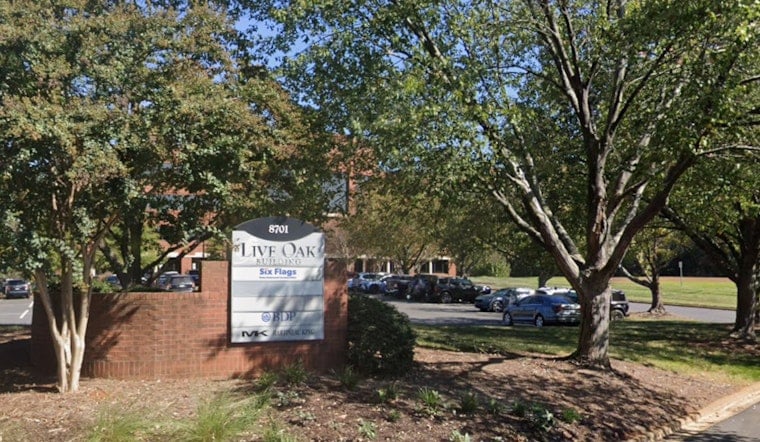
Six Flags Entertainment Corporation is pulling its corporate headquarters out of Charlotte and moving it to Arlington, Texas, ending the city's brief run as the company's global base after less than three years. The move, expected to be complete by March 2027, comes as the theme park giant reported a nearly $203 million net loss in the second quarter of 2026 and grapples with declining attendance across its portfolio.
Six Flags established its headquarters at 8701 Red Oak Blvd in Charlotte in July 2024, shortly after the $8 billion merger of Cedar Fair and legacy Six Flags Entertainment Corporation closed, according to the Charlotte Observer. That merger combined two companies with very different corporate homes: Cedar Fair had been headquartered in Sandusky, Ohio, while legacy Six Flags was based in Arlington, Texas. Charlotte was chosen as a kind of neutral middle ground to balance the two management structures, but that arrangement is now unwinding.
Company leadership says the return to Texas is about proximity and efficiency. Six Flags has cited operational efficiency and its proximity to five Texas properties as reasons for the relocation, the Charlotte Observer reports, and corporate leadership will centralize at Choctaw Stadium in suburban Dallas — a facility where Six Flags has actually maintained office space since 2020, according to Wikipedia. The stadium, formerly known as Globe Life Park and home to the Texas Rangers from 1994 to 2019, now includes nearly 200,000 square feet of redeveloped commercial office and retail space, per REV Entertainment.
A Return to Where It All Began
The relocation carries symbolic weight beyond spreadsheets. Six Flags' corporate return to Arlington brings headquarters operations back to the city where the company got its start in 1961 with the opening of Six Flags Over Texas, its flagship park, according to WFAA. CEO John Reilly, who took over the company in December 2025, framed the move as a matter of consolidation. Concentrating personnel, processes, and decision-making in Arlington is the best path forward for the company, Reilly said, per the Charlotte Observer.
Six Flags will maintain an office in Sandusky, Ohio, even as it exits Charlotte, though the company has not detailed how the Sandusky staff's role might change long-term. It is also unclear how many of the roughly 155 workers currently at the Charlotte office will be offered relocation to Texas versus facing layoffs — a question the Observer's reporting leaves open.
Financial Pressure Behind the Move
The relocation follows a rough stretch for the combined company. Six Flags parks reported a 7% year-over-year revenue decline in the second quarter of 2026, generating $865 million in total quarterly revenue, while attendance fell 7% compared with the same period in 2025 to 13.1 million visitors, according to the Observer's reporting. Those numbers arrive against a backdrop of executive turnover that Hoodline previously reported on, when CFO Brian Witherow departed the Charlotte headquarters amid broader post-merger restructuring.
To shore up its balance sheet, Six Flags sold seven amusement parks — including Six Flags St. Louis, Six Flags Great Escape, Worlds of Fun, Valleyfair, Michigan's Adventure, Schlitterbahn Galveston, and La Ronde in Montreal — to Kansas City-based real estate investment firm EPR Properties for $331 million in March 2026. The company has said the sale was meant to simplify its holdings, strengthen operations at parks with growth potential, and pay down debt. Following that divestiture, Six Flags now oversees 34 parks and nine resorts across North America, per the Observer's figures, with WFAA reporting a slightly different post-restructuring count of 20 amusement parks, 14 water parks, and nine resorts along with an international park development in Saudi Arabia.
What Stays Behind in Charlotte
Despite losing the corporate crown, Charlotte is not being cut loose entirely. Six Flags remains a major employer and economic contributor in the region, and the company is the parent company of Carowinds, the park straddling the North Carolina-South Carolina line that continues to receive investment. Carowinds employs about 2,700 workers at peak season and is set to open its Rip Roarin' Falls attraction in 2027, with Six Flags continuing to invest in both Carowinds and its Carolina Harbor water park.
Carowinds itself has deep roots in the region, having opened on March 31, 1973, as a 73-acre park developed by Charlotte businessman E. Pat Hall for $30 million, according to the North Carolina Department of Natural and Cultural Resources. It remains the only North American amusement park built directly across a state boundary line. That history means Charlotte's relationship with Six Flags predates the corporate headquarters designation by decades and will outlast its departure.
At the time of the 2024 merger, Six Flags reported 1,450 full-time and 41,000 seasonal employees, while Cedar Fair had about 4,400 full-time and 48,800 seasonal workers, according to the Observer. S&P Global Ratings upgraded the combined company's credit rating to BB from B+ upon the merger's completion, citing anticipated annual cost synergies of $120 million within two years — a bet on efficiency that the Arlington relocation appears designed to help fulfill.





