

























































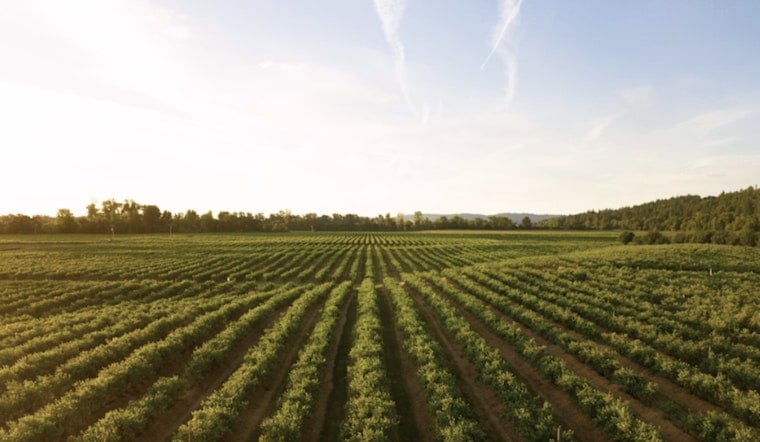
Darrin Morrison has farmed the fields around Mount Vernon, Washington for 40 years, growing vegetable seed and potatoes that depend on irrigation through the region's hot summer stretches. Until two or three years ago, he says, data centers were not even on his radar as a threat to that land. Now they are one of his biggest worries, alongside malls, warehouses and large housing developments that he says are all competing for the same disappearing farmland.
Morrison's concerns are playing out in real time across Skagit County, where officials enacted a six-month moratorium on new data center permits on June 1, according to FOX 13 Seattle. Under the ordinance, the pause applies specifically to facilities larger than 2,000 square feet or with an anticipated electrical load of two megawatts or greater, according to the Skagit County Government. County staff are now using the pause to draft specific land-use code while the county considers an outright ban on new data centers going forward.
A Preemptive Strike After a Battery Storage Fight
The county's move was not a reaction to a specific pending data center application. Instead, Skagit County Senior Deputy for Natural Resources Will Honea has explained at public meetings that the ban grew out of a 2025 clash over a Battery Energy Storage System project, in which the county's lack of specific local zoning rules allowed a developer to bypass county intent through state preemption, according to the La Conner Community News. That gap allowed the developer to appeal to the Washington State Energy Facility Site Evaluation Council, and county officials say they do not want a repeat with data centers.
Nearby jurisdictions have moved just as fast. The town of La Conner enacted its own data center freeze in late July, and the Mount Vernon City Council voted 6-1 on August 12 to institute its own six-month moratorium, even though it has no active permit applications on file, according to Cascadia Daily News. City leaders there said the goal is to keep developers from simply shifting projects onto municipal land to dodge the county's rules.
What Farmers Are Telling Officials
At a July 14 public hearing on the moratorium, Skagit Public Utility District Commissioner Andrew Miller testified that large data center facilities directly conflict with the valley's committed support for agriculture and its limited utility infrastructure, per the same account from the La Conner Community News. Public comment at that hearing overwhelmingly favored extending the moratorium or making it permanent.
Patsy Good, a Skagit Valley planning commissioner and fifth-generation family farmer, told FOX 13 Seattle that water is the top concern for local growers, second only to arable soil itself. She said communities should have a say in where data center infrastructure gets built, and that people ought to be able to decide for themselves whether one is built in their community. The Skagit Valley Planning Commission has held, and plans to hold additional, public meetings to gather community input on data center development, with sessions beginning at 6 p.m.
Water Rights Already Stretched Thin
The stakes over water are not abstract. Under the 2001 Skagit River Basin Instream Flow Rule, most agricultural drainage districts in the lower Skagit Valley hold junior water rights that are subject to total shutoff during dry summer months to protect instream flows for threatened native salmon, according to the Washington State Department of Ecology. Lower Skagit River flows fail to meet those regulatory minimums as much as 60% of the time between August and October. Morrison's potatoes need irrigation especially during hot weather, and he grows them on land where water access can already vanish overnight under that rule.
FOX 13 Seattle also reports that low Skagit River levels can put tribal fishing rights at risk, and that Seattle itself relies on Skagit River water for hydroelectric power, adding more competing claims to an already stretched resource. Data centers require huge amounts of land and can demand thousands of gallons of water to cool their servers, on top of the electrical load that worries Morrison about rising local energy costs. He notes the irony that he himself uses AI and cloud data services in his own farming operation, even as he fights to keep the industry's physical infrastructure off nearby land.
A Global Seed Supply on the Line
What is at risk is not just Morrison's farm. Skagit Valley's 90,000 active agricultural acres generate nearly $300 million in annual product value and supply 75% of U.S. demand for spinach and cabbage seed, according to Washington State University Extension. The valley also supplies between 8% and 25% of the entire global seed supply for spinach, cabbage and table beets, a share made possible by its mild maritime climate and fertile alluvial soils. Large developments like data centers can occupy tens of acres of that land at a time, land Morrison says is disappearing faster than it can be preserved.
Skagit County is far from alone in pushing back. It joins Seattle, Spokane, Burien, Marysville, Pasco and Cle Elum among Washington municipalities that have passed or are considering temporary data center development bans in 2026, Cascadia Daily News reports. That local resistance echoes a broader national mood: a March 2026 Gallup poll found that 70% of Americans oppose building local data centers to support AI technology in their communities, coinciding with a record number of data center project cancellations nationwide amid public backlash over rising electricity rates, heavy water draw and environmental disruption.
State Lawmakers and Regulators Are Watching Too
Washington lawmakers have also started tightening the financial incentives around data centers statewide. Senate Bill 6231, effective July 1, eliminated retail sales and use tax exemptions for server replacement equipment and refurbished data centers, restricting state tax breaks exclusively to initial new facility construction, according to the Washington Department of Revenue. A preliminary report issued in December 2025 by a state Department of Revenue workgroup concluded that while data centers generate local tax revenue and short-term construction jobs, they yield relatively few permanent jobs while imposing heavy long-term demands on local energy grids and water supplies.
For Morrison, the calculus comes back to something simpler than tax policy or megawatts: there is only so much farmland left in western Washington, and once it is paved over for server racks, it does not come back. As Skagit County drafts its new land-use code over the coming months, growers, utility officials and planning commissioners alike are making the case that the valley's soil and water were never meant to compete with the AI industry's appetite for both.



