

























































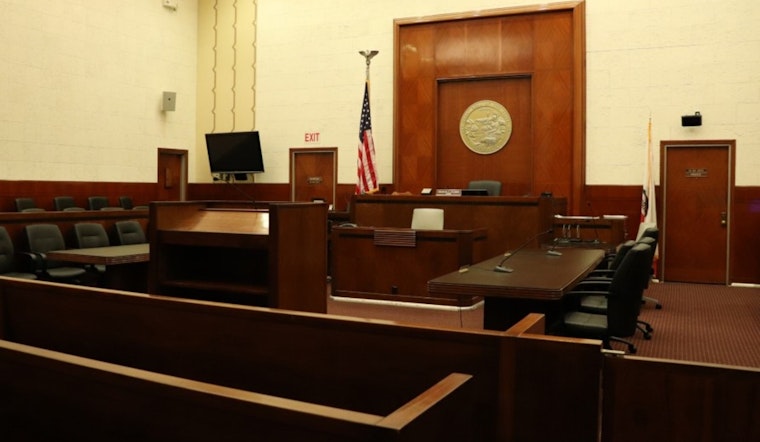
Lawyers defending State Farm in a Los Angeles-area lawsuit over a fire-damaged Carson home have admitted that an artificial intelligence tool invented nonexistent court cases, quotes, and legal holdings that ended up in official filings. The lawyers apologized to both the court and the plaintiff, a U.S. Postal Service carrier named Fa’alagilagi Meni-Siliga who says she and her family lost their home after State Farm delayed repairs following a 2020 fire.
According to LAist, attorney Jacquelene Robinson used an AI tool called Irys to help prepare motions in the case, mistakenly believing it was connected to her firm's Westlaw subscription. Robinson later confirmed seven nonexistent case citations had made their way across eight separate filings in the lawsuit. Kenneth Katel, identified as lead trial counsel for State Farm's defense, told the court he was not aware AI had been used but said, “I was not aware that AI had been used, but as lead trial counsel I accept full responsibility for our filings.”
A Home Lost After a 2020 Fire
Meni-Siliga filed her lawsuit against State Farm and other defendants in July 2024, alleging that delays by the insurer prevented her family from completing repairs to their Carson home after a 2020 fire left it uninhabitable. She and her husband ultimately lost the house to foreclosure and declared bankruptcy. In her own words, quoted by LAist, she wrote, “My family and I have lost forever our family home.”
State Farm has claimed the lawsuit was filed after a one-year deadline had passed and has argued that negligence by the plaintiff, her contractor, and a public adjuster caused the alleged injuries and damages, according to the same LAist report. The case is scheduled to go to trial in October 2026. Eric Khodadian, who represents Meni-Siliga, shared his findings about the fabricated citations at a conference in Los Angeles Superior Court on August 7.
Firm Says It Has Updated Its AI Policy
The law firm Musick, Peeler & Garrett has since updated its policy governing AI use in the wake of the disclosures, the report notes. Tom Hartmann, a State Farm spokesperson, said the insurer expects outside counsel to confirm the accuracy of all legal filings, and the company said it is reviewing what happened with the AI-generated material.
The incident lands amid a broader reckoning over generative AI's reliability inside the legal profession. A recent survey found that 41 percent of law firms and 47 percent of corporate legal departments now use generative AI tools in their work, per the same LAist report. Stanford University law professor Daniel Ho, who has studied the issue, said legal hallucinations have become more prevalent and that he and fellow researchers found some AI companies overstated claims that their legal research tools could guarantee hallucination-free citations.
California's Rules Leave No Room for Shortcuts
California has moved aggressively to regulate the problem even as adoption accelerates. In November 2023, the State Bar of California issued formal practical guidance establishing that attorneys carry a non-delegable ethical duty to independently verify AI-generated research before filing it in court, according to guidance highlighted by Clearbrief. Under California Code of Civil Procedure Section 128.7, attorneys must certify that every factual and legal assertion in a court filing has evidentiary support, giving judges broad authority to strike filings or impose monetary sanctions, according to Reveal Data.
The stakes for getting this wrong have already played out elsewhere in the state. Last year, a California attorney was fined $10,000 after an opening brief containing 21 made-up quotes out of 23 was traced to ChatGPT use. In September 2025, an Alameda County Superior Court judge dismissed a civil lawsuit with prejudice after finding plaintiffs had submitted AI-generated fake evidence in Mendones v. Cushman & Wakefield, as detailed by French legal outlet DDG. Hoodline previously reported that the State Bar Court placed an attorney on probation and a brief suspension in April for filing unverified AI-generated documents, one of the state's first formal bar disciplinary actions of its kind.
A Global Pattern of Fabricated Citations
The Carson case is far from an isolated episode. The HAQQ AI Hallucination Cases database has tracked a surge in identified court filings involving AI-fabricated legal citations worldwide, rising from roughly 200 cases in mid-2025 to nearly 1,922 cases by mid-2026. That growth has coincided with rulings from Oregon to Georgia to Arizona, where courts have sanctioned attorneys or dismissed cases outright after discovering invented case law.
Both Federal Rule of Civil Procedure 11 and California's Section 128.7 include a mandatory 21-day safe harbor provision that lets attorneys withdraw or correct improper filings before facing formal sanctions, according to Clio. Whether that safe harbor, or Katel's apology and the firm's policy update, will be enough to satisfy the court in the Meni-Siliga case remains an open question. It is also unclear whether the California State Bar Court will open a formal investigation into the defense attorneys involved, or whether State Farm's motion to dismiss on statute-of-limitations grounds will succeed despite the tainted filings.




