

























































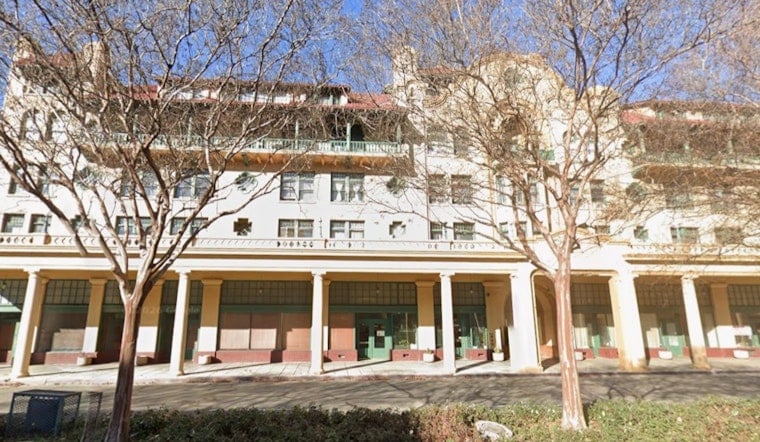
The San Joaquin Pride Center has launched an emergency fundraiser after a cascade of lost government grants left the Stockton nonprofit with enough money to operate only through October. Executive Director John Alita says the center needs to raise $200,000 in bridge funding to keep its doors open into next year, and without it, the organization could shut down entirely by December.
The crisis stems from several funding streams drying up at once, according to KCRA. The center lost one of its largest grants when a two-year Sierra Health Foundation award ended a full year early, a change Alita attributed to shifts in federal funding. That award, worth $400,000, had supported a substance-use prevention project. As Stocktonia News reports, the grant was administered through The Center at Sierra Health Foundation under the state's MAT Access Points Project, and its early termination stemmed from federal policy shifts targeting diversity, equity, and inclusion guidelines. The project had funded peer-led recovery groups and bilingual outreach campaigns for two-spirit and LGBTQ+ residents.
Alita said the delay in state funding, changes tied to Proposition 1, and a federal crackdown combined to make the situation more difficult than a single funding gap would have been, per KCRA. He also said the center's work is effective and backed by reports and data, pushing back against any notion that the cuts reflect a judgment on the organization's performance.
A Wider Collapse in State and Federal Support
The center's largest long-running state revenue stream was an annual grant, ranging from $441,530 to $500,000, under the California Reducing Disparities Project, according to the same Stocktonia report. That program, administered by the California Department of Public Health since 2009, funded community-defined evidence-based mental health practices for underserved populations statewide. It ended in June after state budget reallocations eliminated the remaining project funds.
On top of that, the center saw a separate $600,000 federal grant abruptly canceled in April 2025, the outlet's reporting notes. Local philanthropic support has not been able to fill the gap: individual and corporate donations account for only about 2% of the center's total operating budget, and executive leadership has said donor drop-offs began in late 2024. In earlier years, the organization had relied on large state pass-through awards, including an $800,000 grant through Elevate Youth California, funded by Proposition 64 cannabis tax revenue, according to the Sierra Health Foundation.
Statewide, California has invested in more than 50 nonprofits over the past decade through programs like these, per KCRA's reporting, underscoring how dependent community organizations like this one have become on government pass-through dollars rather than sustained local giving.
Services Already Cut, More at Risk
In response to the sudden revenue drop, the center laid off two staff members and began shifting toward a smaller, remote operational structure to reduce physical overhead, according to Stocktonia's account. The goal is to stretch remaining funds through October while leadership seeks bridge capital. Mental health counseling would be among the first services at risk if additional funding is not secured, KCRA reports.
The center is one of only two organizations in San Joaquin County dedicated exclusively to LGBTQ+ populations, according to the San Joaquin Pride Center. It provides direct services to more than 2,500 youth and reaches over 10,000 residents annually, offering youth peer support, gender-affirming clothing, and mental health counseling. Alita, who leads the center after previously serving as Stockton's Director of Community Services from 2014 to 2020 and Deputy City Manager from 2020 to 2022, according to the Latino Times, has framed the current gap as unexpected: funding that ended abruptly, with new funding not yet available to replace it.
A Client's Stake in the Outcome
For Stockton resident Jose Alexis Razo, the stakes are personal. Razo, who receives therapy at the center, told KCRA that the sessions help him feel understood and heal better as a gay man. He lost his health insurance a couple of months before the outlet's report published, making the center's counseling services even more essential to him.
The center says LGBTQ people generally have access to fewer culturally competent counselors and therapists, a gap that programs like Razo's therapy sessions are meant to help close. The California Department of Health Care Services is currently reviewing applications submitted in response to a new request for applications, which the center's leadership has described as reflecting a more inclusive approach to funding opportunities. Federal guidance tied to that process requires inclusive access to all qualified individuals.
How Proposition 1 Reshaped the Landscape
The center's troubles echo a pattern playing out statewide. California's Proposition 1, approved by voters in March 2024 and taking effect in July, restructured county behavioral health spending by mandating that 30% of Mental Health Services Act tax revenue go toward housing, according to CalMatters. That shift has led counties across the state to end long-standing mental health contracts with community LGBTQ centers. Stonewall Alliance Chico, for instance, lost a major county contract on July 1, per a report from North State Public Radio.
State lawmakers have taken some steps to address the resulting gaps. Assembly Bill 1540, introduced in 2026, aims to backfill specialized LGBTQ+ crisis and hotline services after federal contract cancellations, according to AMFM Healthcare. For now, though, the San Joaquin Pride Center's fundraiser is meant to sustain services into next year while the organization works toward a longer-term healthcare reimbursement model. The center's board has set an October 1 deadline to evaluate whether the bridge funding effort has succeeded, with the future beyond that date still uncertain.



