

























































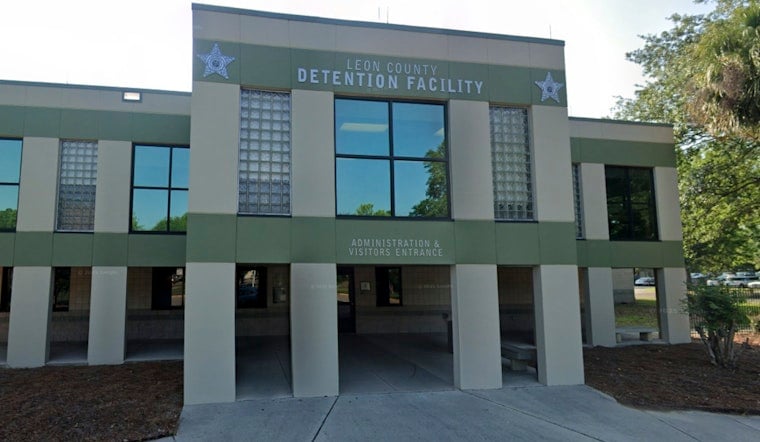
A 26-year-old Tallahassee man is sitting in the Leon County Detention Facility without bond after investigators say he smashed through the bedroom window of his ex-girlfriend's home and exchanged gunfire before his arrest. Tyeric O'Neal now faces felony charges of home invasion robbery with a weapon, firing a weapon into a building, and grand theft following his arrest on August 8.
According to court records cited by the Tallahassee Democrat, O'Neal allegedly tried to force his way into his ex-girlfriend's home by breaking through her bedroom window, an incident that led to gunfire being exchanged at the scene. Booking records published by the Leon County Sheriff's Office confirm O'Neal was formally booked on the same three charges after his arrest.
O'Neal remains held without bond at the Leon County Detention Facility. Under Florida Rule of Criminal Procedure 3.131 and the state's constitutional bail provisions, defendants arrested on charges punishable by life imprisonment are held without bond pending a formal first-appearance hearing before a judge, which must occur within 24 hours of arrest to evaluate probable cause and weigh whether release conditions could protect public safety.
The Charges and What They Carry
The most serious charge O'Neal faces, home-invasion robbery with a firearm or deadly weapon, is a first-degree felony under Florida Statute § 812.135 that can carry a sentence of up to life imprisonment. Florida law defines home-invasion robbery as entering a dwelling with the intent to rob and then committing a robbery against the people inside.
The firing-into-a-building charge falls under Florida Statute § 790.19, which makes it a second-degree felony to wantonly or maliciously shoot into or at any public or private building, occupied or not, punishable by up to 15 years in prison and a $10,000 fine. Alongside that, the grand theft charge is classified under Florida Statute § 812.014 as third-degree grand theft, covering stolen property valued between $750 and $19,999 or specific items such as firearms, and carrying a maximum five-year sentence.
If prosecutors can prove O'Neal intentionally discharged a firearm during the alleged home invasion, Florida's “10-20-Life” mandatory minimum sentencing law under § 775.087 would come into play. That statute sets mandatory prison floors of 10 years for gun possession during a qualifying felony, 20 years for discharging the weapon, and 25 years to life if someone is injured or killed.
A County With a Troubling Pattern
The case unfolds in a county that public health and law enforcement data compiled in 2024 by the Florida Department of Health show ranks among the state's top ten counties for domestic violence offense rates relative to population. Those tracked offenses include homicides, assaults, stalking, and violent threats between current or former intimate partners.
In response to that pattern, Tallahassee Police Department General Order 67, updated in September 2025, mandates that officers responding to intimate partner violence calls carry out a Domestic Violence Lethality Assessment to gauge the immediate risk of serious harm to a victim. The protocol is designed to prompt officers to connect high-risk victims immediately with local crisis shelters.
One of those resources is Refuge House, the certified domestic violence center serving Tallahassee and Leon County since 1978. It operates a 24-hour emergency hotline at 850-681-2111 along with emergency shelter, legal assistance, and safety planning for survivors across the Big Bend region. Statewide, Florida's 41 certified domestic violence centers provided 624,269 nights of emergency shelter to 12,425 survivors and their children in fiscal year 2024–2025, according to the Florida Partnership to End Domestic Violence.
What Comes Next
O'Neal's case will move through Florida's Second Judicial Circuit, where a first-appearance hearing determines probable cause and whether any conditions could allow pretrial release. As with any pending criminal case, the charges against O'Neal remain allegations that have not been proven in court, and it is not yet clear when further hearings will be scheduled.





