

























































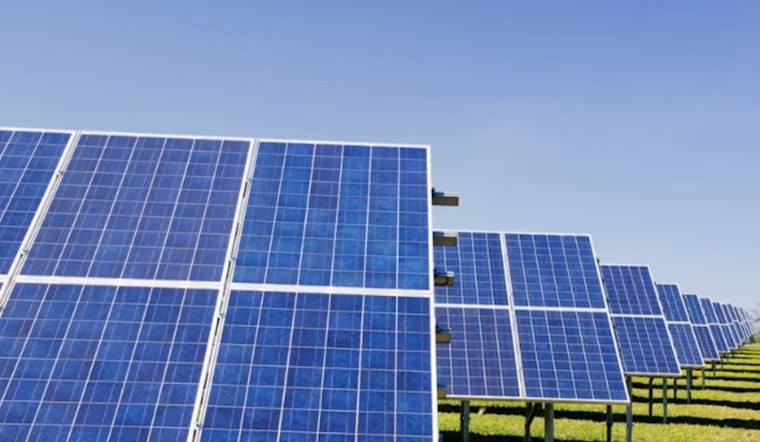
Nate Chiarenza's rooftop solar panels have been sitting dark since they were installed in March, unable to draw power because the company that put them there, Freedom Forever, never finished the paperwork needed to turn them on. Now the Tampa homeowner is staring down a roughly $20,000 bill for a system he can't yet use, while the leasing payments tied to it are expected to begin in September.
Chiarenza's system already passed local inspection, but Freedom Forever failed to show up for a required solar inspection and never enrolled his system with Tampa Electric Company, according to WFLA. Hillsborough County and the utility have been unable to move forward without that missing paperwork, leaving Chiarenza, who lives in Tampa, at what he described as a standstill. He told WFLA consumer investigator Shannon Behnken that the money had already been spent and he had no idea where his lease stood or who, if anyone, would ultimately connect his panels. Freedom Forever has not answered his calls, per the same report.
Behnken contacted TECO directly on Chiarenza's behalf. A utility spokesperson told her that TECO will inspect Chiarenza's system and will turn it on if it passes, and the utility has decided to move forward with his case despite the missing installer documentation.
A Company in Freefall
Freedom Forever, based in California, was one of the nation's largest residential solar installers before its collapse. The company announced a Chapter 11 bankruptcy reorganization in April before the case took a sharper turn: on August 7, the U.S. Bankruptcy Court for the District of Delaware converted the case into a Chapter 7 liquidation after Freedom Forever failed to find a qualified buyer for its assets, according to the Denver Gazette. At the time of its April filing, the company held a 6.1% share of the residential solar market and carried between $500 million and $1 billion in liabilities against far smaller estimated assets, as reported by Financier Worldwide.
The shutdown was abrupt. On the morning it filed for Chapter 11, Freedom Forever laid off roughly 1,600 employees nationwide without warning, a move that later triggered WARN Act proceedings in bankruptcy court over unpaid wages, according to Latitude Media. Former employees said wage and paid-time-off payments were delayed indefinitely after the filing. With a court-appointed trustee now winding the company down rather than keeping it running, local office staff and field technicians who might otherwise process stalled paperwork like Chiarenza's have been eliminated entirely, per the same reporting.
Regulators Were Already Circling
Freedom Forever's collapse did not come out of nowhere. Nine business days before its bankruptcy filing, the Texas Attorney General's office hit the company with Civil Investigative Demands as part of a state initiative targeting fraudulent and deceptive residential solar sales practices, according to the Office of the Texas Attorney General. Investigators were examining allegations of false billing-savings promises, misrepresented equipment performance, and unauthorized loan originations.
The company's troubles ran deeper still. Freedom Forever carried an F rating with the Better Business Bureau over a pattern of unresolved complaints and was placed on probation in 2024 by California's Contractors State License Board, the Denver Gazette reports. Its financial distress accelerated in 2025 when Solar Mosaic, its primary consumer lending partner, filed its own Chapter 11 bankruptcy while holding more than $100 million in unsecured debt exposure to Freedom Forever, according to Financier Worldwide — Mosaic was later listed as Freedom Forever's largest unsecured creditor in Delaware court records.
What Stranded Homeowners Can Actually Do
Chiarenza's predicament fits a much larger pattern. More than 100 U.S. residential solar installers have gone bankrupt or shut down since 2023, leaving over one million American homes with solar arrays from defunct providers, according to industry tracking data cited by the Denver Gazette. Analyses from Wood Mackenzie and the Solar Energy Industries Association project a roughly 20% drop in total U.S. residential solar installations in 2026 as installer failures and tighter financing conditions squeeze the market.
For homeowners caught in the same bind as Chiarenza, the legal picture is mixed. Under Chapter 7 liquidation, Freedom Forever's workmanship and roof-penetration warranties are voided, but equipment warranties from manufacturers like Tesla, SolarEdge, or Enphase remain valid, provided homeowners register their equipment's serial numbers directly with those manufacturers, according to guidance from Solar Equity Solutions. Homeowners are still legally obligated to keep making monthly payments to third-party lenders even when installer service stops, but under the FTC Holder Rule (16 CFR 433.2), they can assert installer breach-of-contract defenses against those loan servicers, the same guidance notes.
Hoodline previously reported on Florida solar debt troubles tied to unfinished installations and installer bankruptcies across the Treasure Coast, part of a wave that has also included the 2024 bankruptcy of SunPower and the collapse of solar developer Pine Gate Renewables. For now, Chiarenza is waiting to see whether TECO's inspection will finally bring his rooftop panels to life, even as the company that sold them to him no longer exists to answer the phone.





