

























































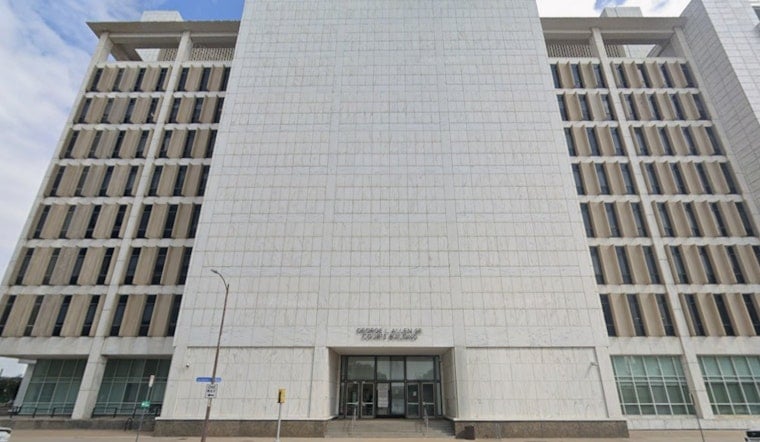
A Dallas County judge has thrown a wrench into the SEC's attempt to keep former professional athletes off college rosters, issuing a 14-day temporary restraining order that blocks the NCAA, the SEC, and Commissioner Greg Sankey from stopping 41 plaintiffs from returning to Division I competition. The group includes three athletes currently on active NFL rosters — Dallas Cowboys receiver Jordan Hudson, Kansas City Chiefs linebacker Wesley Bissainthe, and Omari Evans — along with WNBA signees who have yet to play a regular-season game.
District Court Judge Martin Hoffman's order, issued yesterday, means the NCAA and SEC cannot rely on Bylaw 12.6 or other rules to bar the plaintiffs from Division I athletics during the 2026-2027 season simply because they already used four seasons of eligibility, according to The Athletic. The order also forces the NCAA to temporarily reopen the transfer portal for a week so the affected athletes can seek new landing spots, as reported by Big News Network. Hudson previously played for SMU and Bissainthe for Miami before each signed with an NFL team, and both now fall squarely under the Power 4 conferences' newly clarified bans on athletes who signed pro contracts or appeared on official NFL rosters.
A WNBA Wrinkle in the Football Fight
The Dallas case is not just about football. Two WNBA signees, Bailey Maupin of the Golden State Valkyries and Christeen Iwuala of the Washington Mystics, are also among the 41 plaintiffs. Both signed professional contracts in April but have never logged minutes in a regular-season WNBA game, a detail WXSM-AM notes creates a legal dispute over whether they even count as professionals under collegiate rules. Their inclusion shows the eligibility fight has spread well beyond football rosters and into women's basketball's own gray area between draft-day contracts and actual playing time.
The chaos traces back to a regulatory gap the NCAA created itself. In June, Division I adopted a new 5-in-5 age-based eligibility framework, giving incoming athletes five seasons of competition within a five-year window starting at age 19 — but it explicitly left out high school graduates from the Class of 2022, whose four-year eligibility had already expired. That exclusion, detailed by Yardbarker, is the spark behind the wave of individual and class-action lawsuits now working through state courts nationwide.
SEC's 15-0 Vote and the Louisiana Precedent That Provoked It
The SEC's response came fast and severe. On Wednesday, SEC university presidents voted 15-0, with LSU abstaining, to impose conference penalties on any member school that rosters a former professional athlete — a fine equal to half the sport's annual operating budget, a half-season suspension for the head coach, and revocation of the school's SEC voting privileges. The vote followed a separate ruling a week earlier in which East Baton Rouge Parish Judge William Jorden granted a restraining order allowing LSU head coach Lane Kiffin to recruit former NFL training camp players Dae'Quan Wright, cut by the Cleveland Browns, and Zxavian Harris, cut by the New Orleans Saints. Both went undrafted this year, signed summer NFL contracts, and were later waived before trying to re-enter college ball through the courts, according to the American Press.
All four major Power 4 conferences — the SEC, Big Ten, Big 12 and ACC — have now aligned on policies barring former pros from returning to college rosters, setting up a direct collision with the string of state court orders clearing those same players to play. One athlete outside that fight, SMU safety Ahmaad Moses, offers a contrast: he underwent spinal surgery after last season, went undrafted, and never signed a professional contract, meaning the ACC ban does not apply to him. The Dallas restraining order still makes him eligible to play this fall, and he has been practicing with SMU during camp, per The Athletic.
Other Sports, Other Courtrooms
Football and basketball recruiting fights are unfolding in tandem. In a separate Texas case, former NBA G League player Bryson Warren secured an ex parte temporary restraining order clearing him to compete for Texas A&M this season, despite having earned roughly $239,000 in professional compensation over three seasons, according to the College Sports Litigation Tracker. Warren finished high school with Overtime Elite and played three G League seasons without ever appearing in an official NBA game. LSU basketball signee RJ Luis, who had previously signed pro contracts with the Utah Jazz and Boston Celtics, separately won a preliminary injunction from Baton Rouge Judge Ronald Johnson restoring his college eligibility.
The legal wins have not been uniform, though. The NCAA has also won subsequent legal stays in multiple states, pausing some of the earlier orders, and athletes in states including Louisiana are expected to file similar challenges against conference rules in the coming weeks.
Political Backlash and the Fight Over Retroactive Penalties
Louisiana Governor Jeff Landry publicly criticized the SEC's emergency bans and penalties on Thursday, arguing the conference had already accepted earlier court rulings clearing quarterbacks Diego Pavia and Trinidad Chambliss but was now wrongly punishing current players for navigating NCAA rules that keep shifting under them. Landry's core argument, per Yardbarker, is that athletes should not face retroactive punishment from conference policy after relying in good faith on valid state court orders.
Plaintiff attorney Ryan Downton echoed that argument after yesterday's ruling, telling WXSM-AM that athletic conferences cannot lawfully impose immediate rules with penalties so severe they intimidate member universities into ignoring state court injunctions. Downton and other attorneys have since expanded their lawsuit to name Sankey directly as a defendant, aiming to head off conference-level retaliation against schools that comply with the courts.
The next hearing in the Dallas case is scheduled for September 11, and the NCAA and SEC may present another basis for declaring the plaintiffs ineligible before then. Multiple active NFL rookies are, for now, permitted to play college sports in 2026 if they choose to and a school accepts them — a possibility that remains open only as long as the current restraining order stands. Hoodline previously reported on the SEC and Big Ten's emergency bans on former pro athletes, part of a broader legal battle that has also touched golf, basketball, and multiple state courts since the NCAA's 5-in-5 rule took effect this summer.





