

























































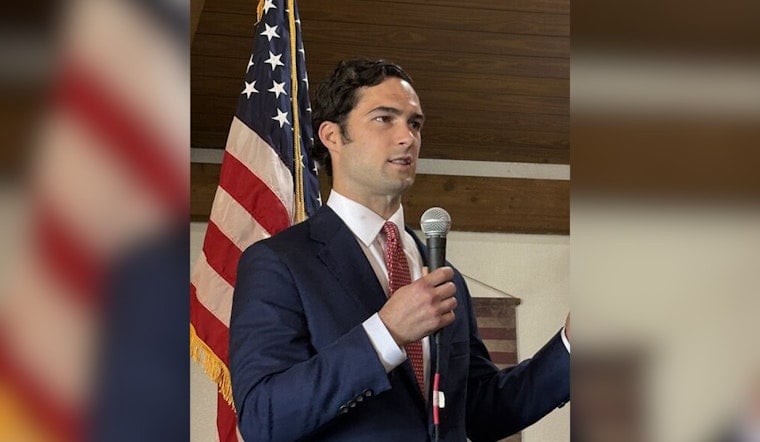
A Texas congressman is trying to turn one of America’s most entrenched immigration fights into a statutory showdown: Rep. Brandon Gill’s new bill would label people who enter unlawfully or travel here to give birth invaders and deny automatic citizenship to some children born on U.S. soil. The proposal arrives less than a month after the Supreme Court rejected President Trump’s executive-order approach, putting Gill’s legislative workaround squarely in the next round of the fight.
Gill’s Bill Would Redefine Birthright Citizenship
Filed on Wednesday as H.R. 9854, the Citizenship Act of 2026 was referred to the House Judiciary Committee, according to the Government Publishing Office. The bill would designate unauthorized entrants, unlawfully present people and certain people seeking admission to give birth as invaders, then amend the Immigration and Nationality Act to exclude some children from birthright citizenship. It also reaches commercial surrogacy tied to nationals of covered nations and says courts could not review the existence of an invasion under the bill. Gill told CBS Texas that the legislation would not require a constitutional amendment.
Legal Implications
The timing matters because the Supreme Court ruled on June 30 in Trump v. Barbara that children born in the United States to parents who are unlawfully or temporarily present are citizens at birth under the Fourteenth Amendment’s Citizenship Clause. The ruling blocked President Donald Trump’s executive order seeking to restrict that citizenship, according to the Supreme Court opinion. Gill’s bill tries to move the fight from presidential power to Congress’s authority over naturalization and the Constitution’s language about invasion.
The bill would also go further than current visa enforcement. The State Department says travel to the United States primarily to give birth to obtain citizenship is not permissible on a visitor visa, and its guidance allows consular officers to deny a B visa when that appears to be the applicant’s main purpose, according to State Department guidance.
Texas Opposition Meets A Broader Crackdown
Democratic State Rep. Ramon Romero Jr. of Fort Worth, who chairs Texas’ Mexican American Legislative Caucus, opposes the bill, CBS Texas reported. Gill, by contrast, has argued the measure can be enacted without a constitutional amendment, putting the Texas lawmakers on opposite sides of a debate that reaches far beyond the state’s borders.
The proposal also follows a months-long congressional investigation into companies accused of arranging “birth tourism” packages. Hoodline previously reported that House Oversight lawmakers sought records from maternity and concierge firms in Florida, Texas and California, with Gill involved in that inquiry.
What Happens Next
For now, the Citizenship Act is only a proposal before the House Judiciary Committee, not a change to federal citizenship law. If lawmakers move it forward, the fight will likely turn on whether Congress can create the bill’s invader exception without running afoul of the Supreme Court’s reading of the Fourteenth Amendment.





